
Pruning
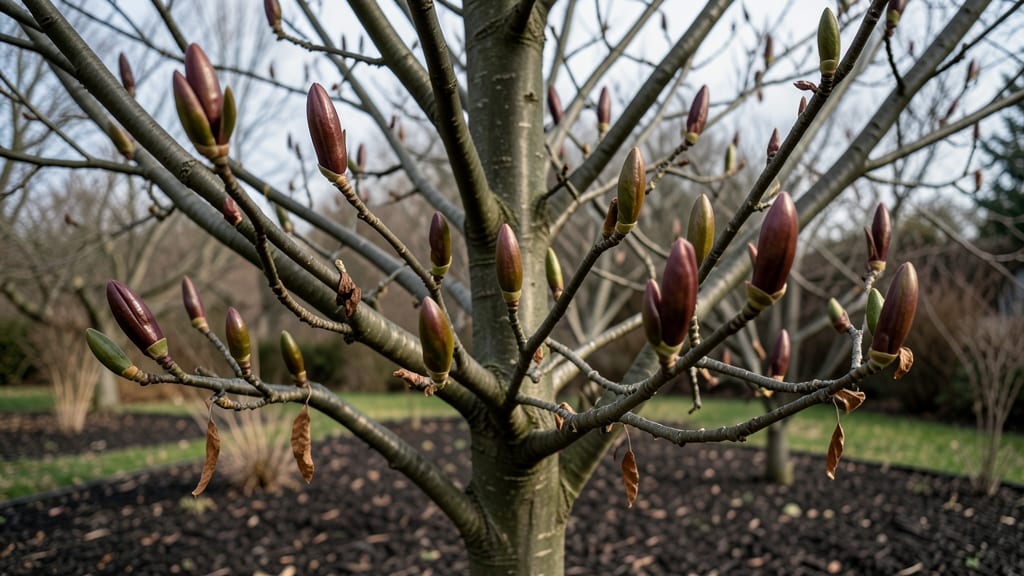
The magnolia tree buds in winter look like tiny green secrets waiting to burst into bloom. 🌱 Those swollen buds you see in late winter aren't just dormant—they're carefully storing energy for spring's spectacular show.
The key to keeping them healthy is understanding when to step in (and when to leave them alone). Most magnolias need zero winter pruning, but if you must trim, wait until after buds swell but before they open.
Cold snaps can damage tender new growth, so protect your tree by wrapping young specimens in burlap or using anti-desiccant spray on older trees. Think of it like tucking your tree in for a long nap.
By late February, you'll see buds plump and ready—this is your cue that spring is near. Healthy buds mean fewer surprises when blooms finally arrive, and your tree will reward you with those iconic, fragrant flowers.
Just avoid heavy pruning now, as it stresses the tree when it's already conserving energy. This approach works for both southern magnolias and later-blooming varieties like saucer magnolias. Patience pays off—your tree knows exactly what to do if you give it the right conditions.
Now let's talk about what to watch for as those buds wake up.
📚 In This Guide
- What you need
- Instructions
- Tips and common mistakes
- Wrapping up and next steps
What you need
- ● Pruning shears – Bypass shears (for small branches, ¼”–¾” thick)
- ● Loppers – 6”–8” bypass loppers (for branches ¾”–2” thick)
- ● Pruning saw – 8”–10” curved-blade saw (for branches 2”+ thick)
- ● Gloves – Heavy-duty, cut-resistant gloves (e.g., Mechanix or Coosah)
- ● Disinfectant – 70% isopropyl alcohol or bleach solution (1:9 ratio) (for sterilizing tools)
- ○ Pruning sealant – Optional, but helpful for large cuts (Tanglefoot Tree Wound Pruning Seal)
- ● Ladder – Extendable aluminum ladder (if tree is 10’+ tall)
- ● Heavy-duty trash bags – For collecting pruned branches
- ● Notepad & pencil – To sketch pruning plan or note branch locations
- ● Weather check – Prune on a dry, frost-free day (ideal temps: 40°–60°F)
- ● Safety glasses – Protects eyes from debris
- ● Long sleeves & pants – Avoid thorns and scratches
- ● Sturdy shoes – Closed-toe, slip-resistant boots
- ● First-aid kit – For minor cuts or scrapes
- ● Water & snacks – Hydration breaks are key!
- ● Extension pole pruners – For high branches without a ladder
- ● Tree pruning spray – Fungicide (e.g., Neem oil spray) to prevent disease
- ● Camera or phone – Take before/after photos for tracking progress
- ● Friend or helper – Extra hands make heavy branches easier to manage!
How to prune magnolia buds in winter for stronger spring blooms
Winter’s the perfect time to shape your magnolia—here’s how to prune without harming next year’s flowers.
🌿 Step 1: Identify Buds and Pruning Windows
Magnolia buds form in late summer and early fall, but they’re most visible now during dormancy. Look for plump, rounded buds along last year’s growth—they’re your future blooms. Prune only when temperatures stay above 30°F at night and below 40°F during the day to avoid stressing the tree.
I always prune after a light frost but before mid-February, when buds begin swelling. If you wait too long, you risk cutting off next year’s flowers. Use sharp pruning shears to make clean cuts—ragged edges invite disease.
✂️ Step 2: Remove Dead or Crossing Branches
Start by removing any branches that are dead, broken, or rubbing against others. Dead branches snap easily when bent; healthy ones bend slightly. Cut these back to the trunk or a strong lateral branch. For crossing branches, remove the smaller one at its base to improve airflow and light penetration.
Here’s the thing—magnolias are sensitive to over-pruning. Never remove more than 25% of the canopy in one season. If you’re unsure, err on the side of caution and leave branches that look questionable. You can always prune more next winter if needed.
🌱 Step 3: Thin Out Overcrowded Growth
Focus on the tree’s center and outer edges. Remove branches growing inward to open up the canopy and reduce disease risk. Aim for a shape that lets light reach all buds. I like to step back every few cuts to visualize the tree’s form—it’s easier to see what needs thinning from a distance.
Watch for water sprouts, those fast-growing, vertical shoots with no buds. These steal energy from flowering branches. Snip them off at the base. If you see suckers sprouting from the ground, remove them too—they drain the tree’s resources.
☀️ Step 4: Shape for Light and Airflow
Magnolias bloom on old wood, so avoid cutting back into last year’s growth where buds are forming. Instead, prune to create an open, vase-like shape. Start at the bottom and work upward, removing branches that grow straight up or block sunlight from reaching lower buds.
Leave at least 3-4 feet of space between branches to prevent fungal issues. If your tree has a dense canopy, prioritize thinning the middle first. You’ll know you’ve done well when you can see light filtering through to the inner branches.
💧 Step 5: Clean Up and Protect the Tree
After pruning, rake up all debris and dispose of it—don’t compost it, as fungal spores may linger. Sterilize your pruning tools with rubbing alcohol to prevent spreading disease between cuts. If you’re pruning a young magnolia, apply a 2-inch layer of mulch around the base (but keep it 6 inches away from the trunk) to retain moisture.
Water deeply after pruning if your area hasn’t had recent rain. The tree will need moisture to heal cuts and prepare for spring growth. Avoid heavy fertilizing now—magnolias are dormant and won’t use nutrients until warmer weather arrives.
Tips & tricks for pruning magnolia buds in winter
Winter pruning can make all the difference for your magnolia’s spring blooms—here’s how to avoid common pitfalls and get it right.
Timing is Everything: The window between a light frost and mid-February is critical. I’ve learned the hard way that pruning too early (before buds form) or too late (after buds swell) can ruin next year’s flowers. Check the forecast for nights above 30°F and days below 40°F—this balance prevents stress while keeping the tree dormant. If you miss this window, wait until next winter.
Tool Prep Prevents Problems: Sterilizing your pruning shears between cuts is non-negotiable. I keep rubbing alcohol in a small spray bottle and wipe blades after every 2-3 cuts. This prevents spreading fungal spores that can infect fresh cuts. Also, sharpen your shears before starting—dull blades tear wood, creating ragged edges that heal poorly. A clean, sharp cut seals faster and looks professional.
Visual Cues for Healthy Cuts: When removing branches in Step 2, bend each one before cutting. Dead branches snap easily, while healthy ones bend slightly. For crossing branches, always remove the smaller one at its base—this opens up the canopy without disrupting the tree’s structure. I mark branches with painter’s tape if I’m unsure, then check again after 10 minutes to confirm my decision.
Mulch Matters More Than You Think: That 2-inch layer of mulch around young magnolias isn’t just decoration—it’s insulation. Spread it 6 inches away from the trunk to prevent rot while keeping roots warm. I use shredded bark mulch because it breaks down slowly and improves soil structure over time. For established trees, a fresh layer helps retain moisture during winter’s dry spells.
Pro Tips for Magnolia Tree Buds In Winter
- Winter pruning can make all the difference for your magnolia’s spring blooms—here’s how to avoid common pitfalls and get it right.
- Timing is Everything: The window between a light frost and mid-February is critical.
- Tool Prep Prevents Problems: Sterilizing your pruning shears between cuts is non-negotiable.
Frequently asked questions
Got questions about caring for magnolia buds during winter? You’re not alone! Here are answers to the most common concerns—from timing to troubleshooting—to help your tree thrive for next spring’s stunning blooms.
Q: Can I prune magnolia tree buds in winter, or should I wait until spring?
Winter is actually the best time to prune magnolia buds—just avoid extreme cold (below 20°F/-7°C). Pruning now removes dead wood, improves airflow, and encourages stronger spring growth. Wait until late winter (February-March) in colder climates for safety. Pro tip: Prune after a light frost to reduce stress on the tree.
Q: How cold is too cold to prune magnolia buds?
Magnolias handle light pruning down to 15°F (-9°C), but avoid heavy cuts below 20°F (-7°C). If temps drop unexpectedly, postpone pruning until a warmer day. Signs of cold stress (wilting or brown buds) mean it’s time to wait. Pro tip: Prune on a mild, sunny day to help wounds heal faster.
Q: What if my magnolia buds are already damaged or dried out?
Don’t panic! Dried or cracked buds are often harmless—they’ll regrow in spring. Remove only buds that are black, mushy, or infested with pests. Healthy buds may look shriveled but will plump up when temps rise. Pro tip: Avoid over-pruning; focus on 10-20% of the tree’s branches max.
Q: Will pruning magnolia buds now affect next year’s flowers?
No—pruning in winter boosts spring blooms by removing weak growth. Just avoid cutting flower buds (they’re plump and visible by late winter). Focus on dead, crossing, or overcrowded branches. Pro tip: Different magnolia types bloom at different times; research your variety to time pruning perfectly.
Q: Are there alternatives to pruning if I’m not confident?
Yes! Try selective thinning (removing only the worst branches) or mulching (adding 2-3 inches of organic mulch) to protect roots. For heavy damage, consult a certified arborist. Pro tip: Use sterilized tools to prevent disease spread—rubbing alcohol works great!
| Quick Reference |
|---|
| Best pruning time: Late winter (Feb-Mar) in cold zones; early winter (Dec-Jan) in mild climates. |
| Avoid pruning: Below 20°F (-7°C) or during active growth (spring/summer). |
| Tools needed: Sharp bypass pruners, gloves, and sterilized cuts. |
Wrapping up and next steps
Winter is the perfect time to nurture your magnolia tree—pruning dormant buds ensures a stunning spring bloom! 🌸 By following proper techniques, you’ll promote healthy growth and prevent disease. Remember, patience and precision are key, so take your time and enjoy the process.
Ready to give your magnolia the care it deserves? Grab your tools and schedule a pruning session before the buds start swelling in early spring. Your future blooms will thank you!