
Pruning
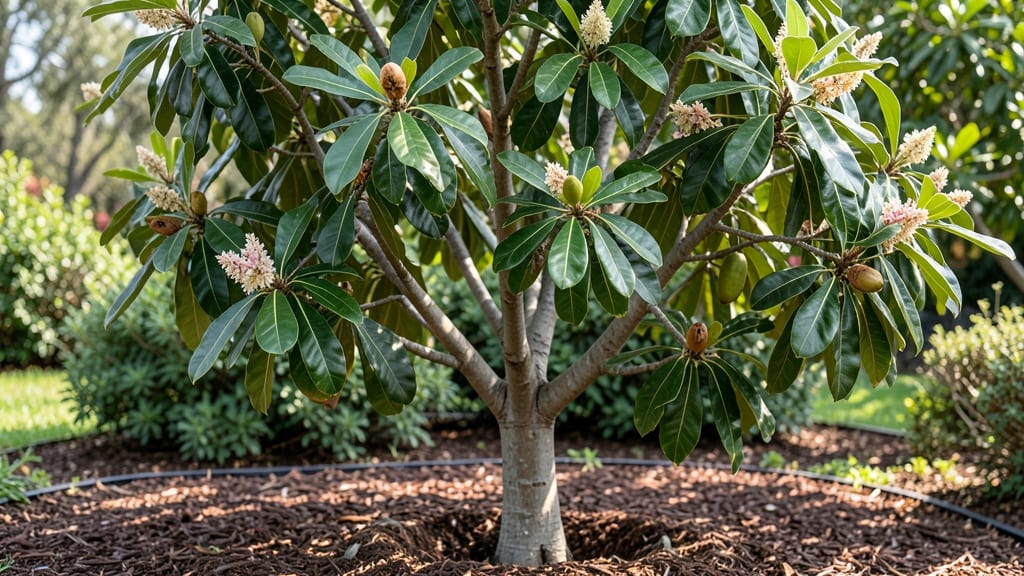
Macadamia tree care starts with understanding their stubborn nature—these trees grow slowly but reward patience with decades of nut production. 🌿 I’ve pruned mine for years, and the key isn’t just cutting branches but shaping the tree to maximize airflow and sunlight, which prevents disease and boosts fruit.
Most gardeners over-prune, leading to stress, so I’ll show you how to trim just enough to keep your tree thriving without stunting its growth.
The best time to prune is late winter or early spring, when the tree is dormant but about to burst with new growth. You’ll need sharp pruners, gloves (macadamia shells are tough!), and a ladder if your tree is over 10 feet tall.
Focus on removing dead, crossing, or crowded branches first—these are the ones that steal energy from your future nut harvest. Think of it like giving your tree a haircut: less is more, and slow cuts heal better.
What you’ll end up with is a tree that produces more nuts per season and resists pests like scale insects, which love crowded branches. The pruning process itself is simple but requires attention to detail—no rushing.
By summer, you’ll notice fresh green foliage filling in where you trimmed, and by harvest season, your tree will be more productive than ever. The best part? Macadamia trees live for 50+ years, so proper care now means bountiful harvests for decades.
This guide works for both young saplings and mature trees, whether you’re growing in warm climates like California or Florida or pushing the limits in cooler zones with microclimates. We’ll also cover how to spot over-pruning (yellowing leaves) and under-pruning (too many small nuts). Ready to shape your tree’s future?
📚 In This Guide
- What you need
- Instructions
- Tips and common mistakes
- Wrapping up and next steps
What you need
- ● Pruning shears: Bypass pruners (sharp, 6-8" blades) for small branches.
- ● Loppers: 1 pair (18-24" long) for thicker branches (up to 2" diameter).
- ● Pruning saw: 1 curved-tooth saw for branches 2"+ in diameter.
- ● Disinfectant: 70% isopropyl alcohol or a 10% bleach solution (1 part bleach to 9 parts water) to sterilize tools between cuts.
- ● Gloves: Heavy-duty work gloves (cut-resistant) to protect hands.
- ● Safety glasses: 1 pair to shield eyes from debris.
- ○ Pruning sealant: Optional (e.g., tree wound dressing) for large cuts to prevent disease.
- ● Ladder or step stool: Sturdy, tall enough to reach the tree’s canopy safely.
- ● Trash bags or bucket: For collecting pruned branches (5-10 gallons capacity).
- ● Extension pole pruners: For high branches without a ladder.
- ● String or measuring tape: To mark branches for removal.
- ● Sharpener: File or stone to keep blades in top condition.
- ○ Tree growth regulator: Optional (e.g., plant hormones) to encourage healthier regrowth.
- ● Knowledge: Basic understanding of macadamia tree anatomy (e.g., identifying water sprouts vs. fruiting branches).
- ● Timing: Prune during dormant season (late winter/early spring) or right after harvest.
- ● Weather: Choose a dry, calm day to avoid spreading disease or damaging tools.
Step-by-step guide to pruning your macadamia tree
Here's the straightforward method I use to keep my macadamia trees thriving and productive.
🌱 Step 1: Choose the Right Time to Prune
Prune your macadamia tree during its dormant season, which is typically late winter or early spring, just before new growth begins. This is usually between January and March in most growing zones. Pruning during dormancy minimizes stress on the tree and allows it to focus its energy on new growth and fruit production.
If you must prune outside of this window, avoid heavy pruning during the summer months, as this can stress the tree and reduce fruit production. You can do light maintenance pruning to remove dead or diseased branches anytime, but save major pruning for the dormant season.
✂️ Step 2: Gather Your Tools and Assess the Tree
You'll need a few basic tools: a sharp pruning saw for larger branches, bypass pruners for medium-sized branches, and hand pruners for smaller branches. Sterilize your tools with rubbing alcohol to prevent spreading disease. Wear gloves to protect your hands from the tree's rough bark and any potential sap.
Start by assessing the tree. Look for dead, diseased, or crossing branches that need removal. Also, identify any branches that are growing inward or rubbing against each other, as these can cause wounds and invite pests. Remove these first to improve air circulation and sunlight penetration.
⏰ Step 3: Remove Dead, Diseased, and Problem Branches
Begin by cutting out any dead or diseased branches at their point of origin. Make clean cuts just outside the branch collar—the swollen area where the branch meets the trunk—to encourage proper healing. Avoid leaving stubs, as they can trap moisture and lead to rot.
Next, remove any branches that are crossing or rubbing against each other. Cut these back to a healthy lateral branch or bud. This step is crucial for maintaining the tree's structure and preventing future damage. If a branch is too large to cut by hand, use your pruning saw and make the cut just outside the branch collar.
☀️ Step 4: Thin the Canopy for Better Airflow and Light
Step back and look at the overall shape of your tree. Aim to create an open, vase-like structure that allows sunlight and air to reach the center. Remove about 20-30% of the foliage to thin out dense areas. Focus on branches that are growing inward or downward, as these can block light and reduce fruit production.
When thinning, prioritize branches that are at least 3-4 inches in diameter. These branches will provide the best structure for future growth. Avoid over-thinning, as this can reduce the tree's ability to produce fruit. Leave enough foliage to maintain the tree's energy balance.
🌿 Step 5: Shape the Tree and Encourage Fruit Production
Now it's time to shape the tree. Macadamia trees benefit from a balanced, open canopy that allows sunlight to reach all parts of the tree. Remove any branches that are growing too close together or that are competing for the same space. This will help the tree develop a strong, stable structure.
To encourage fruit production, focus on removing branches that are growing straight up or horizontally. Instead, promote branches that grow at a 45-degree angle or upward at a slight angle. These branches will produce more fruit and contribute to a more productive tree. Avoid heavy pruning of fruiting branches, as this can reduce the tree's yield.
💧 Step 6: Clean Up and Monitor Your Tree
After pruning, clean up all the debris from the ground around the tree. This will help prevent the spread of disease and pests. Dispose of any diseased branches separately to avoid contaminating your garden. Once the pruning is complete, give the tree a deep watering to help it recover from the stress of pruning.
Monitor your tree closely in the weeks following pruning. Look for signs of stress, such as wilting leaves or unusual growth patterns. If you notice any issues, address them promptly to keep your tree healthy. With proper care, your macadamia tree should reward you with a bountiful harvest for years to come.
Tips & tricks for perfect macadamia tree pruning
These simple tricks will help you avoid common mistakes and keep your macadamia tree thriving for years.
Timing is Everything: The January-March window isn't just a suggestion—it's when your tree's natural defenses are strongest. I've seen trees stressed beyond recovery when pruned during summer heat, so mark that dormant season on your calendar. If you absolutely must prune outside this window, limit yourself to removing only dead or diseased branches to minimize stress.
Tool Prep Matters: Sterilizing your tools with rubbing alcohol isn't just about hygiene—it's about preventing disease spread. I learned this the hard way when my first tree developed fungal issues from contaminated pruners. Always sterilize before and after working with each tree, especially if you have multiple macadamias. The few extra minutes save hours of potential cleanup later.
Branch Collar Awareness: That swollen area where branches meet the trunk isn't just decoration—it's your tree's natural healing mechanism. Making clean cuts just outside this collar (not flush with it) creates a smooth surface that heals properly. I've seen too many pruning jobs leave ugly stubs that trap moisture and invite rot. Take your time here—this is where professional pruning separates from amateur trimming.
Canopy Vision Test: Before making any cuts, step back 10-15 feet and really look at your tree's shape. What you're aiming for is sunlight reaching every part of the canopy. I've found that removing just 20-30% of foliage (as mentioned) creates that perfect balance—enough airflow to prevent disease but still enough leaves for photosynthesis. Think of it like thinning a haircut—you want volume, not just length.
Pro Tips for Macadamia Tree Care
- These simple tricks will help you avoid common mistakes and keep your macadamia tree thriving for years.
- Timing is Everything: The January-March window isn't just a suggestion—it's when your tree's natural defenses are strongest.
- Tool Prep Matters: Sterilizing your tools with rubbing alcohol isn't just about hygiene—it's about preventing disease spread.
Frequently asked questions
Got questions about keeping your macadamia tree thriving? We’ve got answers! Whether you’re a first-time grower or looking to refine your skills, these FAQs cover the essentials for pruning and long-term care.
How often should I prune my macadamia tree?
Prune your macadamia tree once a year, ideally in late winter or early spring (before new growth starts). Light maintenance pruning can be done in summer to remove dead branches or shape the tree. Avoid heavy pruning in fall—it can stress the tree before winter.
Can I prune a macadamia tree at any time of year?
While you can remove dead or diseased branches anytime, avoid heavy pruning outside late winter/early spring. Summer pruning is fine for shaping, but pruning too late in the season (fall/winter) can leave cuts vulnerable to frost damage or fungal infections.
What’s the best way to prune macadamia trees to encourage fruit production?
Focus on opening the canopy to improve airflow and sunlight penetration—this boosts fruit set. Remove suckers (shoots from the base) and water sprouts (fast-growing vertical branches). Thin out crowded branches to redirect energy to nut production.
My macadamia tree has brown, crispy leaves—what’s wrong?
Brown, crispy leaves often signal underwatering, overwatering, or heat stress. Check soil moisture (top 2 inches should be dry) and adjust watering. If leaves curl and brown, it could also be nutrient deficiency (try a balanced fertilizer). Avoid pruning stressed branches—focus on hydration first.
Are there alternatives to traditional pruning tools for macadamia trees?
For small branches, hand pruners or loppers work well, but macadamia wood is hard—use sharp, clean tools to avoid tearing. For larger branches, a pruning saw is ideal. Disinfect tools between cuts to prevent disease spread (rubbing alcohol works great!).
Wrapping up and next steps
Caring for your macadamia tree doesn’t have to be overwhelming—with the right pruning techniques and a little patience, you’ll enjoy a thriving tree that rewards you with abundant, delicious nuts year after year.
Remember, consistency is key: prune in late winter or early spring, remove dead branches promptly, and always use sharp tools to keep your tree healthy and productive. 🌿
Ready to take the next step? Start by scheduling your first pruning session and observe how your tree responds. Over time, you’ll develop a routine that keeps your macadamia tree flourishing—so grab those shears and get to work! 🌱