
Pruning
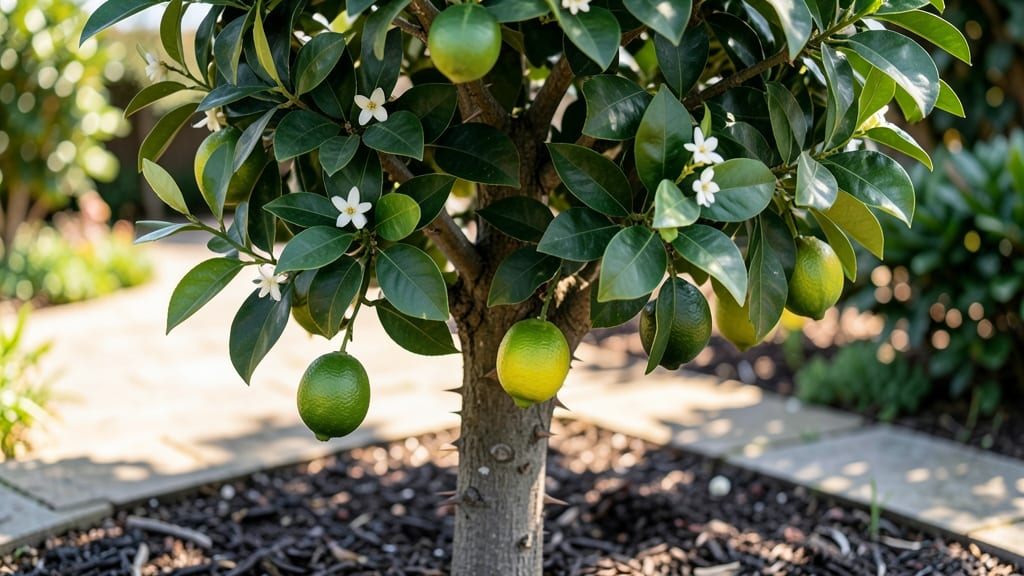
Pruning a lime tree with thorns transforms it from a tangled mess into a healthy, productive plant. ✂️ I’ve wrestled with these spiky beauties for years, and the right cuts make all the difference—whether you’re growing Mexican lime (Citrus aurantifolia) or prickly ash (Zanthoxylum alatum).
The key? Timing, tools, and a little patience to avoid turning your kitchen into a pincushion.
You’ll need sharp bypass pruners (dull blades tear bark), thick gloves, and a clear day to work. Start by removing dead or crossing branches first—they’re the easiest to spot and the most critical for airflow.
Thorny varieties like Mexican lime need light pruning in late winter to encourage fruit production, while ornamental types can take a harder trim for shape. Just remember: every cut should aim at a bud or branch collar to heal cleanly.
By summer, you’ll see the payoff: fewer thorns cluttering your path, more sunlight reaching the center of the tree, and lush, vibrant growth. The tree will reward you with glossy leaves, fragrant blossoms, and—if it’s a citrus type—tart, juicy fruit.
Plus, the right pruning reduces pest hiding spots, keeping your tree thriving year-round. Safety first: always prune away from your body and keep kids and pets clear.
This method works for both backyard lime trees and container-grown varieties, though dwarf types need less aggressive trimming. For extra safety, consider wearing long sleeves and eye protection—those thorns don’t forgive.
Once you master the technique, your lime tree will go from prickly problem to prized centerpiece. Ready to sharpen those shears?
📚 In This Guide
- What you need
- Instructions
- Tips and common mistakes
- Wrapping up and next steps
What you need
- ● Ready to give your lime tree with thorns the care it deserves? Here’s everything you’ll need to tackle the job safely and effectively—no surprises, just success! 🌿✂️
- ● Pro tip: 💡 Sterilize your tools before and after pruning to prevent spreading disease between cuts!
Step-by-step guide for pruning a thorny lime tree
Here's how I keep my thorny lime tree thriving—with cleaner branches and fewer sharp surprises.
✂️ Step 1: Gather the Right Tools for Clean Cuts
Start with sharp, sterilized pruning shears—dull blades tear wood and invite disease. I use bypass pruners for branches under ½ inch thick and a pruning saw for thicker limbs. Wipe blades with rubbing alcohol before and after to prevent spreading fungal spores. A glove with reinforced palms protects against thorns while you work.
Here's the thing—thorny lime trees like Mexican lime or sour orange respond best to cuts made just outside the branch collar. That little swollen area where the branch meets the trunk tells the tree where to heal. If you cut too close, you'll leave a wound that never seals properly.
☀️ Step 2: Prune at the Right Time for Maximum Recovery
Do most of your pruning in late winter or early spring, just as new growth begins. This is when the tree's energy shifts from dormancy to growth, so it recovers faster. Avoid heavy pruning in summer heat—the tree will struggle to heal wounds before the next season. I do light maintenance pruning in summer only to remove dead wood or water sprouts.
Watch for new shoots growing from the base—these are called "suckers" and should be removed immediately. They drain energy from your main tree. Also, trim any branches growing toward the center of the tree. These compete for light and create a tangled mess. You'll see better air circulation and sunlight penetration after just one session.
✂️ Step 3: Remove Dead, Diseased, or Crossing Branches First
Start with the obvious: dead wood (branches that snap easily or have no green leaves) and diseased branches (mushy spots, black streaks, or oozing sap). Cut these back to the branch collar using a 45-degree angle for limbs over ¼ inch thick. For smaller branches, a straight cut works fine.
Next, look for branches that cross or rub against each other. These will eventually tear open wounds. Remove the weaker of the two branches—it's usually the one growing from the lower position. I always step back occasionally to see the tree's shape. Your goal is an open center that lets sunlight reach the inner branches.
🌿 Step 4: Thin Out Overcrowded Areas for Better Fruit Production
Lime trees produce more fruit when they have good airflow. Aim to remove 20-30% of the tree's total branches during pruning. Focus on branches growing straight up ("water sprouts") and those growing inward. These compete with your main scaffold branches—the sturdy framework that supports the tree's structure.
Leave 3-5 main branches spaced evenly around the trunk. These should be sturdy and spread out like spokes on a wheel. Each main branch should have its own smaller branches growing outward. You'll see a dramatic difference in fruit yield after just one year of proper thinning.
🪴 Step 5: Shape the Tree for Safety and Aesthetics
Use your pruners to round the tree's outline rather than creating sharp angles. This helps water run off easily during rain. For trees under 10 feet tall, I keep the height manageable by trimming the topmost branches. Remember, thorny lime trees can grow aggressively—don't let them become unmanageable.
Here's where it gets fun: shape the tree to make harvesting easier. Leave lower branches if you want easy access to fruit, or remove them if you prefer a cleaner look. Just be consistent—don't create a "broomstick" shape with all branches at the top. The tree will grow unevenly and become top-heavy.
Tips & tricks for pruning thorny lime trees
These practical tips will help you trim your lime tree like a pro—keeping it healthy, fruitful, and less threatening.
Tool Selection Matters: For branches under ½ inch, bypass pruners give you the cleanest cuts. I always keep a backup pair sterilized with rubbing alcohol—swapping tools between healthy and diseased branches prevents spreading fungal infections. A small pruning saw is worth its weight in gold for thicker limbs, but make sure it's sharp enough to cut cleanly without crushing the wood.
Timing is Everything: Late winter or early spring is prime time because the tree's energy is shifting from dormancy to growth. If you must prune in summer, do it early in the morning to reduce stress on the tree. I've learned the hard way that summer pruning can invite pests—always prioritize the winter schedule unless it's an emergency removal of dead wood.
Branch Collar Awareness: That little swollen area where branches meet the trunk isn't just decoration—it's the tree's natural healing point. Cut just outside the collar, never flush with it. I mark the spot with my finger before cutting to ensure precision. This small detail makes all the difference in how quickly the wound seals and whether new growth appears at that spot.
Visual Pruning Check: Step back every few minutes to assess your work. You should see an open center with sunlight reaching all the way to the trunk. If you're struggling to visualize, take photos before and after—it's shocking how much difference proper thinning makes in just one session. This practice alone transforms a tangled mess into a well-structured tree.
Pro Tips for Lime Tree With Thorns
- These practical tips will help you trim your lime tree like a pro—keeping it healthy, fruitful, and less threatening.
- Tool Selection Matters: For branches under ½ inch, bypass pruners give you the cleanest cuts.
- Timing is Everything: Late winter or early spring is prime time because the tree's energy is shifting from dormancy to growth.
Frequently asked questions
Got questions about pruning your lime tree with thorns? You’re not alone! Here are some of the most common concerns—plus quick, practical answers to keep your tree thriving.
When is the best time to prune a lime tree with thorns?
The ideal time is late winter or early spring (before new growth starts) or right after harvest to avoid stressing the tree. Avoid heavy pruning in summer or fall, as this can expose the tree to pests or disease. For tropical lime varieties, prune lightly year-round to maintain shape.
How do I safely handle the thorns while pruning?
Wear thick gloves (like leather or heavy-duty gardening gloves) and long sleeves to protect your hands and arms. Use long-handled pruners or a pole saw for high branches. If thorns snag your clothes, consider a thorn-proof apron for extra safety.
Can I prune too much? What are the signs?
Yes! Over-pruning (cutting more than 25-30% of the foliage at once) weakens the tree, making it vulnerable to disease or poor fruit production. Signs include yellowing leaves, stunted growth, or fewer flowers/fruit. Prune gradually over 2-3 years if needed.
What if my lime tree isn’t producing fruit after pruning?
Lime trees need balanced pruning—focus on removing dead, diseased, or crossing branches while keeping the canopy open for sunlight. If fruit is still scarce, check for pests, water stress, or nutrient deficiencies (like lack of zinc or nitrogen). A light prune in early spring can encourage new growth and flowering.
Are there thornless lime tree alternatives?
Yes! Varieties like ‘Meyer lime’ or ‘Bearss lime’ have fewer thorns than wild types. For heavy thorns, consider grafted trees (like ‘Improved Meyer’), which often have milder thorn coverage. If you love the flavor but hate the pricks, these are great options!
Wrapping up and next steps
Pruning your lime tree with thorns doesn’t have to be intimidating—it’s all about timing, technique, and a little patience! 🌿 With the right tools and a clear strategy, you’ll encourage lush growth, better fruit production, and a safer space around your tree.
Remember, consistency is key, so schedule your pruning sessions and observe how your tree responds over time.
Ready to take the next step? Start small—whether it’s tackling one branch at a time or marking your first pruning zone. Before you know it, your lime tree will thrive, and you’ll be the proud gardener it deserves! Grab your tools and get pruning!