
Pruning
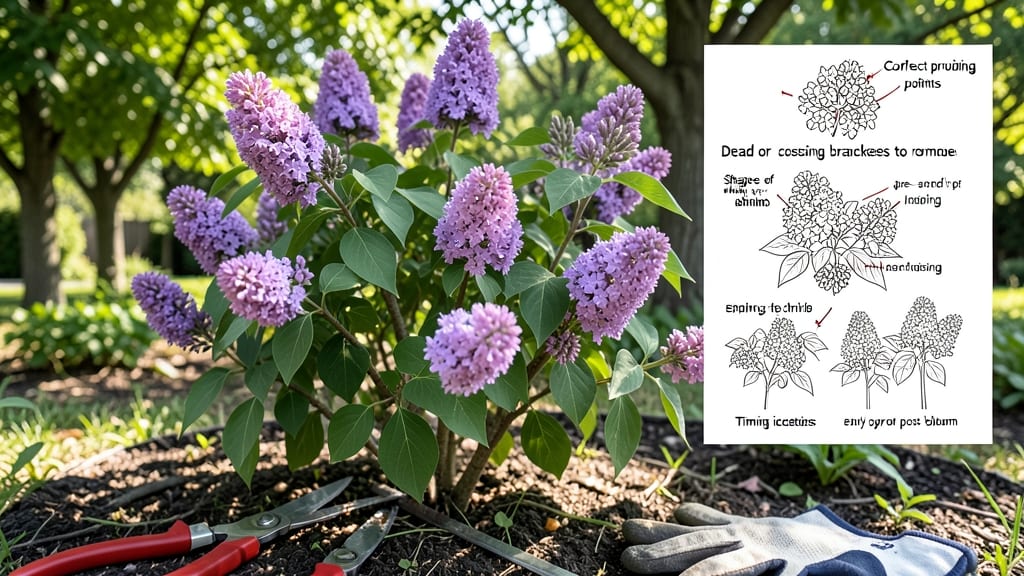
A lilac tree pruning diagram makes it clear why trimming right after blooming turns wild shrubs into showstopping garden stars. ✂️ I’ve pruned dozens of lilacs over the years, and the difference between a messy tangle and a graceful, flowering masterpiece comes down to timing, cuts, and knowing where to stop.
The best time to prune is right after flowering, when the blooms fade but before new buds form. You’ll need sharp pruners, a ladder (for taller trees), and a glove—because those suckers pack a punch.
The goal is to remove dead wood, shape the tree, and encourage fresh growth from the base. You’ll end up with lush, dense branches loaded with next year’s blooms, plus a cleaner shape that lets sunlight reach the center.
The key is cutting just above outward-facing buds—this keeps the tree open and airy, not cramped and crowded. This method works for both older established lilacs and newly planted shrubs. Once you see how dramatically pruning improves their form and flowering, you’ll never skip it again.
📚 In This Guide
- What you need
- Instructions
- Tips and common mistakes
- Wrapping up and next steps
What you need
- ● Bypass pruners – Sharp, clean pruners with a 4- to 6-inch blade for cutting small to medium branches (1/4" to 1" thick). Example: Felco F-2 or Corona Tools Classic.
- ● Loppers – For thicker branches (up to 2" in diameter). Look for bypass-style loppers with a long handle for leverage.
- ● Hand saw – A pruning saw with a curved blade for branches larger than 2" in diameter.
- ● Gloves – Heavy-duty gardening gloves to protect against thorns and rough branches.
- ● Disinfectant (70% isopropyl alcohol or bleach solution) – To sterilize tools between cuts and prevent disease spread.
- ● Rag or paper towels – For wiping down tools and branches.
- ● Ladder or step stool – If your lilac tree is taller than 6 feet (safety first!).
- ○ Pruning sealant (optional but helpful) – A tree wound sealant (like Tanglefoot Tree Wound Pruning Sealer) to coat larger cuts and reduce disease risk.
- ● Trash bags or bucket – For collecting pruned branches and debris.
- ● Marking spray or flags – To label branches you plan to cut (great for complex pruning diagrams!).
- ● Safety glasses – Protect your eyes from debris, especially when using a saw.
- ● Knee pads or a small stool – For comfort if you're working close to the ground.
- ● Notebook & pencil – To sketch your lilac tree’s structure before pruning (helps follow your diagram!).
Step-by-step guide to pruning your lilac tree for healthy growth
Here's the precise method I've used for years to keep lilacs flowering abundantly while maintaining their natural shape.
✂️ Step 1: Time Your Cuts to the Lilac's Natural Cycle
Lilacs bloom on old wood, meaning last year's growth produces this year's flowers. Prune immediately after flowering when all blooms have fully opened and dropped. This timing ensures you never cut off next year's flower buds, which form on stems from the previous season. If you prune too early, you risk removing next season's blooms before they develop.
For most varieties, this falls in late May to early June. I mark my calendar because missing this window means waiting another full year for optimal blooms. If you must prune outside this period, limit cuts to removing only dead or crossing branches—never shape the tree until after flowering.
✂️ Step 2: Remove Dead, Diseased, or Crowded Branches First
Start by cutting out any branches that are dead, diseased, or crossing—these are your priority. Use clean, sharp pruners to make 45-degree cuts just above a healthy outward-facing bud. I always work from the bottom up, removing branches that are thinner than a pencil at their base first. These small branches compete with the main structure for energy and rarely produce significant blooms.
Look for branches growing directly into the center of the tree—these create dense, unflowering centers. Cut these out completely at their base. You'll know you're doing it right when you can see light penetrating to the center of the plant after removing these branches. This airflow prevents fungal diseases that commonly plague lilacs.
✂️ Step 3: Thin Out Overcrowded Areas for Better Airflow
Next, focus on thinning the outer branches to open up the tree's center. Select branches that are one-third as thick as your thumb and cut them back to a healthy bud. I aim to remove about 20-30% of the oldest wood each year to maintain vigor. This selective thinning encourages new growth while preserving the tree's natural shape.
Watch for branches that grow at sharp angles—these are more prone to breaking in storms. Cut these back to a stronger lateral branch. You'll notice the tree's structure becomes more balanced and less top-heavy. Never remove more than one-third of the plant's total foliage in a single year, as this stresses the lilac and reduces flowering.
✂️ Step 4: Shape the Tree by Selective Pruning
For final shaping, focus on maintaining the lilac's natural vase shape. Cut back the longest branches to just above a side bud that grows outward. Avoid cutting back to stubs—this invites disease and weak growth. I like to step back frequently to check the tree's silhouette, ensuring no branches dominate the shape.
If your lilac has become too large, you can gradually reduce its size by cutting back some of the oldest branches to 12-18 inches from the ground. This rejuvenation pruning stimulates new growth from the base. Do this over 2-3 years rather than all at once to avoid shocking the plant. You'll see vigorous new shoots emerge within 2-3 weeks of proper pruning.
✂️ Step 5: Clean Up and Prepare for Next Season
After pruning, remove all cuttings and dispose of them in the trash—not your compost pile. Lilac cuttings can harbor diseases that spread to other plants. I also sterilize my pruners with rubbing alcohol between cuts to prevent transmission of bacterial or fungal infections.
Apply a 2-3 inch layer of mulch around the base of the tree, keeping it 6 inches away from the trunk. This protects the roots and retains moisture. Water deeply after pruning to help the tree recover. You'll notice fresh, green growth appearing within 3-4 weeks, signaling successful pruning.
Tips & tricks for graceful lilac tree pruning
These are the hard-won lessons that'll help you avoid common pruning mistakes and keep your lilac thriving for decades.
Timing is Everything: The late May to early June window is non-negotiable for most lilac varieties. I've seen gardeners miss this window twice and end up with sparse blooms the following year. If you absolutely must prune outside this period, stick to removing only dead or crossing branches—never attempt shaping cuts. The flower buds for next season are already forming on last year's wood, and cutting them off means no blooms until the following year.
Tool Preparation Matters: Your pruners should be as sharp as possible—dull blades crush stems instead of making clean cuts, which invites disease. I sterilize my pruners with rubbing alcohol between each cut to prevent spreading fungal spores. Also, always make cuts at a 45-degree angle just above a healthy outward-facing bud. This angle prevents water from pooling on the cut, which can rot the branch over time.
Visual Cues for Proper Pruning: When thinning branches in Step 3, look for the "one-third as thick as your thumb" rule—this ensures you're removing the right size branches for optimal airflow. After removing central branches, step back and check that light can penetrate to the center. If you can see through to the middle, you've done it right. This open center prevents fungal diseases that thrive in dense, shaded areas.
Gradual Rejuvenation Strategy: If your lilac has become overgrown, don't try to reduce its size all at once. Cutting back old branches to 12-18 inches over 2-3 years prevents shock to the plant. I've seen lilacs recover beautifully when given this gradual approach, with vigorous new shoots appearing within 2-3 weeks. The key is patience—rushing this process can actually set your tree back years in terms of flowering potential.
Pro Tips for Lilac Tree Pruning Diagram
- These are the hard-won lessons that'll help you avoid common pruning mistakes and keep your lilac thriving for decades.
- Timing is Everything: The late May to early June window is non-negotiable for most lilac varieties.
- Tool Preparation Matters: Your pruners should be as sharp as possible—dull blades crush stems instead of making clean cuts, which invites disease.
Frequently asked questions
Got questions about pruning your lilac tree? You’re not alone! Here are some of the most common concerns—and their answers—to help you prune like a pro.
When is the best time to prune a lilac tree?
The ideal time to prune lilacs is right after they finish blooming in late spring or early summer. This ensures you don’t cut off next year’s flower buds, which form after blooming. Avoid pruning in fall or winter, as it can stimulate late-season growth that may be damaged by frost. For shaping cuts, late summer (after August) is also safe.
Can I prune lilacs in the fall or winter?
Pruning lilacs in fall or winter is not recommended unless you’re dealing with dead or diseased branches. Late pruning can encourage tender new growth that won’t survive winter cold. If you must prune outside the ideal window, focus on removing only dead, damaged, or crossing branches—avoid heavy cuts. Always wait until late winter (just before buds swell) for minimal risk.
What if I accidentally prune off next year’s flower buds?
Don’t panic! Lilacs are resilient, and you won’t kill the tree by cutting back too much. However, buds for the next year’s blooms form on last year’s growth, so heavy pruning may reduce flowers temporarily. To minimize the impact, prune no more than 1/3 of the plant’s height and avoid cutting back to old wood. With patience, your lilac will bounce back with vibrant blooms in 1-2 years.
How often should I prune my lilac tree?
Lilacs thrive with annual light pruning to maintain shape and health. Focus on:
- Removing dead/diseased wood (year-round).
- Thinning out crowded branches (after blooming).
- Light shaping cuts (late summer/fall).
What do I do if my lilac isn’t blooming after pruning?
If your lilac skips blooming, check these common causes:
- Pruned at the wrong time (e.g., late winter/early spring).
- Over-pruned (cutting back to old wood).
- Nutrient deficiency (add compost or balanced fertilizer in early spring).
- Age (older lilacs may bloom less; rejuvenate with gradual pruning).
Wrapping up and next steps
Pruning your lilac tree doesn’t have to be intimidating—with the right seasonal cuts and a handy lilac tree pruning diagram, you’ll encourage lush blooms and strong growth in no time! 🌿 Whether you’re shaping young branches or rejuvenating an older shrub, consistency is key.
Now that you’re armed with tools, timing tips, and techniques, grab those shears and get pruning!
Ready to transform your lilac into a showstopper? Start by marking your next pruning session on the calendar—spring or early summer are your best friends for long-term success. Happy gardening! 🌸