
Planting
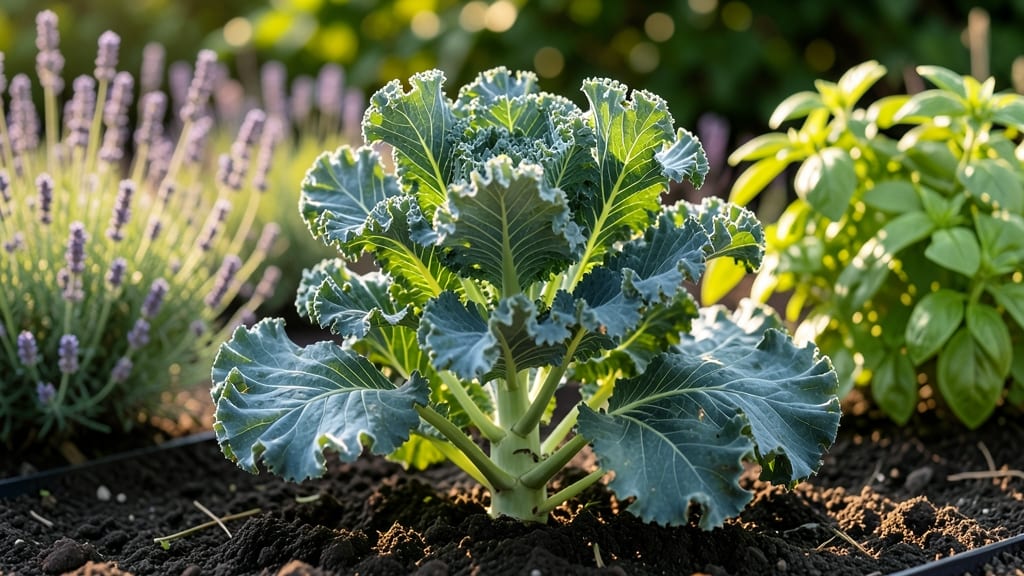
Growing a kale tree plant isn’t about magic—it’s about training kale to grow vertically like a bushy shrub. 🌿 I’ve turned my backyard into a lush, harvestable green wall by using simple espalier techniques that work for both dwarf and heirloom varieties.
The secret? Pruning just enough to encourage upward growth while keeping the leaves accessible.
You’ll need sturdy stakes or a trellis (3-4 feet tall), well-draining soil, and a sunny spot. Start with seedlings or young plants, then gently tie stems to the support as they grow.
Water consistently—about 1 inch per week—and mulch to retain moisture. Within 6-8 weeks, you’ll see dense, bushy growth climbing upward, ready for continuous harvesting.
The payoff? Year-round harvests with minimal pruning. Cut outer leaves as needed, and the plant keeps producing. My kale tree stays productive through winter with a little row cover, and pests have a harder time reaching the upper leaves.
Works for containers too—just use a smaller trellis. Here’s how to get started without the guesswork!
📚 In This Guide
- What you need
- Instructions
- Tips and common mistakes
- Wrapping up and next steps
What you need
- ● Kale Tree Plant: 1 healthy, disease-free kale tree (available as a grafted plant or bare-root cutting from specialty nurseries).
- ● Well-Draining Soil: 5-10 gallons of high-quality potting mix or garden soil (amend with compost for nutrient-rich soil).
- ● Container or Garden Plot: Container Option: 1 large pot (15+ gallons) with drainage holes.
- ● Garden Option: A sunny, sheltered spot with loose, fertile soil (6’ x 6’ area recommended).
- ● Fertilizer: Balanced organic fertilizer (10-10-10 or compost tea) to promote lush growth.
- ● Watering Can or Hose: With a gentle spray nozzle for hydration.
- ● Pruning Shears: Sharp, sterilized shears for minimal trimming.
- ● Mulch: Straw or wood chips to retain moisture and suppress weeds.
- ● Trellis or Cage: For vertical support if growing in a container.
- ● Shade Cloth: Lightweight fabric to protect young plants from harsh sun.
- ● pH Test Kit: To ensure soil pH is between 6.0–7.0 (ideal for kale).
- ● Slow-Release Granules: For sustained nutrient delivery.
Step-by-step instructions for growing a kale tree
Here's how to create a productive, low-maintenance kale tree that keeps giving all year.
🌱 Step 1: Select and Prepare a Healthy Kale Start
Choose a young kale plant with 5-7 mature leaves and a sturdy stem—this ensures it can support the tree structure. I look for plants with vibrant green leaves and no yellowing, which signals disease or nutrient stress. Remove any lower leaves that would block airflow and encourage rot.
Dig a hole twice as wide as the root ball but only as deep. The top of the root ball should sit 1 inch above ground level—this prevents waterlogging while allowing the plant to establish strong roots. Gently loosen the roots if they're circling in the pot, then place the plant in the hole and backfill with native soil.
🪴 Step 2: Build the Support Structure
Use a 5-foot bamboo stake or sturdy wooden dowel as the central trunk. Drive it 6 inches deep into the soil next to the plant, positioning it on the side where the prevailing wind comes from. This prevents the tree from leaning later.
Tie the kale stem to the stake with soft plant ties (not wire or twine, which can cut into the stem). Start at the base and loop upward every 6-8 inches, creating a spiral pattern. The goal is to train the main stem vertically while encouraging side branches to form naturally.
☀️ Step 3: Train Branches for a Tree-Like Shape
When the plant reaches 12-18 inches tall, pinch off the top set of leaves to encourage lateral branching. This is where the "tree" shape begins—you'll see new shoots emerge from the leaf axils. Let these side branches grow to 6-8 inches long before pinching again to promote even growth.
Once the branches reach your desired height (typically 3-4 feet), stop pinching. The plant will focus energy on leaf production rather than vertical growth. Water deeply after pruning to reduce stress—aim for 1 inch of water per week, delivered at the base to keep leaves dry.
💧 Step 4: Maintain Year-Round Growth
Kale trees thrive in full sun to partial shade, but they'll produce more tender leaves in cooler weather. In hot climates, provide afternoon shade to prevent bolting. I mulch with 2-3 inches of organic mulch around the base to retain moisture and regulate soil temperature.
Harvest leaves from the outer edges first, cutting 1-2 inches above a leaf node to encourage regrowth. Never take more than 1/3 of the plant at once—this ensures continuous production. In winter, reduce watering slightly but keep the soil moist; kale tastes sweeter after a light frost.
✂️ Step 5: Prune for Health and Shape
Twice a year (early spring and late summer), give your kale tree a light pruning. Remove any yellow or damaged leaves first—they drain energy from the plant. Then, trim back any branches that grow toward the center of the tree to improve airflow and sunlight penetration.
If a branch becomes too leggy, cut it back to a leaf node. The plant will respond by sending out new growth from that point. Avoid heavy pruning—kale trees recover slowly from aggressive cuts. After pruning, fertilize lightly with a balanced organic fertilizer to support new growth.
Tips & tricks for perfect kale tree planting
Transforming kale into a tree-like structure takes patience and precision—here's how to avoid common pitfalls while maximizing your harvest.
Plant Selection: Look for kale plants with 5-7 mature leaves that show no signs of stress. The stem should be sturdy enough to support the tree structure, but not woody or brittle. I've found that plants with slightly larger leaves (around 4-5 inches wide) handle the training process better than smaller ones. Avoid plants with yellowing leaves or holes—these indicate pest damage or disease that could weaken your tree's foundation.
Support Structure Stability: The 5-foot bamboo stake should be positioned on the side where prevailing winds come from—this prevents the tree from leaning as it grows. I recommend driving the stake 6 inches deep and at a slight angle (about 15 degrees) away from the plant. This creates a natural counterbalance. Use soft plant ties (not wire) and create a spiral pattern every 6-8 inches—this distributes pressure evenly and prevents stem damage as the plant thickens.
Pruning Technique: When pinching off the top set of leaves at 12-18 inches, use clean, sharp scissors to make a precise cut just above a leaf node. This encourages branching while minimizing stress. I've noticed that pinching at the third leaf node from the top often produces the most robust side branches. After pruning, always water deeply—this helps the plant recover faster and prevents shock. The goal is to create a balanced canopy where all branches receive sunlight.
Year-Round Maintenance: The 2-3 inches of organic mulch should extend out to the drip line of your tree's branches, not just around the base. This helps regulate soil temperature and retain moisture during hot summer months. In winter, reduce watering slightly but never let the soil dry out completely—kale's natural sweetness develops during cold snaps. I've found that a light frost actually improves flavor, so don't be afraid to let nature do its work when temperatures drop.
Pro Tips for Kale Tree Plant
- Transforming kale into a tree-like structure takes patience and precision—here's how to avoid common pitfalls while maximizing your harvest.
- Plant Selection: Look for kale plants with 5-7 mature leaves that show no signs of stress.
- Support Structure Stability: The 5-foot bamboo stake should be positioned on the side where prevailing winds come from—this prevents the tree from leaning as it grows.
Frequently asked questions
Got questions about growing a kale tree plant? You’re not alone!
Here are answers to the most common queries to help you grow lush, productive kale year-round with ease.
How long does it take for a kale tree plant to start producing harvestable leaves?
A kale tree plant typically begins producing edible leaves 4–6 weeks after germination if grown from seed. If you’re transplanting a young seedling, expect harvestable growth in 3–4 weeks. With proper care—like consistent watering and sunlight—you’ll see continuous harvests for months!
Can I grow a kale tree plant in containers, or does it need a garden bed?
Kale tree plants thrive in containers as long as the pot is at least 12–18 inches deep with drainage holes. Use a high-quality potting mix rich in organic matter. Just ensure the container gets 6+ hours of sunlight daily and replant every 1–2 years to refresh nutrients.
What’s the best way to prune a kale tree plant for maximum yield?
Pruning is minimal—just harvest outer leaves first to encourage bushier growth. Avoid cutting into the center stem. For a "tree" shape, let the plant grow tall (up to 3–4 feet) and prune lower leaves to create a tiered look. Never remove more than ⅓ of the plant at once to avoid stress.
How do I keep my kale tree plant from bolting (going to seed) too early?
Bolting happens when kale senses heat or stress. To delay it:
- Plant in partial shade during hot months.
- Use shade cloth (30–50%) if temps exceed 80°F (27°C).
- Water deeply but consistently to avoid drought stress.
- Choose bolt-resistant varieties like ‘Winterbor’ or ‘Red Russian.’
With these tips, your kale tree can stay productive for 6–9 months!
What can I do if my kale tree plant gets pests like aphids or cabbage worms?
Start with preventive measures:
- Spray leaves with neem oil or insecticidal soap weekly.
- Introduce beneficial insects like ladybugs or lacewings.
- Use row covers to block butterflies (cabbage worm hosts).
For severe infestations, handpick pests or apply Bt (Bacillus thuringiensis), a natural bacteria-based solution. Healthy plants are less susceptible!
Wrapping up and next steps
Growing a kale tree plant is a game-changer for home gardeners—it delivers year-round harvests with minimal effort! Whether you're a seasoned gardener or just starting, this low-maintenance plant offers nutrient-packed greens without the hassle of frequent pruning. 🌱
Ready to take the next step? Start small—plant your kale tree in a sunny spot, keep it watered, and watch it thrive. Soon, you’ll be enjoying fresh, homegrown greens all year long! 🌿