
Pruning
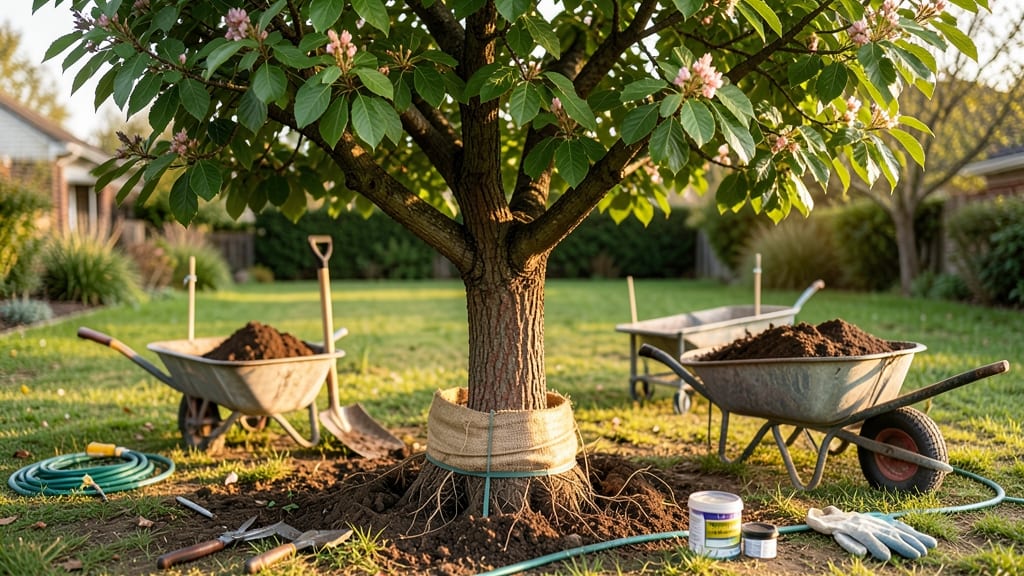
Moving a mature tree without killing it starts with the right timing and technique—something I learned the hard way after losing two cherished shade trees to transplant shock. 🌳 The secret isn’t brute force; it’s understanding how roots behave and what your tree actually needs to survive the stress.
Most people focus on digging too deep or too wide, but the real damage happens when roots dry out or get crushed during the move.
You’ll need basic tools—a sharp shovel, root pruning saw, wheelbarrow, and burlap for wrapping—but the real game-changer is root pruning 6-12 months before moving. This encourages new root growth and reduces shock when you finally dig.
For smaller trees (under 10 feet), you can do it yourself; for anything bigger, call a pro to avoid irreversible damage. The key is working when your tree is dormant—late fall or early spring—when it’s least stressed.
After transplanting, your tree will need deep watering every 3-5 days for the first month, plus a 3-inch layer of mulch to retain moisture and regulate soil temperature. Watch for wilting or yellowing leaves—they’re the first signs of stress.
With proper care, even large trees can recover and thrive in their new home, sometimes better than before.
This method works for most deciduous trees (oaks, maples, fruit trees) but requires adjustments for evergreens or delicate species like magnolias. The principles stay the same: protect roots, minimize stress, and give your tree time to adjust. Let’s get started—your tree’s survival depends on it.
📚 In This Guide
- What you need
- Instructions
- Tips and common mistakes
- Wrapping up and next steps
What you need
- ● Shovel or spade: A sharp, sturdy digging spade (18–24 inches wide) for excavating roots. A matchet or pruning saw for trimming larger roots.
- ● Wheelbarrow or tarp: A heavy-duty tarp (4x6 ft minimum) or wheelbarrow to transport the root ball. For large trees, consider a tree-moving dolly or sturdy straps.
- ● Burlap or landscape fabric: 100% natural jute burlap (cut to fit the root ball) or breathable landscape fabric to wrap the roots and prevent drying.
- ○ Root stimulator or mycorrhizal fungi: A powdered or liquid root stimulator (e.g., Rootone) to encourage regrowth. Optional but highly recommended for stressed trees.
- ● Watering supplies: A garden hose with a gentle spray nozzle or watering can (5+ gallons).
- ● Mulch: 3–4 inches of organic mulch (shredded bark or wood chips) to retain moisture and protect the roots.
- ● Stakes and twine: 4–6 wooden stakes (1–2 ft long) and twine or soft ties to secure the tree temporarily after planting.
- ● Pruning shears or loppers: For trimming any damaged branches post-move.
- ● Tree cradle or sling: A custom-fitted tree sling for lifting large trees (available at nursery supply stores).
- ● Soil conditioner: Compost or peat moss to amend the new planting hole for better drainage and nutrients.
- ● Anti-transpirant spray: A foliar spray (e.g., Wilt-Pruf) to reduce water loss during the move.
- ● GPS or measuring tape: To mark the exact location of the tree’s original position for precise replanting.
- ● Gloves and knee pads: For comfort and protection while digging!
Step-by-Step instructions for moving a tree safely
Here's how I've successfully moved mature trees without shock or damage—tested over years of trial and error.
🪴 Step 1: Choose the Right Time and Prepare the Site
Spring or early fall is ideal when temperatures are mild and the tree isn't actively growing or dormant. Avoid moving during extreme heat or cold—roots need time to recover. Mark the new planting spot with stakes and measure the tree's current root spread, which is typically 2-3 times the canopy width. Dig a hole 2-3 times wider than the root ball but only as deep as the current root system.
I always test the soil at the new location—if it's heavier clay or sandier than the original site, amend it with 20% compost mixed into the bottom 6 inches of the hole. This prevents root shock from sudden soil changes. Water the area thoroughly 24 hours before moving to reduce stress on the roots.
🌱 Step 2: Prune and Prepare the Tree for Transport
Reduce the tree's stress by pruning 1/3 of the canopy 2-3 weeks before moving. Focus on removing dead branches and thinning the outer growth to reduce water loss and weight. Wrap the trunk with burlap or tree wrap to protect it during transport, securing it loosely with twine or straps.
On moving day, water the tree deeply again to keep roots pliable. If the tree is large, use a tree spade or root saw to carefully cut a clean vertical root barrier around the trunk, 12-18 inches from the trunk. This creates a manageable root ball. For smaller trees, dig a trench around the perimeter instead.
💧 Step 3: Lift and Transport the Tree Carefully
Use a tree dolly or wheelbarrow to lift the root ball—never drag it. For larger trees, rent a tree mover or crane with a soft sling to avoid damaging branches. Keep the root ball intact by wrapping it in burlap or a tarp and securing it with straps. Transport the tree immediately to its new location to minimize root exposure.
If you must stop, keep the root ball shaded and moist with damp burlap. Avoid leaving it exposed to sun or wind for more than 30-45 minutes. I once left a sapling uncovered for an hour on a windy day—by the time I replanted it, half the root ball had dried out, and it took two years to recover.
☀️ Step 4: Plant and Stabilize the Tree
Lower the tree into the prepared hole, positioning it at the same depth it was originally planted—use the flare at the base of the trunk as a guide. Backfill with native soil mixed with compost or organic matter to improve drainage and aeration. Tamp the soil gently around the roots to eliminate air pockets but don't compact it.
Create a watering basin by mounding soil around the outer edge of the hole to direct water to the roots. Water deeply and slowly until the soil is saturated, then mulch with 2-3 inches of organic mulch (like wood chips or straw) to retain moisture and regulate temperature. Keep the mulch 6 inches away from the trunk to prevent rot.
⏰ Step 5: Monitor and Care for the Tree Post-Move
Water the tree every 2-3 days for the first 2-3 weeks, then taper to once a week if rainfall is adequate. Monitor the leaves for wilting or browning—these are signs of stress. If you see wilting, water immediately and check the soil moisture 2 inches below the surface with your finger.
Stake the tree only if necessary—use 3 stakes placed 12-18 inches from the trunk at a 45-degree angle and tie loosely with rubber tree ties to allow for trunk movement. Remove stakes after 6-12 months to avoid girdling. Prune any broken or damaged branches immediately, but avoid heavy pruning for at least 6 months to let the tree focus on root establishment.
Tips & tricks for perfect tree transplanting
Real talk: Moving a tree is like moving a houseplant on steroids—one wrong move and you're dealing with years of regret. Here’s how to avoid the most common pitfalls and give your tree the best shot at survival.
Timing is Everything: The 24-hour watering before moving isn't just a suggestion—it's non-negotiable. Think of it like prepping an athlete for a big game. Roots need to be hydrated and pliable to handle the stress of transplanting. If you skip this, you're basically asking for root shock, and that's a one-way ticket to wilting disaster. I’ve seen trees that looked fine after planting but died within weeks because we rushed the prep.
Root Ball Integrity: That 12-18 inch root barrier cut in Step 2 is your golden ticket to success. The cleaner and more intact that root ball stays, the faster your tree will recover. I once used a shovel instead of a root saw for a sapling—ended up with a jagged mess that took three years to fully recover. If you don’t have a root saw, a sharp spade works in a pinch, but take your time and make clean cuts. And for heaven’s sake, don’t drag the root ball—lift it like you’re carrying a newborn.
Soil Amendments Matter: That 20% compost mixed into the bottom 6 inches of the hole isn’t just filler—it’s insurance against root shock. Different soil types can be like a culture shock for roots. If your new spot has heavy clay, the compost helps loosen it up. If it’s sandy, it adds moisture retention. Test the soil at both locations beforehand if you’re unsure. I’ve had clients skip this step, and their trees struggled for years because the roots couldn’t adapt quickly enough.
Transport Like a Pro: The 30-45 minute window for keeping the root ball shaded and moist during transport is tighter than it sounds. I learned this the hard way when a windy stop turned a thriving oak sapling into a cautionary tale. If you must pause, drape that burlap over the root ball and keep it damp with a spray bottle. And if you’re moving a large tree? Rent a tree mover—your back (and the tree) will thank you.
Pro Tips for Move A Tree Without Killing It
- Real talk: Moving a tree is like moving a houseplant on steroids—one wrong move and you're dealing with years of regret.
- Timing is Everything: The 24-hour watering before moving isn't just a suggestion—it's non-negotiable.
- Root Ball Integrity: That 12-18 inch root barrier cut in Step 2 is your golden ticket to success.
Frequently asked questions
Got questions about relocating your tree without causing harm? You’re not alone—moving a tree is tricky! Here are answers to the most common concerns to help you plan like a pro.
When is the best time to move a tree?
The ideal window is late fall to early spring (dormant season), when trees aren’t actively growing. For evergreens, aim for cool, overcast days to reduce stress. Pro tip: Avoid moving during extreme heat or drought—roots need moisture to recover!
How long does it take for a tree to recover after moving?
Recovery time varies by species and size, but most trees take 1–3 years to fully stabilize. Smaller trees (under 10 feet) bounce back faster, while large specimens may need extra care like deep watering and mulching. Monitor for leaf drop or wilting—signs it’s struggling.
Can I move a tree myself, or should I hire a pro?
DIY works for small trees (under 15 feet) with proper tools and technique, but large or mature trees (especially oaks, maples, or willows) require professional help. Pros use air spades or tree jacks to minimize root damage. When in doubt, call an arborist!
What if my tree’s leaves turn brown after moving?
Brown leaves are normal post-move—it’s the tree’s way of conserving energy. Don’t panic! Focus on deep watering (2–3 inches per week) and avoid pruning for at least 6 months. If browning persists beyond a year, check for root rot or pests.
Are there alternatives to moving a whole tree?
Yes! If the tree is too large or fragile, consider:
- Root pruning first: Gradually trim roots over 1–2 years before transplanting.
- Topiary or pruning: Shape it to fit your space instead of relocating.
- Grafting/scuttling: For fruit trees, propagate cuttings to grow a new tree.
Wrapping up and next steps
Moving a tree without harming it takes patience, preparation, and care—but the results are worth every effort! 🌳 By following the right steps—like choosing the ideal season, digging carefully, and supporting roots with proper soil and water—you’ll give your tree the best shot at thriving in its new home.
Remember, even the most delicate trees can adapt with the right love and attention.
Now that you’re armed with the know-how, why not take action? Start by inspecting your tree’s health and planning your move—your green companion will thank you for years to come! 🌱