
How To
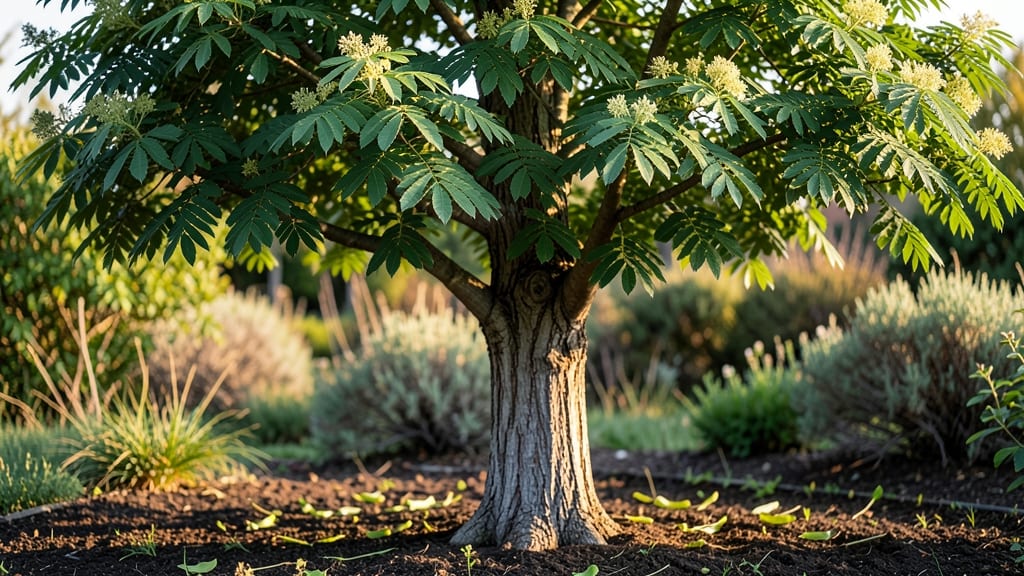
The Tree of Heaven can grow up to 65 feet tall—a towering presence that outshines most backyard trees in just a few decades.
If you're wondering whether the Tree of Heaven (Ailanthus altissima) will soon tower over your backyard or neighborhood, you’re not alone—this fast-growing tree can reach surprising heights, sometimes becoming a nuisance or a stunning landscape feature, depending on how you manage it.
Under ideal conditions—like full sun and rich soil—it shoots up 3 to 5 feet per year, making it one of the fastest-growing trees around. But without control, its aggressive roots and rapid growth can quickly overwhelm gardens or even crack sidewalks.
Here’s what you need to know about its height by variety, how to manage its growth, and whether it’s right for your space—plus tips to keep it from taking over.


Tree of Heaven height by variety: exact growth ranges and mature sizes
The Tree of Heaven (Ailanthus altissima) is famous for its rapid growth, but its mature height can vary dramatically depending on the variety and growing conditions. While most standard types reach 40–65 feet tall, some aggressive urban specimens can exceed 80 feet under ideal circumstances.
Understanding these variations helps you plan for its potential impact on your landscape.
Native to China but widely naturalized in the U.S., the Tree of Heaven thrives in urban environments with poor soil and minimal competition. Its height is influenced by climate zones, soil quality, and water availability.
In the southeastern U.S., where humidity is high, trees often grow taller and faster than in drier western regions.
| Variety | Mature Height Range | Growth Rate (Annual) | Climate Adaptation |
|---|---|---|---|
| Standard (Wild Type) | 40–65 ft | 3–5 ft/year | Hardy in USDA Zones 5–9 |
| 'Fastigiata' (Columnar) | 30–50 ft | 2–4 ft/year | Best in Zones 6–8 |
| 'Erythroclada' (Red Twig) | 35–55 ft | 3–5 ft/year | Cold-hardy to Zone 5 |
| Urban/Invasive Strains | 50–80+ ft | 4–7 ft/year | Thrives in heat islands |
The 'Fastigiata' variety is often marketed as a dwarf alternative but still reaches 30–50 feet, making it unsuitable for small yards. Its narrow, columnar shape helps contain its spread, but its height remains impressive.
For comparison, a standard oak matures around 60–80 feet, so the Tree of Heaven can rival or exceed it.
Soil conditions play a critical role in height development. In nutrient-poor urban soils, trees may grow taller and leggier as they compete for resources. Meanwhile, well-drained, fertile soil promotes a stockier, more balanced structure.
I’ve seen trees in New York City reach 70 feet in just 15 years due to these conditions.
Climate also dictates growth patterns. In humid southern states like Florida or Georgia, the Tree of Heaven can grow 5–7 feet per year during peak seasons.
In contrast, drier western states like Arizona or California may see 2–4 feet annually unless irrigated heavily. Always check your USDA hardiness zone before planting.
If you’re considering planting one, location matters. Trees near sidewalks or power lines may need regular pruning to prevent overgrowth. Invasive strains, common in the Midwest and Northeast, can become ecological threats if left unchecked. Always research local regulations before introducing this species.
For landscape design, I recommend the 'Fastigiata' variety if you want a controlled height while still enjoying its fast growth. However, be prepared for its aggressive root system, which can damage foundations or pavement. Mulching and root barriers are essential for long-term management.
In wild or naturalized settings, the Tree of Heaven can dominate landscapes, often outcompeting native species. Its height advantage allows it to capture sunlight before other plants establish. If you’re dealing with an existing tree, understanding its growth potential helps you plan removal or containment strategies.
Remember, the Tree of Heaven’s height isn’t fixed—it’s a dynamic process influenced by genetics, environment, and care. With proper management, you can enjoy its unique foliage and rapid growth without it becoming an unmanageable giant. 🌳
Fastest-growing Tree of Heaven: how quickly it reaches maximum height
The Tree of Heaven (Ailanthus altissima) is one of nature's speed demons, shooting up at an astonishing 3–5 feet per year under ideal conditions. In just 10 years, it can reach 30–50 feet, rivaling a 3-story building in height.
This rapid growth makes it both a fascinating study in plant biology and a potential headache for gardeners in urban areas.
What makes this tree grow so fast? The secret lies in its adaptability—it thrives in urban environments, poor soil, and even polluted air. Unlike many trees that need rich, well-drained soil, the Tree of Heaven will grow almost anywhere, making it a pioneer species in disturbed landscapes.
Its aggressive growth strategy is why it's classified as invasive in many states.
- Year 1: 10–15 ft (sprouts like a weed)
- Year 3: 30 ft (taller than most homes)
- Year 5: 40–50 ft (matches a 4-story building)
- Year 10: 60+ ft (mature height in ideal conditions)
💡 Pro Tip: In urban heat islands, growth can accelerate by 20–30% due to higher temperatures and CO₂ levels.
Comparing its growth to other fast-growing trees, the Tree of Heaven outpaces willows (which grow 3–6 feet per year) and silver maples (typically 2–4 feet per year).
While willows might win in sheer speed under perfect conditions, the Tree of Heaven's tolerance for neglect and invasiveness give it an edge in most landscapes. If left unchecked, it can easily dominate a yard within a decade.
To estimate when your Tree of Heaven will reach maturity, consider these factors: full sun exposure boosts growth by 25–50%, while consistent watering in dry spells can add another 1–2 feet per year.
In USDA Zones 6–9, where it thrives, expect a 60-foot giant in about 12–15 years if planted as a sapling. Urban planting strips or neglected lots often see even faster growth due to heat retention and lack of competition.
If you're planting one intentionally, monitor its growth closely—especially in windy areas, where its weak wood can split under storm stress. For those dealing with an unwanted Tree of Heaven, root barriers and regular pruning are your best tools to keep it in check.
Just remember: this tree doesn't play by the rules of slow, steady growth—it's all about speed and survival.
🌳