
How To
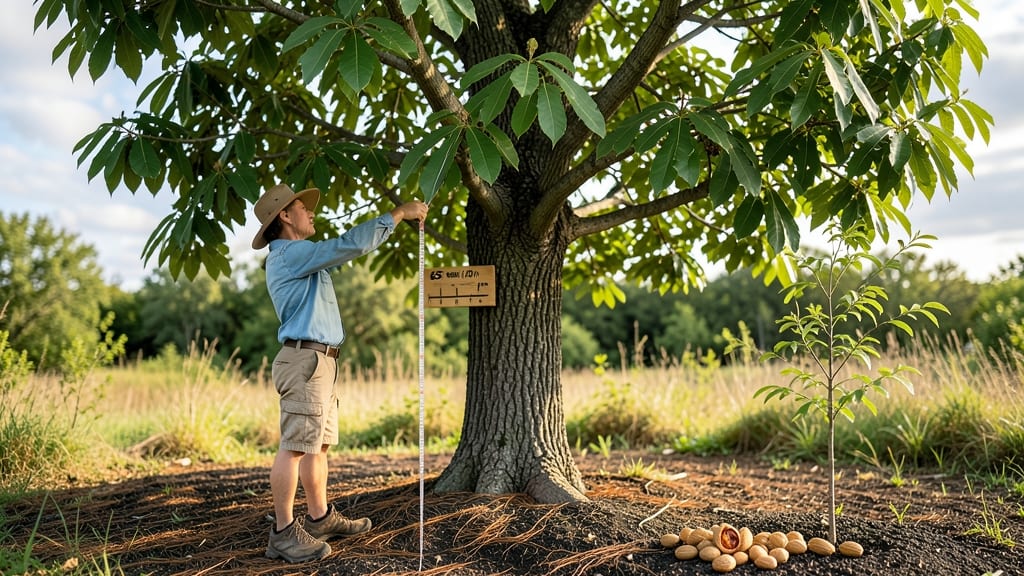
A pecan tree can grow up to 100 feet tall—taller than a three-story building—if given the right conditions, but that doesn’t mean your yard has to become a forest to enjoy them.
Dreaming of fresh pecans but worried your yard isn’t big enough? Pecan trees can reach towering heights, but with the right variety and pruning techniques, you can grow them successfully even in small spaces.
Most pecan trees need at least 60 feet of space to thrive, but some varieties stay smaller, making them perfect for suburban yards. The key is choosing the right type and learning how to manage their growth early on.
In this guide, I’ll break down the height ranges of popular pecan varieties, share pruning tips to keep them in check, and even suggest alternatives for tiny yards. Let’s make room for pecans—without sacrificing your lawn!


Pecan tree height by variety: choosing compact options for small yards
If you love the idea of harvesting your own pecans but have limited space, don’t assume a pecan tree is off the table. While standard varieties can tower over 100 feet, there are compact pecan varieties and pruning strategies that make growing pecans feasible in small yards.
The key lies in selecting the right variety and understanding its mature height and growth rate.
Most pecan trees fall into the tall tree category, reaching heights between 60-100 feet at maturity. However, some semi-dwarf varieties and careful pruning can keep them manageable. For example, the 'Pawnee' variety typically stays between 30-40 feet, making it a great choice for smaller properties.
Always check the specific mature height of the variety you’re considering before planting.
Growth rates also vary significantly. Young pecan trees grow about 2-4 feet per year in ideal conditions, but this slows as they mature. Proper spacing is crucial—standard varieties need 100+ feet between trees, while dwarf or semi-dwarf types can thrive with 30-50 feet of space.
This makes a big difference in small yards where every inch counts.
Here’s a quick comparison of popular pecan tree varieties and their mature heights to help you decide which fits your space best:
When choosing a pecan tree variety, consider not just height but also your climate zone and soil type. For example, 'Pawnee' thrives in USDA Zones 6-9 and adapts well to well-draining soil.
If your yard is on the smaller side, prioritize varieties like 'Wichita' or 'Schley', which offer a balance between compact size and nut production.
Another factor to consider is the tree’s canopy spread. Even compact varieties can have wide canopies, so ensure your chosen spot has enough horizontal space too. For instance, a 'Pawnee' tree might only reach 30-40 feet tall but can spread 25-35 feet wide.
Always measure your space before planting to avoid future crowding issues.
For gardeners with truly limited space, consider planting pecan trees in large containers. While this isn’t ideal for long-term growth, it’s a temporary solution that can work for dwarf varieties like 'Pawnee' in a 200-gallon container.
Just remember that container-grown trees will need regular pruning and fertile soil to thrive. Use a high-quality potting mix with good drainage and fertilize every 4-6 weeks during the growing season.
Pruning plays a crucial role in managing a pecan tree’s height. Even standard varieties can be kept smaller with
How to prune a pecan tree for height control: step-by-step guide
Managing the height of a pecan tree is essential for small yards, where 100-foot giants can quickly become problematic. The key is strategic pruning that maintains tree health while controlling vertical growth. Start by understanding that pecan trees grow 6-12 feet per year when young, so early intervention is critical.
With the right techniques, you can keep your tree at a manageable 15-20 feet while still enjoying a bountiful harvest.
Before grabbing your pruners, gather the right tools: sharp bypass pruners for small branches, a pruning saw for thicker limbs, and sterilized cuts to prevent disease. Safety gear like gloves and eye protection is a must when working with large branches.
Timing is everything—prune during late winter or early spring (before buds break) to avoid stressing the tree during active growth phases.
Step-by-Step Pruning Guide
- Step 1: Identify target branches for removal—focus on vertical growth and crossing limbs that create hazards.
- Step 2: Make clean cuts just outside the branch collar (the swollen area where the branch meets the trunk) at a 45-degree angle.
- Step 3: Remove up to 25% of foliage in one session to avoid over-stressing the tree. Prioritize suckers and water sprouts for height control.
- Step 4: Seal larger cuts (>2 inches) with pruning sealant to prevent disease entry, but skip sealant on small cuts—they heal faster without it.
- Step 5: Thin the canopy by removing every other branch to improve air circulation and sunlight penetration, which boosts nut production.
- Step 6: Monitor the tree’s growth response after pruning. If it regrows too aggressively, repeat pruning in 6-12 months to maintain height.
One common mistake is over-pruning, which weakens the tree and reduces nut yields. Aim to remove only what’s necessary for height control while preserving the tree’s natural shape. For example, if your goal is a 15-foot tree, focus on trimming the top third of vertical branches annually.
Always step back after pruning to visualize the tree’s new silhouette—this helps ensure balanced growth.
After pruning, give your pecan tree extra care: deep watering and a balanced fertilizer (like 10-10-10) will support recovery. Mulch the base with organic matter to retain moisture and protect roots. Remember, pecan trees thrive with patience—consistent pruning over years will keep them manageable while maximizing your harvest.
For best results, prune your pecan tree annually in late winter (just before buds swell) to shape it for the growing season. This timing minimizes stress and aligns with the tree’s natural dormant phase.
Combine this with seasonal maintenance (removing dead wood in summer) to keep your tree healthy and compact. With these steps, you’ll enjoy fresh pecans without sacrificing yard space!