
How To
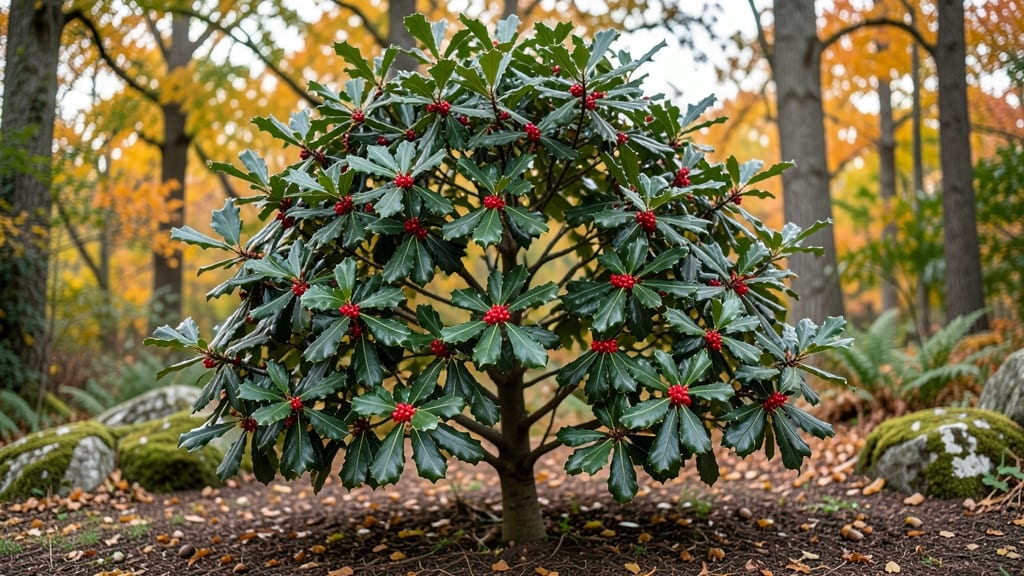
How tall does a holly tree grow? The answer varies wildly—from just 8 feet in dwarf varieties to a towering 50 feet in mature American holly 🌳 — and that difference can completely reshape your yard plan.
Picture this: a 25-foot holly casting shade over your patio one year, then suddenly dwarfed by a 40-foot neighbor that blocks your view. That’s why knowing the exact species matters before you dig that hole.
Some holly trees grow 3 feet per year in ideal conditions, while others creep along at just 6 inches annually. Soil, sunlight, and pruning all play a role in whether your holly stays a shrub or stretches toward the sky.
Below, I’ll break down the height ranges by species, how to control growth in tight spaces, and which compact varieties work perfectly for small yards—so you can pick the right holly without regrets.


Holly tree height by species: mature sizes and growth rates
Choosing the right holly tree for your landscape starts with understanding their mature heights. Some varieties grow into towering specimens, while others remain manageable for small yards.
The American holly (Ilex opaca) typically reaches 20-30 feet, but others like the English holly (Ilex aquifolium) can soar to 40-50 feet. Your space and vision will determine which species fits best.
Growth rates also vary—some holly trees grow 1-2 feet per year, while others may take decades to reach their full height. For example, the Chinese holly (Ilex cornuta) grows faster than the Inkberry holly (Ilex glabra), which is slower but more compact.
Let’s break down the key varieties and their growth habits to help you plan.
| Variety | Mature Height | Growth Rate (ft/year) | Best For |
|---|---|---|---|
| American Holly (Ilex opaca) | 20-30 ft | 1-2 ft | Large yards, privacy screens |
| English Holly (Ilex aquifolium) | 40-50 ft | 1-1.5 ft | Large estates, formal gardens |
| Chinese Holly (Ilex cornuta) | 15-25 ft | 2-3 ft | Medium yards, hedges |
| Inkberry Holly (Ilex glabra) | 10-15 ft | 0.5-1 ft | Small yards, wetlands |
| Dwarf Holly (Ilex crenata 'Green Lustre') | 8-12 ft | 0.3-0.5 ft | Containers, small gardens |
The American holly is a classic choice for landscapes with space, often used as a privacy screen or focal point. Its spiny leaves and bright red berries add year-round interest, but its slow growth means it may take decades to reach full height.
If you’re working with limited space, consider the Chinese holly, which grows faster and stays more compact.
For small yards or containers, dwarf varieties like 'Green Lustre' are ideal. These holly trees max out at 8-12 feet and grow just 0.3-0.5 feet per year, making them perfect for urban gardens or patio plantings.
Their slow growth also means less maintenance over time, which is a plus for busy gardeners.
Climate and soil conditions play a big role in how tall a holly tree grows.
In warmer climates (Zones 7-9), holly trees often grow taller and faster due to longer growing seasons. Well-draining, slightly acidic soil (pH 5.0-6.0) is ideal, but many holly varieties are adaptable to clay or sandy soils.
If your soil is alkaline, amend it with peat moss or sulfur to encourage healthier growth.
Pruning can also influence height. Regular pruning in late winter or early spring helps control size and shape. For example, if you want to keep an American holly under 15 feet, prune the topmost branches each year to redirect growth.
Just avoid heavy pruning in summer or fall, as this can stress the tree and slow its growth.
If you’re unsure which holly fits your space, start with a smaller variety like the Inkberry holly or 'Blue Prince' (a dwarf English holly). These stay under 10-15 feet and are great for hedges or foundation plantings.
For a bold statement, the English holly is unmatched, but it’s best suited for large properties or park-like settings.
Remember, holly trees are long-lived—some can live for 100+ years—so choosing the right variety now will save you headaches later. Whether you’re aiming for a towering specimen or a compact accent plant, there’s a holly tree that’s perfect for your vision.
🌳
How to control holly tree height: pruning tips for different varieties
Pruning holly trees is essential for maintaining their desired height and shape, especially when space is limited. Unlike many trees, hollies respond well to structured pruning but require precision to avoid damaging their iconic spiny leaves and berries.
The key is timing—prune at the right season and use the correct techniques to encourage healthy growth without stunting the tree.
For taller varieties like the American holly (Ilex opaca), which can reach 25-50 feet, pruning helps manage their towering stature. Smaller varieties like 'Dwarf Burford' (Ilex aquifolium 'Burfordii') stay under 10 feet but still benefit from occasional shaping.
I’ve found that late winter or early spring is the best time to prune, just before new growth begins.
The mature height of a holly tree varies wildly by species:
- American Holly: 25-50 ft (tallest variety)
- English Holly: 15-30 ft (moderate height)
- Dwarf Holly: 6-12 ft (ideal for small yards)
Start by removing dead or diseased branches first—these can harbor pests and diseases. Use clean, sharp pruners or a pruning saw for thicker branches to make clean cuts just above a bud or branch collar.
Avoid cutting into old wood, as hollies may not regenerate leaves or berries from these areas.
To reduce overall height, focus on pruning the uppermost branches first. Cut back to a lateral branch or bud that faces outward to maintain an open canopy. For shaping smaller hollies, like 'Blue Princess', I recommend a light trim every 1-2 years to encourage bushier growth.
Always step back and assess the tree’s shape after each cut.
Never remove more than 25% of the canopy in a single pruning session—this can stress the tree and reduce its ability to produce berries or new foliage.
If you’re dealing with a very tall holly, consider topping (cutting the main stem) as a last resort, but be prepared for a less attractive, bushier growth pattern afterward.
After pruning, apply a balanced fertilizer to help the tree recover and promote new growth. Water deeply to keep the soil moist, especially during hot, dry periods.
With consistent care, your holly will maintain its desired height while keeping its signature holly charm—whether it’s a towering specimen or a compact shrub. ✂️🌿