
Watering
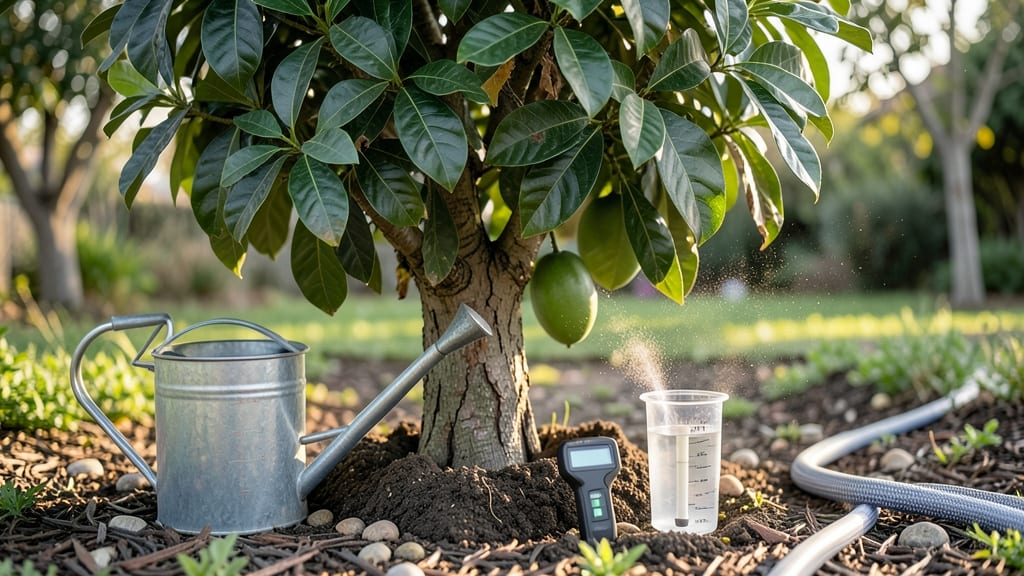
A mango tree needs deep, consistent watering—about 15-30 gallons per session for young trees—to thrive in tropical climates like yours.
Struggling to keep your 🥭 lush and productive? Overwatering or underwatering can turn your tropical dream into a sad, drooping reality—here’s the exact watering schedule your mango tree actually needs to thrive year-round.
Young trees demand frequent deep watering, while mature ones prefer bi-weekly soaks—but seasonal shifts (like monsoon rains or scorching summers) change everything. I’ll break down how climate, soil, and age affect your watering routine so you never guess again.
You’ll also learn to spot overwatering vs. underwatering signs, the best times to water (hint: not at noon), and how mulch or drip irrigation can save you hours of work. Let’s get that tree drinking just right.
Mango tree watering requirements by season: a detailed breakdown
Mango trees thrive in tropical climates but demand precise watering to avoid stress or disease. Unlike drought-tolerant plants, they need consistent moisture—especially during their first 3 years—while mature trees develop deeper roots to access water. The key? Understanding how seasonal shifts and climate zones change their needs.
In USDA zones 10-11, monsoon seasons can drown roots if drainage fails, while dry summers may require daily watering for young trees. Let’s break it down by season, including soil tests and root depth tips to keep your tree hydrated without waterlogging.
Start by testing your soil’s moisture level before watering. Stick your finger 4-6 inches deep—if it feels dry, it’s time to water. For young mango trees (under 3 years), this means 15-30 gallons per watering every 5-7 days in summer.
Mature trees, with roots extending 3-5 feet deep, need 50+ gallons weekly during peak heat but can stretch to bi-weekly waterings in cooler months. The trick? Water deeply and infrequently to encourage root growth toward moisture, rather than shallow, frequent sprinkles that promote surface roots.
During the monsoon season, heavy rains can saturate soil, suffocating roots. If your area gets 10+ inches of rain weekly, reduce watering to every 10 days and check for yellowing leaves or moldy bark, signs of overwatering.
In dry seasons, young trees may need daily watering if temperatures exceed 90°F. Use a moisture meter for accuracy—aim for 60-70% soil moisture at 6 inches deep.
For mature trees, focus on deep watering every 2 weeks, as their extensive root systems can access water from lower soil layers.
Flowering season (February-April) is critical—inconsistent watering can cause flower drop or poor fruit set. Increase frequency to every 5-7 days and apply 20-40 gallons per watering to support nutrient uptake. Avoid wetting flowers directly, as this can attract pests.
In winter, reduce watering to monthly to prevent root rot, but keep soil slightly moist (40-50% moisture). Mulch with 3-4 inches of organic matter (e.g., wood chips) to retain heat and moisture around roots.
Climate zones play a huge role. In USDA zone 10, where summers are hot but dry, young mango trees may need daily watering in peak heat, while mature trees thrive on bi-weekly deep soaks.
In zone 9b, where winters dip below 30°F, protect roots with extra mulch and reduce watering to every 4-6 weeks. Always water early in the morning (before 9 AM
Signs your mango tree is overwatered or underwatered (and how to fix it)
Your mango tree communicates distress through leaves, branches, and soil—if you know what to watch for. Overwatering and underwatering both cause yellowing leaves, but the fixes couldn’t be more different. The key? Checking the soil moisture and root health before symptoms appear.
For example, mushy roots scream "too wet," while crispy roots mean "not enough." Let’s decode these signals so your tree thrives instead of wilts.
First, yellowing leaves are the most common red flag, but their location tells the story. Overwatered trees show yellowing from the bottom up, while underwatered trees turn yellow from the top down.
Pair that with moldy soil or fungal growth (like root rot), and you’ve got a waterlogged disaster. On the flip side, dry, brittle leaves and wilting branches mean your tree is begging for hydration. Let’s break down the fixes for each scenario.
How Much Water Does a Mango Tree Need?
✅ DO This
Deep watering (15-30 gallons for young trees, 50+ for mature) once weekly in dry seasons.
✅ DO This
Water early morning (4-8 AM) to reduce evaporation and fungal risk.
✅ DO This
Use well-draining soil (sandy loam or amended with compost) to prevent waterlogging.
✅ DO This
Adjust frequency by season: weekly in summer, bi-weekly in fall, monthly in winter.
❌ DON'T Do This
Shallow watering (surface-level) that never reaches root depth (12-18 inches).
❌ DON'T Do This
Water at night (promotes fungal diseases like root rot).
❌ DON'T Do This
Ignore soil moisture tests—stick your finger 2 inches deep; if dry, water.
❌ DON'T Do This
Overwater young trees—they’re more sensitive to waterlogged roots.
If your mango tree shows signs of overwatering, like yellowing leaves with mushy roots or moldy soil, act fast. Stop watering immediately and let the soil dry out for 3-5 days. Then, repot if needed into well-draining soil and prune any rotted roots.
For underwatered trees, deep water until it drains from the bottom of the pot (or 12 inches deep for ground-planted trees). Add mulch to retain moisture and water early morning for 2-3 weeks to recover.
Young mango trees (under 3 years) need more frequent watering—every 5-7 days in summer—while mature trees can handle bi-weekly deep soaks. During flowering season (spring), reduce water slightly to encourage fruit set, but never let the soil dry out completely.
Pro tip: Use a moisture meter to avoid guesswork—40-60% moisture is ideal for mango roots.
One common mistake is assuming wilting leaves always mean underwatering. In reality, overwatered trees wilt too—check the soil first! If it smells sour or feels soggy, you’ve overdone it.
For underwatered trees, look for crispy leaf edges and drooping branches. Fix it by watering deeply and adding organic mulch to lock in moisture.
Remember: Consistency is key. Mango trees hate moisture extremes, whether too wet or too dry. Stick to a seasonal watering schedule, monitor the soil, and adjust as needed.
With the right balance, your mango tree will reward you with lush foliage and sweet fruit for years to come. 🌱