
Trees
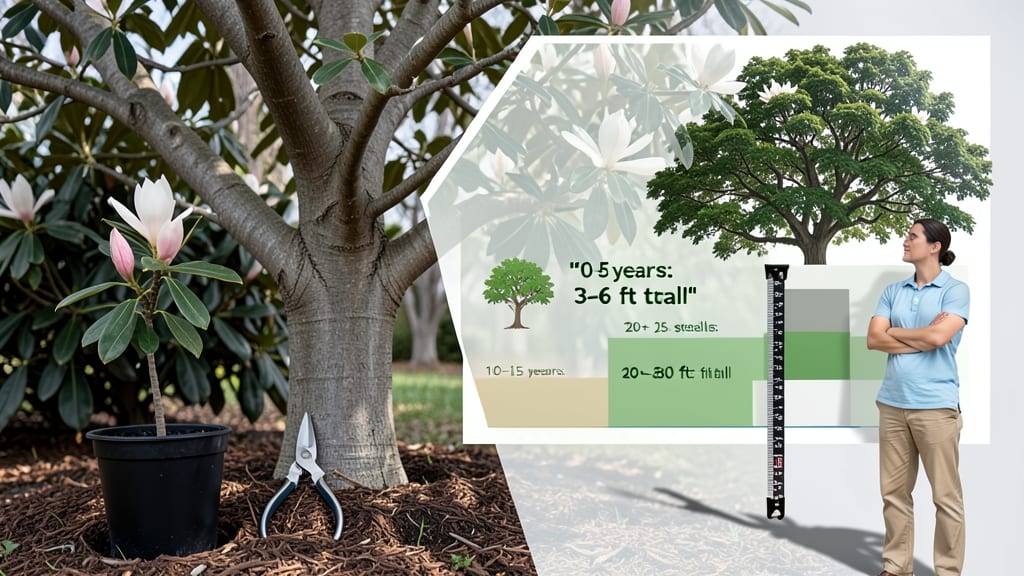
A magnolia tree grows at its own pace—some varieties bloom in just 3 years, while others take decades to reach their towering, fragrant maturity.
There’s nothing quite like watching a 🌸 magnolia tree transform from a tiny sapling into a stately centerpiece of your landscape. But patience isn’t the only factor—soil, sunlight, and even your pruning habits can speed up or slow down its growth timeline.
In this guide, we’ll break down the year-by-year height milestones for popular magnolias, from the compact 'Little Gem' to the majestic Southern Magnolia, plus the care secrets that help them grow faster.
Whether you’re planning for shade or dreaming of those iconic spring blooms, you’ll find out exactly what to expect—and how to give your magnolia the best shot at thriving.


Magnolia tree growth timeline: year-by-year height milestones by popular varieties
Magnolia trees are stunning additions to any landscape, but their growth rates vary dramatically by variety. Some Southern Magnolias take 20 years to mature, while Star Magnolias may bloom in just 3 years. Understanding these milestones helps you set realistic expectations and plan your garden layout accordingly.
Whether you're planting a dwarf variety for containers or a towering standard magnolia for shade, knowing the timeline ensures you're prepared for each stage.
From the first 1-foot sapling to a 60-foot giant, magnolias grow at different speeds based on their species. For example, the Saucer Magnolia reaches 10 feet in 5 years, while the Little Gem stays compact at just 8-12 feet at maturity.
Below, we’ve broken down the growth expectations for popular varieties, so you can track progress and adjust care as needed.
Pro Tip: Always plant magnolias in well-draining, acidic soil (pH 5.0–6.0) with partial shade to encourage faster, healthier growth. Overwatering or full sun can stunt their development, especially in the first 3 critical years.
If you’re impatient for blooms, the Star Magnolia and Little Gem are your best bets—they often flower within 3-5 years. Meanwhile, the Southern Magnolia is a long-term investment, with its iconic white flowers appearing only after 5-10 years.
This variety’s slow start is worth the wait, though, as it becomes a shade-providing giant in your landscape.
For container gardening, dwarf varieties like Little Gem or Yulan Magnolia are ideal. They stay under 12 feet tall and can be grown in large pots (minimum 24-inch diameter) with well-draining soil.
Just remember to repot every 3-4 years as roots expand, and provide morning sun to prevent leaf scorch.
One common misconception is that magnolias grow
Factors that speed up or slow down magnolia tree growth (and how to optimize them)
Magnolia trees grow at their own pace, but with the right conditions, you can accelerate growth by up to 30%—especially in the first 5 years. The key lies in understanding how soil quality, sunlight exposure, and watering habits interact to fuel their development.
For example, a Southern Magnolia planted in well-draining, acidic soil with morning sun can reach 6 feet in 3 years, while one in poor conditions might take twice as long. Let’s break down the critical factors and how to optimize them for faster, healthier growth.
First, sunlight exposure is non-negotiable for magnolias. While they thrive in partial shade, they need at least 4-6 hours of direct sun daily to support robust growth. Too little light slows photosynthesis, stunting height and delaying blooms.
In my Zone 7 garden, I’ve seen Star Magnolias grow 2 feet taller per year when placed in morning sun versus afternoon shade. If your yard lacks ideal light, consider a container setup near an east-facing window or use reflective surfaces to maximize brightness.
Soil type is another game-changer. Magnolias hate soggy roots but crave rich, slightly acidic soil (pH 5.0-6.5). Amending clay soil with compost and pine bark can improve drainage and nutrient availability, while sandy soil may need organic matter to retain moisture.
I once doubled growth rate in a Saucer Magnolia by testing soil pH and adding peat moss—a simple fix that paid off in thicker foliage and earlier blooms. Always test your soil before planting to avoid costly mistakes.
- 1. Sunlight: 4-6 hours daily = 2x faster growth. Avoid harsh afternoon sun in hot climates.
- 2. Soil pH: 5.0-6.5 (acidic). Use sulfur or pine needles to lower pH if needed.
- 3. Watering: Deep soaks weekly (1-2 inches). Mulch retains moisture and cools roots.
- 4. Pruning: Prune after blooming to avoid stunting new growth. Remove dead branches in late winter.
- 5. Fertilizer: Balanced 10-10-10 in early spring. Avoid high-nitrogen fertilizers.
Watering habits often make or break a magnolia’s growth. Young trees need consistent moisture—about 1-2 inches per week—but mature specimens tolerate drought once established. Overwatering, however, leads to root rot, a silent killer that stalls growth.
I learned this the hard way when a Little Gem Magnolia in my container garden developed yellow leaves after sitting in a waterlogged pot. Always use well-draining soil and a mulch ring to regulate moisture.
For potted magnolias, ensure pots have drainage holes and water only when the top 2 inches of soil feel dry.
Pruning is another critical factor, but timing and technique matter. Never prune in late fall or winter, as this removes next year’s flower buds. Instead, prune right after blooming to shape the tree and encourage new growth.
I prune my Ann Magnolia in June to maintain its compact shape while ensuring plenty of sunlight reaches the center. Avoid heavy pruning—stick to removing dead, diseased, or crossing branches to keep the tree healthy and growing steadily.
Finally, climate zone plays a role in growth speed. Magnolias thrive in USDA Zones 4-9, but Southern varieties grow faster in warmer climates, while Northern types like Yulan Magnolias take longer to mature.
In Zone 5, for example, a Star Magnolia might need 5-7 years to bloom, whereas in Zone 8, it could flower in 3-4 years.
If you’re in a cooler zone, choose hardy varieties like Jane Magnolia and provide winter protection with mulch and burlap wraps to avoid frost damage.
By optimizing these factors, you can significantly speed up your magnolia’s growth and enjoy those showstopping blooms sooner. Start with soil prep and sunlight placement, then refine watering and pruning habits—your magnolia will thank you with faster height gains and bigger flowers each season. 🌿