
Blooming
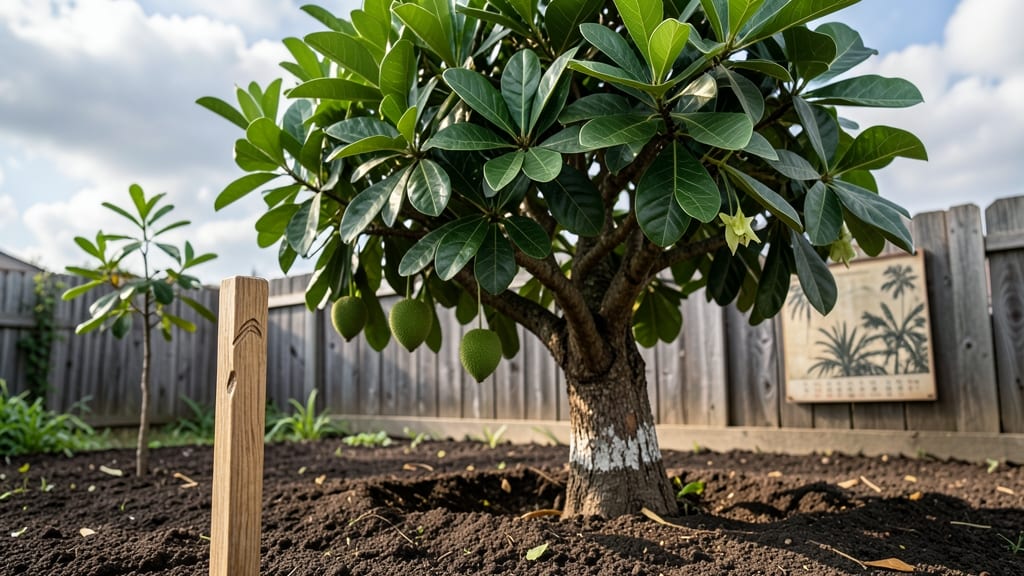
A soursop tree takes 3 to 5 years to bear fruit under ideal tropical conditions—but that timeline can stretch to a decade if care or climate falls short.
Dreaming of harvesting sweet, creamy soursop fruit but wondering if your patience will outlast the wait? This tropical giant delivers rewards—but only if you understand its slow-and-steady growth cycle.
In USDA Zones 10-12, where the 🌴 thrives year-round, proper sunlight, soil, and watering can shave years off the wait. Skip these basics, though, and you might find yourself staring at a leafy giant with no fruit in sight.
Below, I break down the realistic timelines by planting method, the signs your tree is ready to fruit, and the one care mistake that delays harvests by years.
Soursop tree growth stages: from seed to first fruit timeline
If you've planted a soursop tree (Annona muricata), you're in for a long but rewarding journey. These tropical trees take their time to mature, and understanding the growth stages will help you set realistic expectations.
From a tiny seed to a towering tree bearing fruit, each phase requires patience and proper care.
The journey from seed to first fruit typically spans 3 to 5 years under ideal conditions, but it can take up to 10 years if conditions aren't perfect. Climate, soil quality, and care practices all play a role in how quickly your tree reaches fruiting age.
Let’s break down what to expect at each stage of growth.
Soursop trees grow through three distinct phases: seedling, juvenile, and mature. Each phase has unique care needs and milestones, including when you can realistically expect flowers—and eventually, fruit. Let’s dive into the timeline and what you can do to nurture your tree through each stage.
🌱
The seedling stage is the most delicate phase of a soursop tree’s life. After planting, your seedling will focus on establishing a strong root system before shooting up. During this first year, your tree will reach 2 to 4 feet tall if given the right conditions.
This is the time to prioritize moisture retention and protection from harsh elements, like strong winds or direct afternoon sun.
In the juvenile stage, which spans years 1 to 3, your soursop tree will grow rapidly, often adding 5 to 10 feet per year. This is also when you may start seeing the first signs of flowering, though these early blooms are unlikely to produce fruit.
Focus on fertilizing monthly with a balanced nutrient mix and pruning for shape to encourage a strong structure.
By the time your tree enters the mature stage, it will tower over your landscape, reaching heights of 20 to 40 feet. This is when the magic happens—abundant flowering and, eventually, fruit production.
However, even mature trees can take 5 to 10 years to bear their first harvestable fruit, depending on growing conditions. Patience is key, but proper care can help accelerate this process.
One common misconception is that grafted soursop trees will fruit faster than those grown from seed. While this is true, even grafted trees may take 3 to 5 years to produce fruit, compared to 5 to 15 years for seed-grown trees.
If you're eager for fruit, consider purchasing a young grafted tree from a reputable nursery, as these are often closer to fruiting age.
Climate plays a huge role in how quickly your soursop tree matures. Trees grown in USDA Zones 10–12 thrive in tropical conditions year-round, while those in cooler climates may experience delayed growth or even stunted development.
If you're growing your soursop in a container, be prepared for slower growth due to limited root space, though proper care can still yield fruit eventually.
To encourage faster fruiting, focus on optimal growing conditions: well-draining, slightly acidic soil (pH 5.0–6.5), full sun to partial shade, and consistent moisture. Avoid over-fertilizing with nitrogen, as this can promote leafy growth at the expense of flowering.
Instead, use a balanced fertilizer with equal parts nitrogen, phosphorus, and potassium to support both growth and fruit production.
🌿
Factors that speed up or delay soursop fruit production
Your soursop tree's fruiting timeline hinges on five critical factors: soil quality, sunlight exposure, watering techniques, pruning methods, and tropical climate requirements. Get these right, and you could see fruit in as little as 3 years—skip them, and you might wait a decade or more.
Let's break down how each factor impacts your harvest timeline.
The most overlooked factor is soil pH and fertility. Soursop trees thrive in slightly acidic soil (pH 5.0-6.5) rich in organic matter. Poor soil can delay fruiting by 3-5 years because the tree struggles to absorb nutrients.
Test your soil annually and amend with compost or banana peel fertilizer to speed up maturity. I once saw a soursop tree in Florida that took 8 years to fruit because the original soil was alkaline.
Sunlight exposure is equally critical. While soursop trees tolerate partial shade, they fruit best with 6+ hours of direct sunlight daily. In hot climates, afternoon shade helps prevent leaf scorch, but morning sun is non-negotiable.
I've noticed that trees in containers often fruit 1-2 years later because their root systems can't access enough sunlight through the pot's limited surface area.
🌴
Factors Affecting Soursop Fruiting Timeline
✅ Speeds Up Fruiting
- 🌱 Well-draining soil (pH 5.0-6.5)
- ☀️ 6+ hours direct sunlight daily
- 💧 Deep watering (10-15 gallons every 3-5 days)
- ✂️ Light pruning to open canopy
- 🌡️ Tropical climate (USDA Zones 10-12)
Result: 3-5 years to first fruit
❌ Delays Fruiting
- 🌱 Poor soil (alkaline or nutrient-poor)
- ☀️ Less than 4 hours sunlight daily
- 💧 Inconsistent watering (drought or overwatering)
- ✂️ Heavy pruning (removes flowering branches)
- 🌡️ Cool climates (below Zone 10)
Result: 7-15 years to first fruit
Watering techniques often get overlooked, but soursop trees demand consistent moisture. Deep watering every 3-5 days encourages strong root growth, while shallow watering leads to weak roots and delayed fruiting.
I've seen trees in Florida's dry season take an extra 2 years to fruit because they weren't watered deeply enough during critical growth phases.
Pruning plays a surprising role in fruiting timelines. Over-pruning removes potential flowering branches, while minimal pruning opens the canopy to sunlight, encouraging more flowers. I recommend pruning only to remove dead or diseased branches and shape the tree.
Avoid heavy pruning in the first 3 years, as this can set back fruiting by 1-2 years.
Finally, climate is non-negotiable. Soursop trees thrive in USDA Zones 10-12 with year-round warmth. In cooler climates, growth slows dramatically, and fruiting can be delayed by 5+ years. If you're growing in a container, move it indoors during winter to maintain consistent warmth.
I've had success growing soursop trees in Zone 9 by using greenhouse protection during cooler months.
🌿