
Pruning
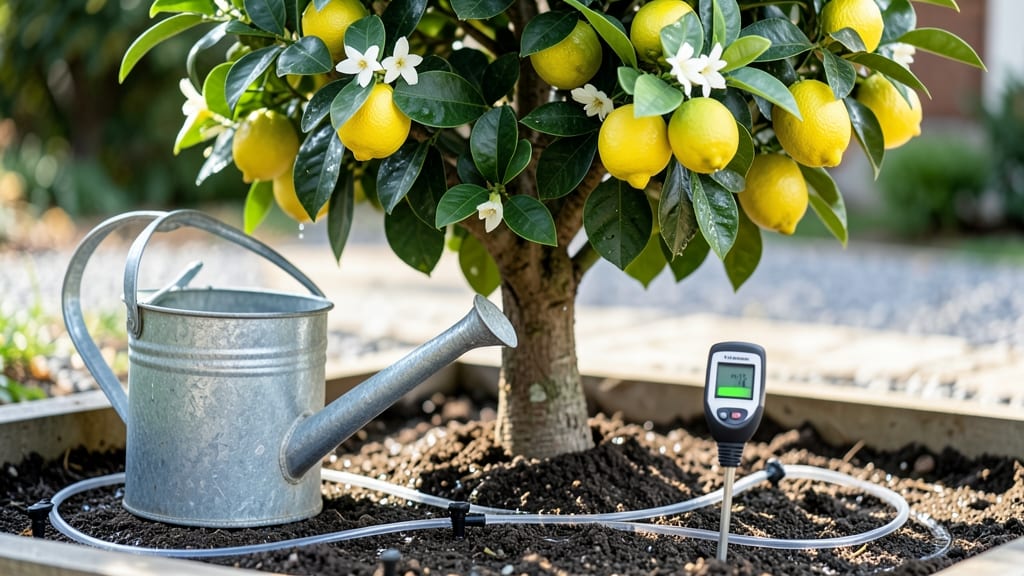
Proper citrus tree irrigation is the key to bigger fruit and fewer headaches—whether you’re watering by hand or setting up a system.
Picture this: your 🌱 citrus trees are thriving, but you’re still guessing if they’re getting too much or too little water. The truth? Overwatering chokes roots, while underwatering stresses the tree, and both cut your harvest. The right method—drip, flood, or a mix—can change everything.
Drip systems deliver water slowly right at the roots, reducing waste and disease, while flood methods might work for large orchards but can drown young trees.
I’ll break down when each makes sense, how to spot the signs of trouble, and how to adjust for your climate—because a drought-prone summer demands a different approach than a rainy spring.
By the end, you’ll know exactly how to water your citrus for sweeter fruit, fewer pests, and a system that saves you time. Let’s get started.
Drip irrigation for citrus trees: how it boosts water efficiency and fruit quality
If you've ever watched water run off your citrus tree's soil after a hose session, you've witnessed a missed opportunity. Drip irrigation delivers water directly to the roots where it's needed most, transforming your citrus harvest with sweeter fruit and healthier trees.
This method isn't just about saving water—it's a game-changer for nutrient absorption and disease prevention in your citrus grove.
The secret lies in how drip systems mimic natural rainfall patterns, keeping soil consistently moist without oversaturating the surface. Unlike overhead sprinklers that waste water through evaporation and fungal exposure, drip irrigation targets the root zone with precision.
For citrus trees, this means fewer leaf diseases and more energy directed toward fruit production instead of stress recovery.
Let's compare how drip irrigation stacks up against traditional methods for citrus trees, focusing on key metrics that directly impact your harvest's quality and quantity.
| Feature | Drip Irrigation | Flood Irrigation |
|---|---|---|
| Water Efficiency | 90%+ retained | 40-60% lost |
| Root Health | Deep root growth | Surface root stress |
| Disease Risk | Low (dry foliage) | High (wet leaves) |
| Fruit Quality | Sweeter, higher yield | Lower sugar content |
| Nutrient Uptake | Maximized absorption | Uneven distribution |
| Pest Control | Reduces soil pests | Attracts pests |
| Cost Over Time | Higher upfront, lower long-term | Lower upfront, higher long-term |
One of the most compelling benefits of drip irrigation for citrus trees is its ability to maintain consistent soil moisture. Citrus trees thrive when their roots receive water at the same rate they consume it, preventing both drought stress and waterlogging.
With drip systems, you can set up automated timers to deliver water every 2-3 days during peak growing seasons, ensuring your trees never experience the extremes that lead to fruit drop or bitter-tasting citrus.
The precision of drip irrigation also means you can integrate fertilizers directly into the water stream, giving your citrus trees a steady diet of nutrients without the risk of leaf burn from overhead applications.
This targeted approach leads to healthier foliage and larger fruit, as the tree's energy isn't wasted on recovering from nutrient deficiencies or overwatering.
Another advantage is the reduction of soil-borne diseases like root rot, which can devastate citrus trees when soil remains too wet. Drip irrigation keeps the foliage dry, creating an environment that's less hospitable to fungal pathogens.
This is particularly valuable in humid climates where citrus trees are prone to leaf spot diseases and citrus canker.
For home gardeners, drip irrigation systems are surprisingly easy to set up and customize. You can adjust the flow rate to match your specific citrus variety's needs—lemon trees might need slightly more frequent watering than orange trees during hot summers.
The flexibility allows you to fine-tune your approach as your trees mature and their water requirements change.
What's more, drip irrigation systems reduce water waste by up to 60% compared to traditional methods. In drought-prone regions where water conservation is critical, this method becomes not just beneficial but essential for maintaining your citrus grove's health without depleting local water resources.
If you're considering making the switch to drip irrigation, start with a small section of your citrus grove to test the system. Monitor your trees' response to the new watering method, paying attention to leaf color, fruit size, and overall vigor.
You'll likely notice improvements within just a few weeks as your citrus trees adapt to this more efficient watering approach.
Remember, the key to successful drip irrigation lies in proper setup and maintenance. Regularly check your emitters for clogs, adjust the system as your trees grow, and consider adding a rain sensor to prevent overwatering during wet periods.
With these practices, you'll be well on your way to enjoying a bountiful harvest of juicy, flavorful citrus fruit year after year.
Flood irrigation methods: when and why citrus growers still use them
Flood irrigation remains a staple in many citrus orchards, especially in regions with clay-heavy soils or large-scale operations. This method involves flooding entire fields to saturate the root zone, a technique that’s been used for decades.
While it may seem outdated next to modern drip irrigation, flood systems still offer unique advantages for specific growing conditions.
One reason growers cling to flood irrigation is its cost-effectiveness for large acreages. The initial setup is minimal—just a water source, channels, and a way to control flow. This makes it ideal for commercial citrus farms where labor and infrastructure costs must stay low.
Additionally, clay soils naturally retain moisture, reducing the need for frequent watering once the field is flooded.
However, the simplicity of flood irrigation comes with trade-offs. Uneven water distribution can leave some roots dry while others sit in standing water, stressing the tree. Overwatering also increases the risk of root rot and fungal diseases like citrus greening, which thrive in waterlogged conditions.
These risks make flood irrigation a gamble unless carefully managed.
⚠️ WARNING: Flood Irrigation Risks for Citrus Trees ⚠️
For growers who can’t switch to drip systems, a hybrid approach often works best. For example, using flood irrigation during the establishment phase of young citrus trees—when roots are shallow—then transitioning to drip as the tree matures.
This balances the benefits of both methods while minimizing risks. Some orchards also use surge irrigation, a modified flood technique that delivers water in short bursts to reduce waste.
If you’re managing a small backyard citrus grove, flood irrigation is rarely the best choice. Instead, focus on soil moisture sensors and targeted drip systems to give your trees the precise hydration they need.
For large-scale operations, however, flood irrigation can still be a viable option—if you’re willing to accept its limitations and invest in soil testing to monitor moisture levels closely.
Ultimately, the right irrigation method depends on your orchard size, soil type, and water availability. While flood irrigation may not be the most efficient choice, understanding its pros and cons helps you make an informed decision that protects both your trees and your water resources. 🌱💧