
Watering
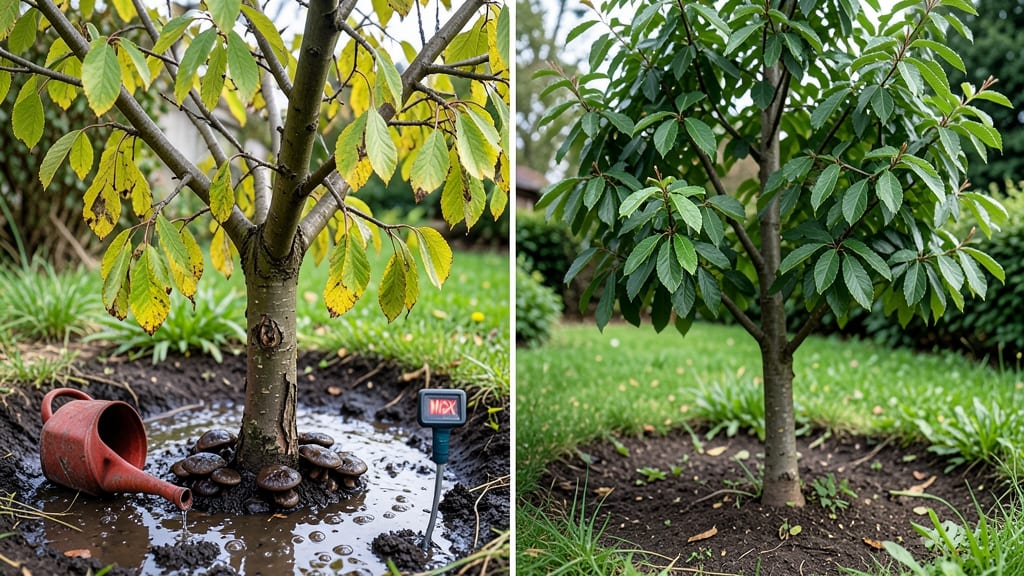
Your cherry tree’s drooping leaves and spongy roots aren’t just wilting—they’re screaming for help after showing clear cherry tree overwatering signs. 🌱 Overwatering turns lush canopies into sad, yellowing messes within weeks, and the damage often starts below ground where you can’t see it.
I’ve watched three cherry trees suffer this fate, and the key to saving yours is catching the signs early, before the roots rot beyond repair.
Look for leaves that stay wilted even when the soil feels damp, or worse, mushrooms sprouting at the base—those are the first red flags. The bark might peel or ooze sap, and new growth stalls completely.
Worst of all? The roots turn black and mushy when you gently scrape away the topsoil. These aren’t just cosmetic issues; they’re life-threatening, and once root rot sets in, recovery is a long shot.
Here’s the good news: fixing it starts with cutting back on watering—completely—and improving drainage. Let the top 2-3 inches of soil dry out before watering again, and if your tree’s in a heavy clay spot, amend the soil with compost or sand.
Prune any dead branches immediately, but don’t overdo it—you’re trying to save energy, not shock the tree further.
With consistent adjustments, most trees bounce back within 6-8 weeks, though severe cases may take a full season. The real secret? Monitoring soil moisture with your finger—if it’s still wet after 48 hours, you’re overdoing it.
Trust me, your tree will thank you with fresh green leaves by next spring.
Root Causes Of Overwatering
Overwatering your cherry tree isn’t just a gardening mistake—it’s a complex issue rooted in soil science, plant biology, and environmental factors. Understanding these causes helps you prevent future damage and save your tree. Let’s break down the science behind why too much water can harm your cherry tree.
Cherry trees thrive in well-draining soil, but when water can’t escape quickly enough, it pools around the roots. This happens due to:
- Clay-heavy soil: Clay particles bind tightly, trapping water and blocking oxygen flow.
Even if you water less, excess moisture lingers, suffocating roots. - Compacted soil: Foot traffic, machinery, or heavy rainfall compresses soil, reducing pore space for water drainage. - Shallow planting: If the root ball isn’t buried deep enough, roots sit in a "bathtub" of water, unable to spread into drier layers below. - Lack of amendments: Without organic matter (like compost or sand), soil struggles to aerate and drain efficiently.
Pro Tip: 💡 Test your soil’s drainage by digging a 6-inch hole, filling it with water, and timing how long it takes to drain. If it takes more than 2 hours, amend with perlite or coarse sand.
Even with good soil, human error plays a huge role. Common mistakes include:
- Watering on a schedule: Cherry trees need consistent moisture, not rigid timelines. Factors like rainfall, temperature, and tree age dictate frequency. - Ignoring soil moisture: Poking a finger 2 inches into the soil is the gold standard—if it’s damp, wait.
Over-reliance on sprinklers or timers leads to guesswork. - Heavy watering after drought: While reviving a thirsty tree, many drown it by giving too much too soon, overwhelming the roots’ ability to absorb water efficiently. - Watering at the wrong time: Early morning or late afternoon is ideal; watering at night traps moisture on leaves, promoting fungal diseases like powdery mildew.
Action Step: 🌡️ Use a moisture meter or the "squeeze test" (grab a handful of soil—if it clumps, it’s too wet).
Mother Nature doesn’t always cooperate. External conditions can amplify overwatering risks:
- High humidity: Moist air slows evaporation, keeping soil wet longer.
In tropical or rainy climates, roots suffocate faster. - Low sunlight: Shady spots reduce transpiration (the tree’s natural water release process), causing water to pool instead of evaporating. - Poor mulching practices: Too much mulch (over 3 inches) or mulching directly against the trunk can trap moisture, leading to rot. - Irrigation system failures: Leaky hoses, broken emitters, or misaligned sprinklers can drench the tree unintentionally.
Fix It: ✨ Adjust mulch depth to 2–3 inches, keeping it 6 inches away from the trunk. In humid areas, opt for porous mulch like pine straw.
Soil isn’t just dirt—it’s a living ecosystem. When waterlogged, harmful microbes thrive:
- Fungal overgrowth: Pathogens like Phytophthora or Pythium multiply in saturated soil, attacking roots and causing rot.
- Bacterial buildup: Excess water creates anaerobic (oxygen-free) zones, where harmful bacteria like Erwinia can fester.
- Nutrient lockout: Overwatering washes away essential nutrients (like nitrogen and potassium) before roots can absorb them, starving the tree.
Prevention: 🔥 Introduce beneficial microbes with mycorrhizal fungi or compost teas to outcompete pathogens.
Not all cherry trees react the same way. Consider these factors:
- Rootstock type: Dwarf or semi-dwarf varieties have shallower roots and are more sensitive to water stress than standard trees.
- Age of the tree: Young saplings have delicate root systems and can’t handle excess moisture like mature trees.
- Species differences: Sweet cherries (Prunus avium) are slightly more tolerant than sour cherries (Prunus cerasus), but neither enjoys soggy feet.
Key Insight: 🎯 Older trees with established root systems can handle brief overwatering better, but their recovery takes longer.
Understanding these causes empowers you to adjust your care routine—whether it’s amending soil, tweaking your watering schedule, or improving drainage. The next step? Learning how to spot the signs of overwatering before it’s too late.
Revive Your Cherry Tree Now
Overwatering can feel like a silent killer for your cherry tree, but the good news is that with the right steps, you can nurse it back to health—even if it’s already showing signs of distress.
The key is acting fast, adjusting your watering habits, and giving your tree the space it needs to breathe. Below, we’ll break down specific solutions for each overwatering sign, plus prevention tips to keep your tree thriving long-term.
If your cherry tree’s leaves are turning yellow (especially on lower branches) and the soil feels soggy to the touch, root suffocation is likely the culprit. Here’s how to fix it:
🔥 Step 1: Stop Watering Immediately
Let the soil dry out completely before watering again. Stick your finger 2–3 inches deep—if it’s damp, wait. Overwatering is the fastest way to worsen root rot.
👨🍳 Step 2: Improve Drainage
- Aerate the soil: Use a garden fork to loosen compacted soil around the tree’s drip line (the edge of its canopy). This helps roots access oxygen.
- Add organic matter: Mix in compost or well-rotted manure to improve soil structure.
Avoid heavy clay soils—amend them with sand or perlite if needed. - Raise the tree’s base: If planting in containers, ensure pots have drainage holes. For in-ground trees, consider a gravel layer under the root ball if drainage is poor.
🥘 Step 3: Prune Damaged Foliage
Snip off yellow or brown leaves with clean pruners to redirect the tree’s energy to healthy growth. Avoid heavy pruning—focus on removing only the worst-affected branches.
💡 Pro Tip: If the tree is in a container, repot it into a larger one with fresh, well-draining potting mix. Root-bound trees are more prone to overwatering.
Root rot is a silent emergency—if you see mushy stems, blackened roots, or a foul odor, your tree’s roots are drowning. Act now:
🔪 Step 1: Remove Affected Soil
Gently dig around the root ball (but don’t damage roots) and prune any black, mushy roots with sterilized shears. Healthy roots should be firm and white or light brown.
🌡️ Step 2: Disinfect the Area
- Sprinkle fungicide (like copper-based or neem oil) on remaining roots to prevent further rot.
- Replace the top 2–3 inches of soil with sterilized potting mix or compost to create a healthier growing medium.
⏰ Step 3: Adjust Watering Forever
- Water deeply but infrequently: Only when the top 2–3 inches of soil are bone-dry.
- Use a moisture meter to avoid guesswork.
- Mulch correctly: Apply 2–3 inches of organic mulch (like wood chips) 3 inches away from the trunk to retain moisture without suffocating roots.
✨ Prevention Tip: If your tree is in a low-lying area, consider raising the planting site or installing a French drain to redirect excess water.
Slow growth or wilting (even with wet soil) means your cherry tree is stressed from overwatering + nutrient loss. Here’s how to revive it:
📊 Step 1: Test Soil pH & Nutrients
Overwatering leaches away essential nutrients.
Use a soil test kit to check levels of: - Nitrogen (N): Boosts leafy growth (use balanced fertilizer like 10-10-10). - Phosphorus (P): Supports root development (try bone meal). - Potassium (K): Helps with drought resistance (use wood ash or kelp meal).
💪 Step 2: Fertilize Smartly
- For young trees: Apply a slow-release granular fertilizer in early spring.
- For mature trees: Use a liquid fertilizer (diluted to half-strength) every 4–6 weeks during growing season.
- Avoid over-fertilizing—this can burn roots.
Always water before and after applying fertilizer.
🥗 Step 3: Encourage Deep Root Growth
- Top-dress with compost annually to improve soil health.
- Avoid shallow watering: Use a soaker hose or drip irrigation to encourage roots to grow deeper.
- Prune strategically: Remove suckers (shoots at the base) to focus energy on the main canopy.
🎯 Long-Term Fix: If your tree is in clay soil, consider deep tilling with compost to break up compaction over time.
If your cherry tree shows multiple signs of distress (e.g., large dead patches, oozing sap, or widespread root rot), it may need professional intervention, such as:
- Root aeration (for severe compaction).
- Soil replacement (if rot is extensive).
- Structural pruning to remove deadwood and improve airflow.
💡 Quick Fix Reminder:
| Problem | Solution | Prevention |
|---|---|---|
| Yellow leaves | Loosen soil + stop watering | Test soil drainage before planting |
| Root rot | Prune bad roots + fungicide | Mulch properly, avoid soggy spots |
| Stunted growth | Fertilize + deep watering | Use moisture meter |
| Wilting (wet soil) | Improve airflow + prune | Plant in well-draining soil |
Final Thought: Cherry trees are hardy but sensitive to moisture. The best cure for overwatering? Patience and consistency. Adjust your habits now, and your tree will reward you with vibrant blooms and sweet fruit for years to come! 🍒🌿
Frequently asked questions
Why do cherry tree leaves turn yellow when the soil is still wet?
Yellow leaves on wet soil are the first warning sign of overwatering. When roots sit in soggy conditions, they can’t absorb oxygen, leading to nutrient starvation. The tree’s response? Shedding lower leaves to conserve energy. Check for mushy roots or a foul smell—these confirm root suffocation.
Can I save a cherry tree with root rot?
It depends on how severe the damage is. If only the outer roots are affected, prune the black/mushy sections, apply fungicide, and improve drainage immediately. For deep rot, recovery is unlikely—but you can try replanting healthy sections in fresh, well-draining soil. Prevention is key: never let soil stay damp for more than 48 hours.
How often should I water a cherry tree to avoid overwatering?
There’s no set schedule—always check soil moisture first! Stick your finger 2-3 inches deep; if it’s dry, water deeply until moisture reaches 6-8 inches down. Mature trees need water every 7-10 days in dry climates, while young saplings may need weekly checks. Rain counts too—adjust your watering after heavy downpours.
Will mulch help or hurt my cherry tree if I’ve been overwatering?
Mulch can help or hurt—it depends on how you use it. Use 2-3 inches of organic mulch (like wood chips) but keep it 3 inches away from the trunk to prevent rot. If your tree is already struggling, remove old mulch first to improve airflow and soil drying.
Can I use hydrogen peroxide to fix overwatered cherry tree roots?
Yes! A 3% hydrogen peroxide solution (1 part peroxide to 10 parts water) can help oxygenate compacted soil and kill harmful microbes. Pour it around the root zone monthly during recovery. For severe cases, combine this with soil aeration and fungicide treatments for best results.