
How To
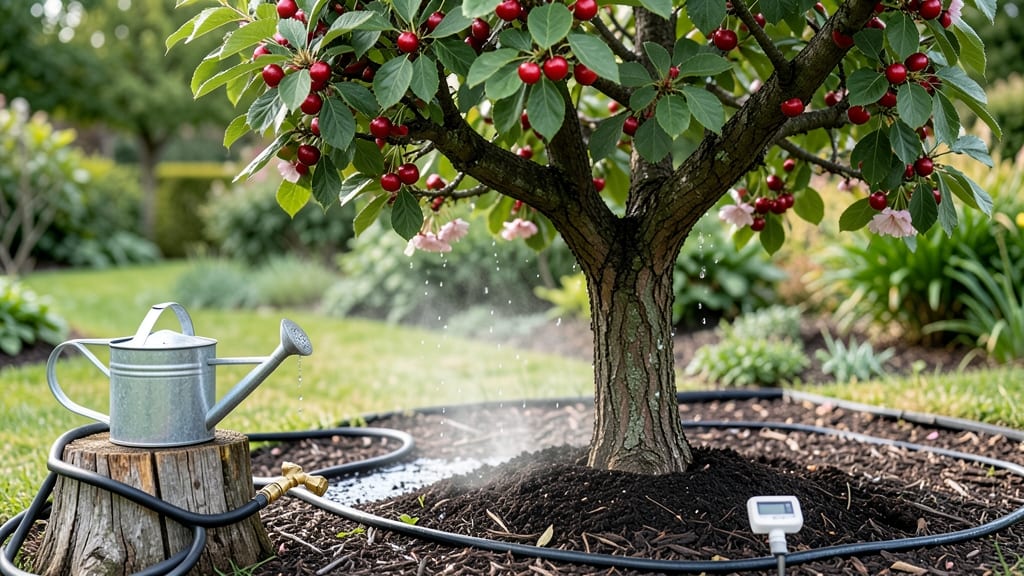
A cherry tree 🍒 needs about 10-20 gallons of water every 7-10 days during its first year, then adjusts as it matures—but get this wrong, and you’ll watch your tree struggle or even die.
Most gardeners overwater without realizing it, drowning the roots while thinking they’re helping. The truth? A young cherry tree’s roots need deep, infrequent soaks to grow strong, not daily sips that keep the soil soggy.
Here’s the breakdown: soil type changes everything—sandy soil drains fast, while clay holds too much moisture. Age matters too, with saplings needing more frequent watering than a 10-year-old tree with deep roots.
I’ll walk you through seasonal shifts, how to tell if your tree is thirsty or drowning, and the one trick that saves water while keeping your cherry tree thriving year after year.
Cherry tree watering requirements by age: from sapling to mature tree
Watering a cherry tree isn’t one-size-fits-all—it changes dramatically as your tree grows. A young sapling needs frequent, shallow watering to establish roots, while a mature tree can survive on deep, infrequent soaks.
Understanding these stages ensures your tree thrives from planting to harvest. Let’s break down the exact watering needs by age, including how deep roots influence your routine.
For newly planted cherry trees (0-3 years), focus on keeping the top 12 inches of soil consistently moist. Young trees have shallow roots that can’t reach deep water sources, making them vulnerable to drought stress.
Overwatering is just as harmful—it can suffocate roots and invite fungal diseases. The key is deep watering every 3-5 days during dry spells, adjusting for rainfall.
Established cherry trees (4-10 years) develop deeper root systems, typically reaching 3-5 feet underground. At this stage, you’ll shift to deep, infrequent watering—about every 7-10 days—unless your soil drains poorly or temperatures soar. A good rule of thumb: water when the top 2 inches of soil feel dry. Mulching around the base helps retain moisture and regulates soil temperature.
Once your cherry tree reaches maturity (10+ years), its roots can extend 5-8 feet deep, giving it access to groundwater. Mature trees are more drought-tolerant but still need deep watering every 10-14 days during dry periods.
In extreme heat or drought, increase frequency to every 5-7 days. Look for wilted leaves or cracked soil as signs it’s time to water.
Seasonal adjustments are critical. In spring and summer, when growth and fruit development peak, increase watering frequency. Fall is a transition period—reduce watering as the tree prepares for dormancy.
During winter, unless temperatures drop below freezing, minimal watering is needed. Always water in the early morning to reduce evaporation and fungal risks.
Monitor your cherry tree’s soil closely—stick your finger 2 inches deep. If it’s dry, water thoroughly. If it’s damp, wait. Overwatering leads to root rot, while underwatering causes leaf scorch and poor fruit production. A moisture meter can help gauge soil conditions accurately, especially in unpredictable climates.
Mulching plays a vital role in water retention. Apply a 3-inch layer of mulch around the tree’s base (but keep it 6 inches away from the trunk to prevent rot). Organic mulch, like wood chips or straw, breaks down over time, improving soil structure.
This layer acts like a sponge, slowing water loss and keeping roots cool in summer and insulated in winter.
Signs of overwatering include yellowing leaves, mold growth at the base, or a foul smell from the soil. Underwatering shows as brown, crispy leaf edges or wilting foliage. Adjust your routine based on these cues—your cherry tree’s health is the best indicator of whether you’re nailing the watering balance.
Pro tip: Group young cherry trees together and water them simultaneously. This ensures even moisture distribution and mimics natural rainfall patterns. As your trees mature, you’ll develop an intuitive sense of their needs—but always start with the root depth rule: deeper roots mean deeper watering.
Soil type matters: adjusting watering for sandy, clay, OR loamy soil
Your cherry tree's watering needs change dramatically based on soil type. Sandy soil drains water too quickly, while clay holds too much moisture—both extremes stress your tree. Loamy soil, the gold standard, balances drainage and water retention perfectly.
Understanding your soil type helps you adjust watering frequency and depth to keep roots healthy.
I’ve seen young cherry trees wither in clay because their roots suffocate, while others dry out in sandy soil within days. The key is matching your watering routine to your soil’s natural behavior.
Let’s break down how each soil type affects your watering schedule and what adjustments you need to make.
🌱 Did You Know? You can test your soil’s drainage in 30 minutes with a simple jar test: Fill a jar with moist soil, add water, and observe how quickly it drains. Sandy soil drains in minutes, clay takes hours, and loam drains evenly in 10-30 minutes.
For sandy soil, I recommend deep watering every 3-5 days to reach the root zone (12-18 inches deep). Use a soaker hose or drip irrigation to deliver water slowly, reducing runoff. Mixing in compost or peat moss helps retain moisture without altering drainage too drastically.
If your clay soil feels sticky when wet, your cherry tree’s roots may struggle to breathe. Water less frequently but deeply—every 10-14 days—to prevent waterlogging. Amend the soil with coarse sand or perlite to improve aeration. Avoid compacting the soil further with heavy foot traffic around the tree.
When you have loamy soil, you’ve hit the jackpot! This ideal mix drains well but retains enough moisture for your cherry tree’s needs. Stick to a 7-10 day watering schedule during dry spells, and always water in the early morning to minimize evaporation.
A 2-3 inch layer of mulch keeps roots cool and hydrated.
💧 Pro Tip: Insert a soil moisture meter 6 inches deep near your cherry tree’s drip line. If it reads dry, water deeply. If it’s still moist, wait another day. This simple tool takes the guesswork out of adjusting for your soil type.