
Propagation
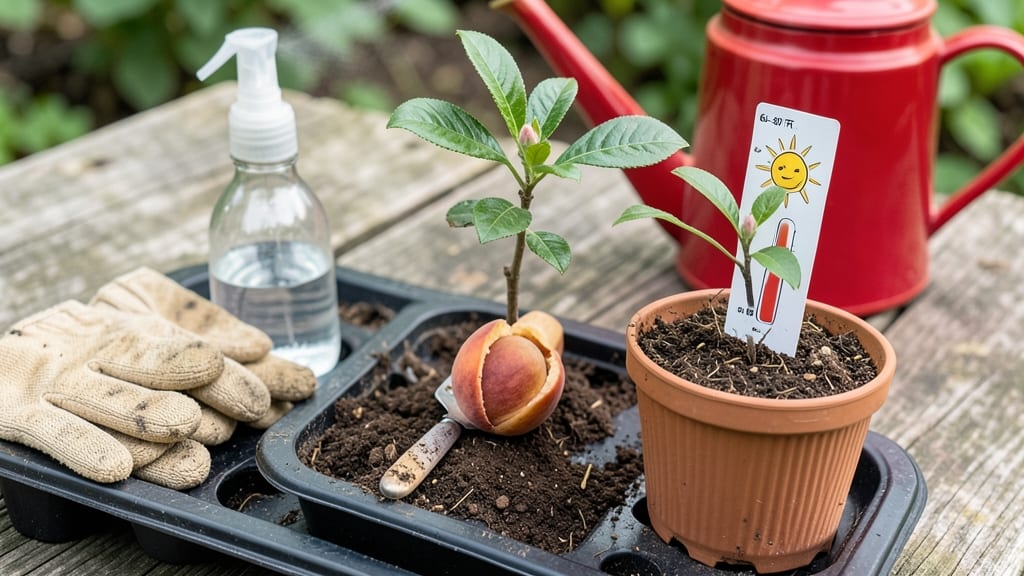
Growing a peach tree from seed isn't just possible—it's the best way to start if you love the thrill of watching nature do its magic. 🌱 I've turned store-bought peaches into sturdy saplings using cold-stratification, a process that mimics winter's natural dormancy period.
The key? Patience and a little science, because those tiny seeds need a convincing reason to sprout.
You'll need just a few supplies: fresh peach pits (from organic fruit, if possible), a damp paper towel, a plastic bag, and a refrigerator. The process takes about 90 days of cold treatment before you even plant the seeds, but trust me—it's worth it for that first green shoot.
Most people skip this step and end up with seeds that refuse to germinate, but cold-stratification breaks that dormancy barrier.
Once those seeds sprout, you'll have a delicate seedling that needs bright light and careful watering. The real reward comes years later when you get your first peaches—but the journey of watching it grow from a tiny sprout to a tree is half the fun.
The tree might not fruit true to the parent (expect surprises!), but the experience teaches you more about orchard care than any textbook ever could.
This method works for any peach variety, though heirloom seeds often produce the most interesting results. Just be ready for a 5-7 year wait before you see fruit—nature's way of reminding us that good things come to those who nurture.
Start your seeds in late fall for spring planting, and you'll be well on your way to growing your own peach tree legacy.
📚 In This Guide
- What you need
- Instructions
- Tips and common mistakes
- Wrapping up and next steps
What you need
- ● Peach pits (seeds): 3–5 fresh, plump pits from ripe peaches (avoid store-bought peaches treated to prevent germination).
- ● Paper towels or coffee filters: 2–3 sheets (for cold stratification).
- ● Plastic bag or airtight container: A quart-sized ziplock bag works perfectly.
- ● Refrigerator: A space in the fridge (34–40°F / 1–4°C) for cold stratification (4–8 weeks).
- ● Small pots or seed trays: 3–5 (4–6 inch diameter) with drainage holes.
- ● Potting mix: 1–2 bags of high-quality, well-draining seed-starting mix (avoid garden soil).
- ● Spray bottle: For gentle watering (avoid over-saturating the mix).
- ● Grow lights or sunny windowsill: A south-facing window or LED grow lights (12–16 hours/day) for seedlings.
- ○ Heat mat (optional but helpful): A seedling heat mat (70–75°F / 21–24°C) to speed up germination.
- ● Fungicide: A mild solution (like hydrogen peroxide 3%) to prevent damping-off disease.
- ● Humidity dome or plastic wrap: To retain moisture during early germination.
- ● pH test kit: To ensure your potting mix is slightly acidic (6.0–6.8 pH).
- ● Fertilizer (low-nitrogen): A balanced 5-5-5 or 10-10-10 fertilizer for young seedlings (use sparingly!).
- ● Transplanting tools: Small hand trowel and biodegradable pots for easier transplanting.
- ● Tree pruning shears: For future shaping (once your tree reaches 1–2 feet tall!).
Step-by-step instructions for growing a peach tree from seed
Here’s how to turn a peach pit into a thriving tree—with cold stratification to break dormancy and boost success.
🌱 Step 1: Extract and Prepare the Seed
Start with a fresh, plump peach pit from a ripe fruit. Rinse it thoroughly to remove all flesh, then pat dry with a paper towel. The key here is removing the outer pit shell without damaging the seed inside. Use a sharp knife to carefully slice through the hard outer shell, then gently pry it open. You’ll find the seed nestled inside—this is what we’ll plant.
Don’t skip the drying step. Place the exposed seed on a paper towel in a warm, dry spot for 3-5 days. This mimics natural drying conditions and prevents rot during stratification. Once the seed feels dry to the touch, it’s ready for the next phase.
❄️ Step 2: Cold-Stratify for Germination
Peach seeds need 60-90 days of cold treatment to break dormancy. Fill a plastic bag with damp (not soggy) peat moss or coconut coir, then place the seed inside. Seal the bag loosely—you want airflow but not complete enclosure. Store it in your refrigerator’s crispier drawer (around 35-40°F), where it stays consistently cool without freezing.
Check the bag every 2-3 weeks to ensure the peat moss stays lightly moist. If it dries out, mist it with water and reseal. After 8-12 weeks, the seed will begin to sprout—you’ll see a tiny root or shoot emerge. This is your signal that stratification worked!
🪴 Step 3: Plant the Stratified Seed
Fill a 4-inch pot with well-draining potting mix (avoid garden soil—it’s too dense). Plant the stratified seed ½ inch deep, with the pointed end facing upward. Gently press the soil around it to secure it, then water lightly until the mix feels evenly moist. Place the pot in a warm, bright spot (like a sunny windowsill) but avoid direct sunlight at first—you want to prevent stress on the young sprout.
Keep the soil consistently moist but never soggy. A clear plastic dome or plastic wrap over the pot helps retain humidity while the seedling establishes. Within 2-4 weeks, you should see the first true leaves—this means the seedling is thriving and ready for more light.
☀️ Step 4: Transplant and Care for Growth
Once the seedling reaches 4-6 inches tall with 3-4 true leaves, it’s time to transplant into a 1-gallon pot. Use the same well-draining mix and plant at the same depth as before. Place it in full sun (at least 6-8 hours daily) and water deeply when the top 1 inch of soil feels dry. Young peach trees are sensitive to overwatering, so let the soil dry slightly between waterings.
Fertilize lightly with a balanced, water-soluble fertilizer (like 10-10-10) every 4-6 weeks during the growing season. Avoid heavy feeding—the goal is steady growth, not rapid size gains. By year 2, your seedling will need a larger container or outdoor planting if your climate allows.
⏰ Step 5: Overwinter and Protect Young Trees
Peach trees grown from seed are tender and may not survive harsh winters in their first few years. If you live in a cold climate, keep the tree in a sunny indoor spot (like a garage or basement with light) during winter. Reduce watering but don’t let the soil dry out completely. In spring, when temperatures stay above 50°F at night, you can move it back outside gradually.
Real talk: Seed-grown peach trees take 5-7 years to bear fruit (vs. 2-3 years for grafted trees). But the reward of growing one from scratch—with its unique genetics—makes it worth the wait. Patience is key here!
Tips & tricks for growing a peach tree from seed
These insider tips will help you navigate the quirks of seed germination and give your peach tree the best possible start.
Seed Selection Matters: Choose pits from fully ripe peaches—unripe pits won't germinate properly. I've learned this the hard way after struggling with underripe seeds that refused to sprout. The flesh should be soft and juicy when pressed, indicating the pit inside is mature and ready for planting.
Stratification Setup: The 60-90 days of cold treatment is non-negotiable for breaking dormancy, but here's what I've found works best: Use a clear plastic bag with tiny holes poked in the top—this lets you monitor moisture levels without opening it completely. Place the bag in your refrigerator's crisper drawer where temperatures stay consistently between 35-40°F. This mimics winter conditions perfectly and prevents temperature fluctuations that can stress the seed.
Planting Depth: That ½-inch planting depth in Step 3 is crucial—any deeper and the seedling may struggle to emerge, while planting too shallow exposes it to drying out. I like to use a pencil to make a small hole exactly ½-inch deep, then place the seed with the pointed end up. Gently press the surrounding soil to eliminate air pockets, which can prevent proper root contact.
Transplanting Timing: Wait until your seedling reaches 4-6 inches with 3-4 true leaves before transplanting—this ensures it has strong enough roots to handle the move. I've seen seedlings that were transplanted too early develop stunted growth. When you do transplant, water thoroughly before and after to reduce transplant shock. The 1-gallon pot should have drainage holes to prevent waterlogging, which peach trees absolutely hate.
Pro Tips for Best Way To Grow A Peach Tree From Seed
- These insider tips will help you navigate the quirks of seed germination and give your peach tree the best possible start.
- Seed Selection Matters: Choose pits from fully ripe peaches—unripe pits won't germinate properly.
- Place the bag in your refrigerator's crisper drawer where temperatures stay consistently between 35-40°F.
Frequently asked questions
Got questions about growing a peach tree from seed?
You’re not alone! Here are answers to the most common ones—so you can skip the guesswork and focus on those sprouts.
How long does it take for a peach pit to germinate?
With cold stratification (the key step!), germination usually takes 4–12 weeks. Some pits sprout faster, while others may need extra time—especially if they’re older or dried out. Patience is key! Place them in a warm spot (like near a sunny window) once you see tiny roots breaking through.
Can I plant the seed directly in the ground without cold stratification?
Not ideal! Peach seeds need cold stratification to break dormancy—planting them straight into soil often results in no germination or weak, slow-growing seedlings. Skip this step, and you might wait years (or never see) a tree. The 60–90 days in the fridge or cold, moist sand are worth it!
Will a peach tree grown from seed produce fruit like the parent?
Probably not! Seed-grown trees are unpredictable—they may take 5–10 years to fruit (if ever), and the peaches could differ wildly in taste, size, or even color. For reliable fruit, grafting or buying a nursery tree is the better bet. Think of seed-grown trees as a fun experiment or shade project!
What should I do if mold grows on my stratified peach pit?
Mold is a red flag! If you see fuzzy white/green growth, your pit is too damp or in a warm, humid environment. Discard it immediately—mold can rot the seed or spread to other pits. Keep your setup moist but not soggy, and store pits in a well-ventilated container (like a mesh bag) to prevent this.
Can I grow a peach tree from store-bought peaches?
Just pick fresh, ripe peaches (not canned or dried) and save the pits. Avoid hybrid varieties (like "Redhaven")—they’re less likely to grow true. Stick to heirloom or local peaches for better odds. Pro tip: Wash and dry the pits thoroughly before stratification to avoid mold!
Wrapping up and next steps
Growing a peach tree from seed is a rewarding journey that combines patience, care, and a touch of science—like cold stratification to kickstart those tiny sprouts!
While it may take time for your seedling to mature into a fruit-bearing tree, every step—from selecting the right seed to nurturing your young plant—builds confidence in your green thumb. 🌱✨
Now that you’re armed with the best methods, why not plant that seed today? Start small, track your progress, and soon you’ll be enjoying the sweet taste of success—literally! For even more tips, explore our guides on transplanting seedlings or pruning young trees to keep your peach tree thriving.