
Companion Plants
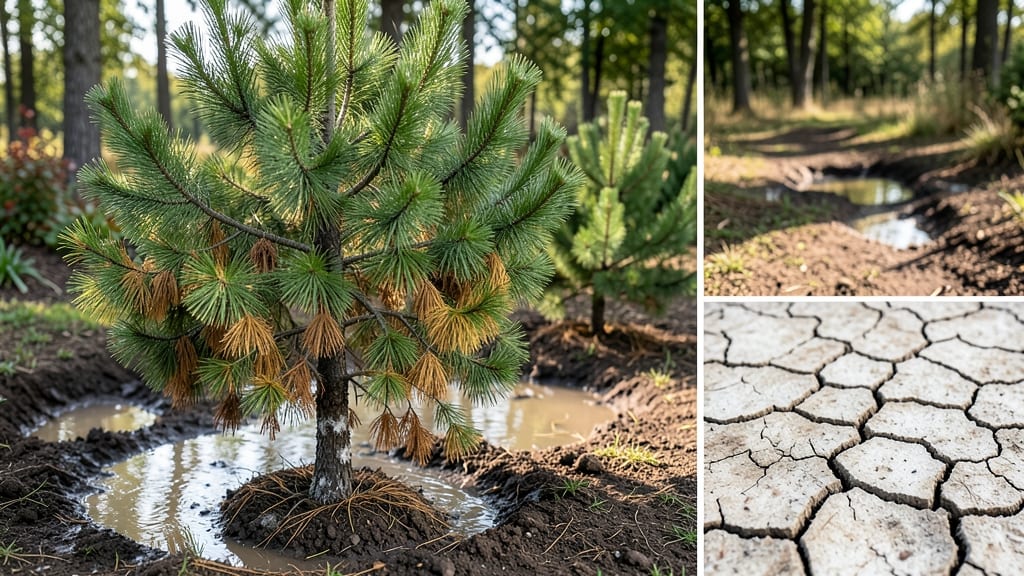
What does an overwatered pine tree look like? If your pine tree’s yellow needles and drooping branches aren’t just a bad hair day—they’re screaming "I’m drowning!" 🌲 Overwatered pines show telltale signs like mushy roots, fungal growth at the base, and needles that turn brown before falling off. I’ve seen this mistake ruin perfectly healthy trees in just weeks, and the fix starts with recognizing these red flags before it’s too late.
First, check the soil: it should feel like a damp sponge, not a soggy washcloth. Roots need oxygen, and too much water suffocates them, leading to that classic "mushy" texture when pulled. Fungal infections like Phytophthora thrive in wet conditions, creating black or orange patches on bark.
Even the needles cling to branches like limp noodles instead of standing tall—this is your tree’s SOS signal.
Fixing it means cutting back on water (pines hate soggy feet) and improving drainage with gritty soil mixes or raised beds. Prune any dead branches immediately, and let the soil dry out between waterings.
Within weeks, you’ll see fresh green needles pushing through, proving your pine is back on track. Prevention is simple: water deeply but infrequently, and never let puddles linger.
This isn’t just about saving a tree—it’s about learning the subtle cues that keep pines thriving for decades. Once you spot these signs early, you’ll catch overwatering before it becomes a full-blown crisis. Your future self (and your tree) will thank you.
Root Causes of Overwatering
Overwatering your pine tree isn’t just a gardening mistake—it’s a physiological stressor that disrupts the tree’s natural balance. Understanding why this happens helps you prevent it before your tree’s health declines. Below, we break down the key culprits behind excess moisture, from soil science to human habits.
Pine trees thrive in well-draining, sandy, or gravelly soils—not clay or compacted earth. When soil holds too much water, roots suffocate because: - Oxygen deprivation: Roots need air pockets to breathe. Waterlogged soil forces out oxygen, triggering anaerobic conditions (like a swamp!).
Without oxygen, roots can’t absorb nutrients or grow. - Fungal invasions: Excess moisture creates a breeding ground for root-rotting fungi (Phytophthora, Pythium) and bacteria.
These pathogens clog root cells, blocking water and nutrient uptake. - Salt buildup: Over time, dissolved minerals (like sodium) accumulate in saturated soil, creating a salty, toxic environment that burns root tips.
💡 Pro Tip: Test your soil’s drainage by digging a 12-inch hole, filling it with water, and timing how long it takes to drain. If it’s still soggy after 6 hours, amend with perlite, coarse sand, or pine bark fines to improve aeration.
Pine trees are drought-tolerant—they evolved to survive dry conditions. Yet, many gardeners water on a schedule rather than by need, leading to: - Inconsistent moisture cycles: Frequent shallow watering keeps the topsoil wet while deeper roots stay dry.
This creates a false sense of hydration, encouraging roots to grow upward (where they’ll drown later). - Automatic irrigation misfires: Sprinklers or drip systems left on too long (or in poor weather) can deliver 2–3x more water than needed, especially if the soil is already moist. - Afternoon watering: Watering in the late afternoon or evening traps moisture on needles and bark, increasing the risk of fungal diseases (like Lophodermium needle cast).
⏰ Action Step: Water deeply but infrequently—aim for 1–1.5 inches per week (including rainfall). Use a moisture meter or the "squeeze test" (grab a handful of soil; if it’s damp, wait).
Not all overwatering is human error—sometimes, the environment conspires against your pine: - Heavy or frequent rain: Pine trees in low-lying areas or with poor drainage act like sponges during downpours.
If rain exceeds 2 inches in 24 hours, roots may stay waterlogged for days. - High humidity + poor airflow: Pines in shady, enclosed spaces (like urban yards or dense forests) struggle to dry out.
Stagnant air slows evaporation, keeping soil—and roots—permanently damp. - Mulch gone rogue: While mulch conserves moisture, thick layers (4+ inches) or mulch piled against the trunk can smother roots and trap heat, accelerating rot.
🌡️ Fix It: Plant pines on sloped ground or raised beds. If mulching, keep it 2–3 inches deep and 6 inches away from the trunk.
Potted pine trees are high-risk for overwatering because: - Limited root space: Roots fill the pot quickly, leaving no room to escape excess water.
Without drainage holes, water pools at the bottom, drowning roots. - Fake soil = fake drainage: Many potting mixes retain moisture longer than native soil.
Add orchid bark or vermiculite to improve airflow. - Winter watering woes: In cold climates, potted pines stop transpiring (losing water through leaves) but may still get watered, leading to root asphyxiation.
🔥 Quick Fix: Ensure pots have drainage holes and elevate them on feet to prevent saucer buildup. Water only when the top 1–2 inches of soil are dry.
Overwatering doesn’t act alone—it triggers a cascade of problems:
- Needle yellowing → Chlorosis (from nutrient lockout due to poor oxygen).
- Drooping branches → Roots can’t anchor the tree (or transport water upward).
- Mushy, black roots → Fungal infections take hold in anaerobic soil.
- Premature needle drop → The tree “sheds” needles to conserve energy.
🎯 Prevention: Combine proper drainage, smart watering, and regular soil checks to break the cycle before it starts.
Revive Your Pine Tree: Step-by-Step Fixes
Overwatering can turn your pine tree into a sad, soggy mess—but don’t worry! With the right approach, you can nurse it back to health and prevent future waterlogging.
Below, we break down cause-specific solutions, from adjusting your watering routine to saving those mushy roots. Let’s get your pine tree thriving again!
Yellow needles are often the first sign of too much water. Here’s how to address them:
🔥 Step 1: Stop Watering Immediately
- Why? Wet soil suffocates roots, preventing them from absorbing oxygen.
- How? Pause watering for at least 1–2 weeks to let the soil dry out. If the ground is still soggy after a week, wait longer.
🍳 Step 2: Improve Soil Drainage Pine trees hate sitting in wet soil.
Take these actions: - Add organic matter: Mix in compost or peat moss to loosen heavy clay soil. - Raise the root zone: If planting in containers, ensure pots have drainage holes and use a well-draining potting mix (like a 50/50 blend of pine bark and perlite). - Avoid mulch piles: Keep mulch 2–3 inches away from the trunk to prevent moisture buildup.
👨🍳 Step 3: Prune Damaged Needles (If Necessary)
- When? Only prune brown or crispy needles—never healthy green ones.
- How? Use clean, sharp shears to trim dead branches just above a healthy bud or branch junction.
⏰ Step 4: Monitor for Recovery
- Signs of improvement: New green needles should appear in 4–8 weeks.
- If no change: The tree may be too far gone—consult a local arborist for advice.
Mushy, foul-smelling roots are a red flag for root rot. Act fast!
💡 Step 1: Check Root Health
- Gently dig around the base (be careful not to damage roots further).
- Healthy roots: Firm, white, or light brown.
- Rotten roots: Dark, mushy, and smelly—trim these off with sterilized pruners.
🔪 Step 2: Treat Root Rot
- Fungicide spray: Apply a copper-based or phosphite fungicide (like Serenade Garden or BioAdvanced) to kill fungal growth.
- Hydrogen peroxide soak (optional): For severe cases, soak roots in a 3% hydrogen peroxide solution (1 part peroxide to 10 parts water) for 10 minutes to disinfect.
🌱 Step 3: Repot or Replant Properly
- If in a pot: Move to a larger container with fresh, fast-draining soil.
- If in the ground: Dig a well-draining trench around the tree and fill it with gravel or coarse sand to improve drainage.
Once your pine tree is on the mend, keep these pro tips in mind:
| Problem | Solution |
|---|---|
| Heavy clay soil | Amend with sand, perlite, or pine bark fines before planting. |
| Poor drainage | Plant on a slight slope or in a raised bed. |
| Frequent rain | Use a soil moisture meter to check before watering. |
| Overzealous watering | Water deeply but infrequently—pine trees prefer dry spells between soakings. |
| Container growing | Ensure pots have multiple drainage holes and terracotta (not plastic) helps wick moisture. |
Once your pine tree is stable, boost its health with:
- Balanced fertilizer: Use a slow-release, acidic fertilizer (like 10-10-10) in early spring.
- Avoid compacted soil: Aerate the root zone annually with a garden fork.
- Watch for pests: Overwatered trees attract pine beetles—inspect branches regularly.
Remember: Patience is key! Pine trees recover slowly, but with the right care, they can bounce back stronger than ever. 🌲💚 If in doubt, less water is always better—pine trees are drought-tolerant once established!
Frequently asked questions
How can I tell if my pine tree is overwatered vs. underwatered?
Overwatered pines show yellowing needles, drooping branches, and mushy, foul-smelling roots. Underwatered pines have brown needle tips, crispy edges, and soil that pulls away from the pot. The key difference? Overwatered roots feel soggy and dark, while underwatered roots are dry and brittle. Check the soil moisture first—if it's damp 2+ inches down, you're likely overwatering.
Can I save a pine tree with root rot from overwatering?
Yes, but act fast! First, stop watering immediately and let the soil dry completely. Trim away any dark, mushy roots with sterilized pruners, then repot in fast-draining soil with perlite or sand. Apply a copper-based fungicide to prevent further spread. Recovery takes 4-8 weeks, but if the tree is too far gone, consider replacing it.
Why does my pine tree's bark look discolored near the base?
Discolored bark (especially black or orange patches) often signals fungal growth from overwatering. This is a red flag for Phytophthora or root rot. Scrape a small area—if it reveals soft, decaying wood, your tree needs immediate drainage fixes. Remove thick mulch, improve soil aeration, and water only when the top 1-2 inches are dry.
How often should I water a newly planted pine tree?
Newly planted pines need deep but infrequent watering—about once every 7-10 days (unless it's extremely hot/dry). Water until the soil 6 inches down is moist, then let it dry slightly before watering again. Avoid wetting the needles, as this encourages fungal diseases. After 1-2 years, reduce watering to every 2-3 weeks once established.
Will my pine tree recover if I only have yellow needles?
Early-stage yellowing from overwatering is often reversible! First, reduce watering and improve drainage. If the needles are soft and pliable (not crispy), they may regrow. Avoid fertilizing until the tree shows new green growth. If needles turn brown and brittle, the damage is permanent—focus on preventing further stress. Monitor for 4-6 weeks to see improvement.