
Plants
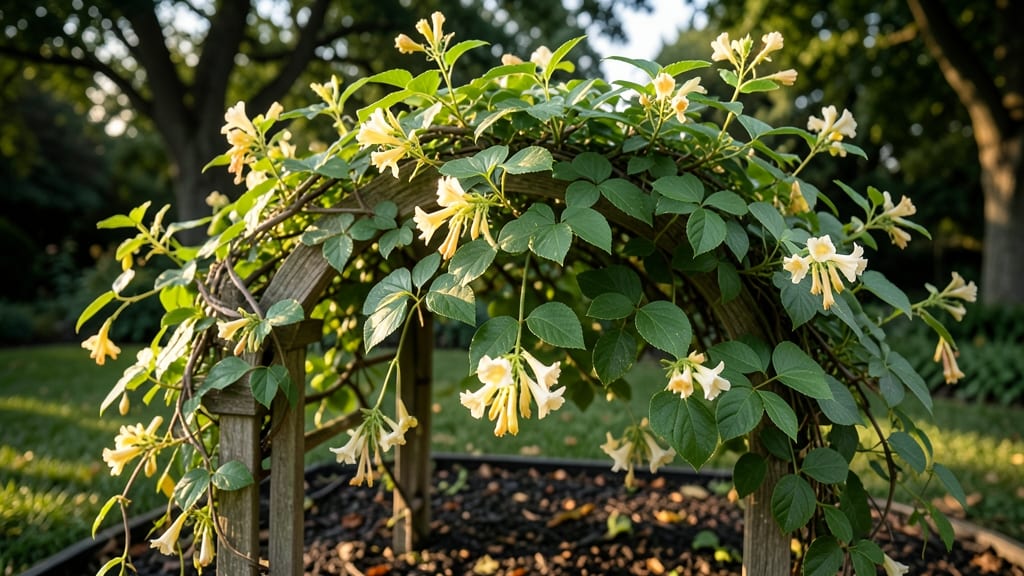
A honeysuckle tree looks like a lush plant with shiny, oval-shaped leaves that have jagged edges, smooth gray-brown bark that develops faint ridges as it matures, and fragrant, trumpet-shaped flowers in white, yellow, or soft pink shades. Many varieties grow as vines or small trees, typically reaching heights between 15 and 25 feet.
A honeysuckle tree's leaves are one of its most recognizable features—those glossy, oval-shaped foliage with serrated edges create a dense, vibrant canopy. 🌿 The bark starts smooth and grayish-brown but develops subtle grooves as the tree ages, giving it a textured appearance.
What really sets it apart, though, are the flowers, which grow in clusters and emit a sweet, intoxicating fragrance that attracts hummingbirds and bees.
These plants come in different forms—some grow as woody vines, while others develop into small trees with a rounded shape. The height can vary significantly depending on the species, with some reaching up to 25 feet in ideal conditions.
Whether you're identifying one in your garden or learning about its characteristics, these visual and structural traits make honeysuckle trees instantly recognizable.
💡 In This Article
- Identifying Honeysuckle Tree Leaves, Bark, and Flower Structures
- Comparing Common Honeysuckle Tree Varieties for Gardeners
Identifying honeysuckle tree leaves, bark, and flower structures
The leaves of a honeysuckle tree are its most distinctive feature, with a glossy, deep green surface that reflects light beautifully. Each leaf measures about 2-6 inches long and 1-3 inches wide, with serrated edges that create a saw-toothed appearance.
The leaf arrangement alternates along the stem in a spiral pattern, which helps distinguish it from other plants with opposite leaf arrangements. 🌿 When crushed, the leaves release a faint, sweet scent that's subtly reminiscent of the flowers.
The bark starts smooth and grayish-brown when young but develops shallow, horizontal grooves as the tree matures, giving it a textured look. These grooves become more pronounced with age, creating a pattern that resembles a fish-scale texture.
The bark's color can darken slightly in older specimens, taking on a more gray-brown hue with slight reddish undertones. This bark texture is particularly noticeable in species like the Japanese honeysuckle, where it contrasts sharply with the vibrant foliage.
The flowers are where honeysuckle trees truly shine, with their fragrant, tubular shapes that range from white to pale yellow or soft pink. Each flower grows in clusters of 3-5 blooms and emits a sweet, intoxicating aroma that's strongest in the evening.
The flower structure includes five fused petals that form a trumpet-like shape, with a two-lipped mouth that attracts hummingbirds and bees. The scent is so potent that some gardeners plant honeysuckle near patios to enjoy its fragrance.
One key identification feature is the flower arrangement, which grows in terminal clusters at the ends of branches. These clusters can reach 3-6 inches long and create a cascading effect that's particularly striking in vine varieties.
The flowers bloom in late spring to early summer, with some species producing a second flush of blooms in fall. This seasonal variation helps gardeners distinguish between different honeysuckle species, as some maintain their flowers longer than others.
For those distinguishing between species, pay attention to the leaf shape and flower color. Japanese honeysuckle typically has heart-shaped leaves and white or pale yellow flowers, while trumpet honeysuckle features longer, tubular red or orange flowers.
The leaf size can also vary, with some species having broader leaves than others. These subtle differences help gardeners select the right variety for their landscape needs.
Understanding these structural details is crucial for proper identification, especially when distinguishing honeysuckle from similar-looking plants like wisteria or jasmine. The combination of glossy leaves, textured bark, and fragrant flowers creates a unique visual and sensory profile that makes honeysuckle trees instantly recognizable in any garden setting. 💫