
Pruning
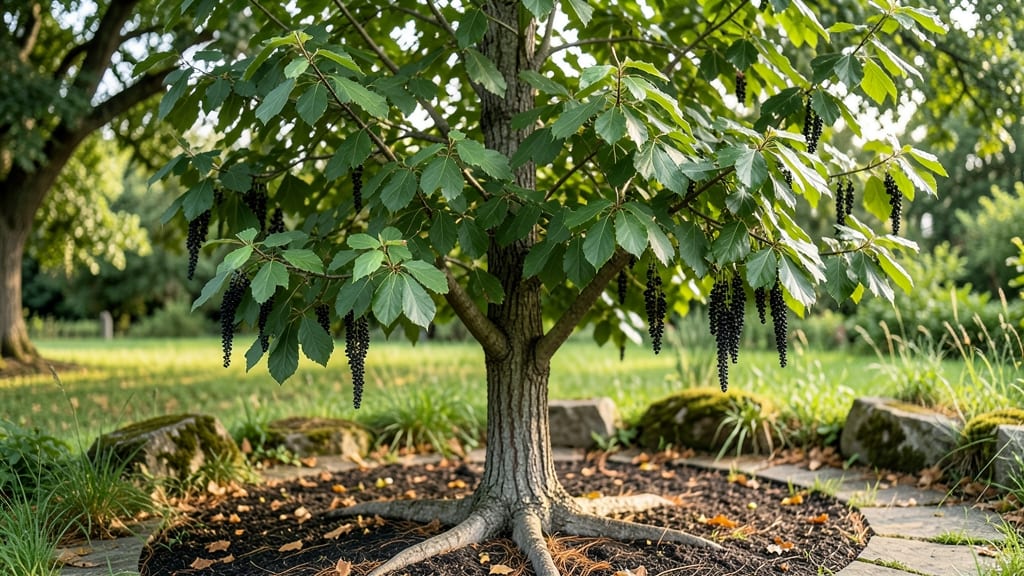
Mastering the tree identification of a tree with black berries and sharp leaves just got easier. 🌿 I’ve spent years untangling these tricky lookalikes—from the glossy leaves of a blackhaw to the jagged edges of American holly—and I’m sharing the key features that make each one unmistakable.
Start with the leaves: serrated edges (like a saw) or smooth curves? Then check the berries—are they waxy, fuzzy, or clustered? A quick bark inspection (smooth vs. ridged) narrows it down fast. Most importantly, never assume berries are safe—some, like bittersweet nightshade, are toxic to pets and kids.
You’ll walk away knowing exactly which tree stands in your yard (or which one to plant). The right ID means better care, safer spaces, and no more guessing. Let’s break it down by the most common suspects—plus how to keep your family safe around them.
Here’s the game-changer: leaf shape and berry clusters are your best clues. A black cherry has smooth-edged leaves and single berries, while winterberry holly (yes, it’s a shrub!) sports bright red berries but sharp leaves too. Poison ivy mimics berries but grows as a vine—so watch for that three-leaf pattern.
Safety first: black nightshade berries look edible but cause severe stomach issues. If kids or pets wander near trees, opt for non-toxic varieties like serviceberry (though its berries are small). Always double-check with a local extension office for regional hazards.
Once you’ve got the ID, caring for the tree becomes straightforward. Holly needs acidic soil and pruning after blooming, while hawthorn thrives in full sun with minimal fuss. Need a pet-friendly alternative? Crabapple (with its tiny fruit) or dogwood (when berries ripen) are safer bets.
Still stuck? Bookmark this guide—we’ll cover regional trees next, plus how to tell if those berries are ripe (or ready to be avoided). Your yard’s mystery tree won’t stand a chance.
Nature’s Tricks Behind Black Berries
Black berries on trees aren’t just a random quirk of nature—they’re the result of evolutionary strategies designed for survival, reproduction, and even ecological balance.
Whether you’re admiring a lush landscape or trying to identify a mystery tree, understanding why these berries appear—and what role they play—can help you spot patterns and avoid common pitfalls. Let’s break down the science behind those glossy, dark fruits.
Black berries are nature’s marketing genius for spreading seeds. Many trees produce them to entice animals—birds, mammals, and even insects—to eat the fruit, then excrete the seeds far from the parent plant.
This reduces competition for resources and ensures the next generation of trees gets a head start in a new location.
- Animal Magnetism: Birds like robins and blue jays love black berries (think elderberry, hackberry, or Virginia creeper). The dark pigment often signals ripeness, making them irresistible. 🐦🍇
- Sticky or Fleshy Textures: Berries with gelatinous coatings (like Sambucus or elderberry) cling to beaks or fur, ensuring seeds hitch a ride. Others, like Celastrus orbiculatus (Asian bittersweet), burst open to reveal seeds coated in a sticky, bird-attracting aril.
- Timing Matters: Trees time berry ripening to coincide with peak animal migration or nesting seasons, maximizing dispersal efficiency.
Pro Tip: If you see berries scattered under a tree with no parent plant nearby, you’re likely looking at a master of seed dispersal! 🌍✨
Some black-berried trees rely on berries to lure pollinators or even trick animals into spreading their genetic material. While flowers handle the initial pollination, the berries take over the next phase of the plant’s life cycle.
- Deceptive Berries: Trees like Mahonia aquifolium (Oregon grape) produce berries that look like fruit but are actually drupes (a fleshy fruit with a hard seed). Animals eat them, digest the flesh, and spread the seeds—even if they don’t realize they’re doing it! 🤯
- Two-Stage Reward System: Some trees (e.g., Viburnum species) offer sterile, showy berries early in the season to attract pollinators, then produce true, seed-bearing berries later. This ensures both reproduction and dispersal.
- Fungal Allies: Certain berries grow in symbiotic relationships with fungi, which help break down nutrients in the soil. The tree rewards the fungi (and indirectly, the animals that eat the berries) with energy-rich fruits.
Watch For: If a tree has both flowers and black berries at the same time, it’s likely using a multi-phase strategy to maximize pollination and seed spread. 🌸🍒
Not all black berries are safe—or even meant to be eaten. Some trees produce them as a deterrent to herbivores or to protect their seeds from premature consumption. Others use them for camouflage against predators.
- Toxic or Bitter Compounds: Trees like Ilex verticillata (winterberry) or Rhus typhina (staghorn sumac) produce berries that are inedible to most animals due to high tannins, alkaloids, or other chemicals. This forces animals to rely on other trees for food, reducing competition. ⚠️🚫
- Late-Season Survival: Some berries only ripen in fall or winter when few other food sources are available. This ensures that only hardy animals (like thrushes or deer) can access them, increasing the chances seeds survive digestion.
- Camouflage Against Predators: Dark berries blend into shadows or leaf litter, making them harder for insects or small mammals to spot. Trees like Prunus serotina (black cherry) use this trick to protect their seeds until they’re ready for dispersal.
Safety Note: Never assume a black berry is safe to eat—many are poisonous to humans and pets. When in doubt, research the tree species or consult a local expert! 🚨🐕
Black berries don’t appear by accident—they’re the result of specific environmental cues that signal a tree it’s time to reproduce. Factors like sunlight, water, and even soil pH play a role.
- Sunlight and Shade Tolerance: Some trees (like Celastrus scandens) thrive in full sun and produce berries only when they receive adequate light. Others, like Actaea rubra (red baneberry), prefer shaded, woodland conditions. 🌞🌳
- Water Availability: Drought-stressed trees may delay berry production or produce fewer seeds, while well-watered trees go all-out. This ensures only the healthiest trees reproduce successfully.
- Soil Nutrients: Trees growing in nitrogen-rich soils (like those near decomposing leaves) may produce more berries, as they have the energy to invest in reproduction. Phosphorus levels also influence berry size and seed viability.
- Age and Health: Young trees or those recovering from disease may skip berry production entirely, focusing energy on growth instead. Mature, thriving trees are the berry powerhouses of the forest. 🌱💪
Garden Hack: If you’re trying to encourage berry production in your landscape, amend soil with compost, ensure proper watering, and prune to optimize sunlight exposure. 🌱💧
Next time you spot a tree dripping with black berries, remember: it’s not just a pretty sight—it’s a strategic masterpiece of nature’s design. Whether it’s luring birds, deterring pests, or ensuring the next generation of trees, every berry has a purpose. Now you’re equipped to decode the mystery! 🕵️♂️🌿
Quick Fixes for Black-Berried Trees
Identifying a tree with black berries and sharp leaves can be tricky, but managing it doesn’t have to be. Whether you’re dealing with invasive species, safety hazards, or simply unwanted growth, these practical solutions will help you take control—without the guesswork.
Below, we break down common issues and their fixes, so you can act fast and keep your property safe and tidy.
If the tree is spreading aggressively or poses a threat to your garden, yard, or wildlife, removal or containment is key.
🔪 Remove It Completely (For Severe Cases)
If the tree is non-native, toxic, or spreading uncontrollably (like black nightshade, bittersweet, or poison ivy), full removal is the safest option.
- Step 1: Wear protective gear 🛡️ (gloves, long sleeves, goggles) to avoid skin irritation or berry toxicity.
- Step 2: Cut down the trunk ⛏️ using a chainsaw or handsaw, starting from the base.
For large trees, hire a professional arborist. - Step 3: Dig out the roots 🌱—use a shovel or root saw to remove as much of the root system as possible.
Check for regrowth in 6–12 months. - Step 4: Dispose of debris properly 🗑️—burning may not be safe if the tree is toxic; check local regulations for disposal.
✨ Pro Tip: If the tree is in a hard-to-reach area, consider smothering it with cardboard and mulch to block sunlight and kill it naturally over time.
🌳 Prune Strategically (For Controlled Growth)
If the tree is native but overgrown, selective pruning can manage its size and shape.
- 🍃 Trim back branches in late winter or early spring (before new growth) to reduce berry production.
- 🌿 Remove suckers or water sprouts that emerge from the base or trunk to prevent spread.
- 🪓 Use clean, sharp pruners to avoid damaging the tree and reduce disease risk.
💡 Prevention Tip: Regularly inspect the tree for new shoots and prune them early to keep it in check.
Some black-berried trees (like pokeweed or bittersweet) produce toxic berries that can harm pets, children, or wildlife.
🚫 Block Access to Berries
- Install a fence or barrier 🏗️ around the tree to keep pets and kids away.
- Pick berries by hand 🧤 (wearing gloves) and dispose of them in sealed bags—do not compost toxic berries.
- Apply a natural deterrent like vinegar spray (1:1 vinegar-water mix) to discourage wildlife from feeding on them.
🌡️ Safety Alert: If ingestion is suspected, contact Poison Control or a vet immediately—some berries can cause severe illness.
🌱 Replace with Non-Toxic Alternatives
If the tree is purely ornamental but problematic, consider swapping it out for a safer species, such as:
- Serviceberry (edible berries, native-friendly)
- Dogwood (ornamental, non-toxic)
- Elderberry (if managed properly, non-invasive varieties exist)
Some trees (like hackberry or poison ivy) have leaves with thorns or urushiol (the oil that causes rashes).
🧤 Protect Yourself While Working
- Wear long sleeves, pants, and closed-toe shoes 👕 to avoid scratches or allergic reactions.
- Use a leaf blower 💨 to clear fallen leaves instead of raking them by hand.
- Apply aloe vera or calamine lotion 🧴 after contact to soothe irritation.
🌿 Mulch or Landscape Around It
- Add a thick layer of mulch 🪴 (3–4 inches) around the base to suppress weeds and reduce leaf spread.
- Plant ground covers (like creeping thyme or clover) to outcompete invasive roots.
To keep black-berried trees under control, schedule these tasks annually:
| Season | Task | Why It Works |
|---|---|---|
| Late Winter | Prune dead/diseased branches | Promotes healthy growth for the season |
| Spring | Monitor for new shoots | Catches regrowth early |
| Summer | Pick berries & inspect leaves | Prevents spread and reduces hazards |
| Fall | Rake up leaves & dispose properly | Stops seed dispersal over winter |
If the tree is large, diseased, or located near power lines, hire an arborist 🌳✨. They can:
- Safely remove hazardous trees
- Diagnose pests or diseases
- Provide expert pruning advice
By following these simple, actionable steps, you can manage black-berried trees effectively—whether you’re dealing with invasives, safety risks, or just an overgrown yard. Act now, and you’ll save time (and headaches) later!
Frequently asked questions
Why do some trees with black berries have sharp leaves?
Sharp leaves (called serrated or spiny) often serve as a natural defense mechanism. Trees like holly or hawthorn use them to deter herbivores from eating their foliage or berries. The jagged edges make it harder for animals to chew through leaves, protecting the tree's energy reserves for berry production.
Are black berries on trees always poisonous?
No! While many black berries are toxic (like bittersweet nightshade or poison ivy), some are safe for humans and wildlife. Elderberry and serviceberry produce edible black berries, but always verify the species before consuming. When in doubt, assume they're toxic—especially if the tree has sharp leaves or grows in wild areas.
How can I tell if a black-berried tree is invasive?
Look for these red flags: rapid growth, aggressive root systems, and berries that spread easily via birds or animals. Asian bittersweet and English ivy are common invasives with black berries. Native trees like black cherry grow slower and have less aggressive spread. Check your local invasive species list for confirmation.
Can black berries on trees harm my pets?
Many black berries contain toxins that can cause vomiting, diarrhea, or worse in pets. Nightshade berries and yew berries are particularly dangerous. If you suspect your pet has ingested berries, contact your vet or Pet Poison Helpline immediately. Keep pets away from trees with unknown berries.
What's the best time of year to identify a tree with black berries?
Fall and winter are ideal! When leaves are present (fall), you can examine leaf shape and arrangement. In winter, look for berry clusters (some trees retain them) and bark patterns. Spring is tricky because berries may have already dispersed, but you can check for new growth or flower clusters that might help with identification.