
Pruning
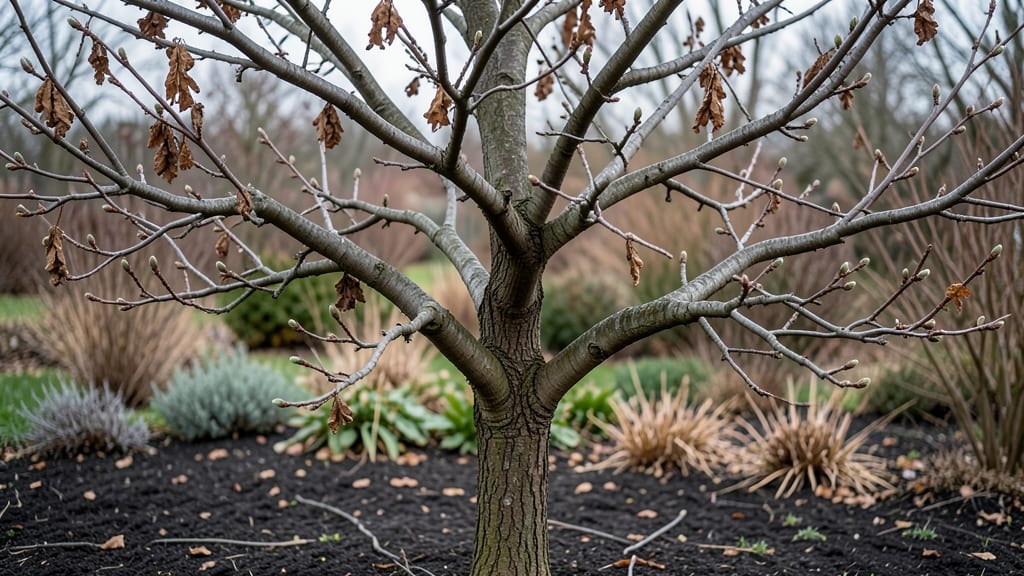
During a plum tree's dormant season—late winter or early spring before buds swell—is the ideal time to prune. This typically falls between January and March in most climates, when the tree is inactive, making it easier to remove dead wood, thin branches, and shape the tree for healthier growth and better fruit production.
This timing isn't just about convenience—it's about biology. 🌳 When plum trees are dormant, their energy is conserved, and wounds heal faster, reducing the risk of disease. Pruning during this period also prevents stress on the tree, which could otherwise weaken it or stunt fruit development.
I've seen firsthand how trees pruned in dormancy bounce back stronger, with thicker canes and more abundant blooms the following spring.
Think of it like giving your tree a fresh start before the growing season kicks in. The key is to act before buds swell, as this signals the tree to wake up and begin active growth.
If you prune too late, you might encourage new growth that won't harden off before winter, leaving it vulnerable to cold damage.
💡 In This Article
- Why Dormancy Is the Best Time to Prune Plum Trees
- Step-by-Step Guide to Pruning a Dormant Plum Tree
Why dormancy is the best time to prune plum trees
Dormancy transforms your plum tree into the perfect pruning canvas because it's essentially in survival mode. During this period—typically January to March—the tree's metabolic processes slow dramatically, reducing sap flow by up to 90% compared to active growth seasons.
This minimized sap means cleaner cuts that heal faster, with less bleeding and reduced risk of bacterial infections like silver leaf disease, which thrives when wounds are fresh in warm conditions.
The biological magic happens at the cellular level. Plum trees store energy in their roots and trunk during dormancy, allowing them to redirect resources toward wound healing rather than growth.
Studies show that pruning wounds on dormant trees seal over with callus tissue in just 2-4 weeks, compared to 6-8 weeks during active growth. 🌱 The tree’s natural dormancy hormones also suppress excessive water loss through pruning cuts, which would be catastrophic if attempted during summer when evaporation rates can exceed 0.5 gallons per day from a single large wound.
Timing aligns perfectly with the tree's annual cycle because dormancy coincides with the natural pruning window when plum trees shed their leaves. This isn't coincidence—it's evolutionary adaptation. The tree's energy conservation mode creates an ideal scenario where pruning stress is minimal.
What most gardeners overlook is that pruning during dormancy actually stimulates more robust flowering the following spring, as the tree interprets the winter pruning as a signal to prepare for maximum reproductive effort.
Consider the climate variations: In colder zones (USDA zones 4-6), dormancy lasts longer, sometimes until late March, while warmer climates (zones 7-9) may see dormancy break by mid-February.
The key visual cue is the buds—prune when they're still tight and haven't begun to swell, as swelling indicates the tree's sap is starting to flow again. This transition period is critical because even slight bud swelling can trigger premature growth that's vulnerable to late frosts.
Here's what happens if you prune at the wrong time: Summer pruning (June-August) causes excessive sap loss and invites pests like plum curculio, while spring pruning after buds swell (April-May) encourages tender new growth that can't withstand winter's freeze-thaw cycles.
The dormant window gives you a 4-6 week safety margin where you can prune without triggering these negative responses, making it the only truly stress-free period for major structural work.
Think of it like scheduling surgery—you wouldn't perform major operations during peak activity hours when the body is most vulnerable. Dormancy is your plum tree's annual "maintenance window," when it's at its healthiest state for receiving interventions.
The tree's reduced physiological activity during this period means it can focus all its limited resources on healing rather than compensating for growth demands.