
Neem Oil
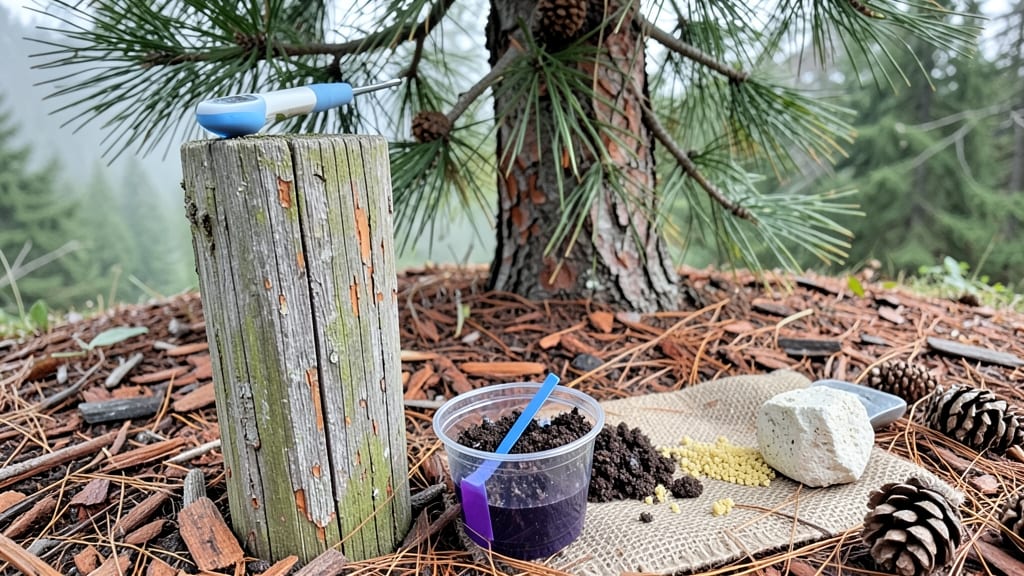
Growing a thriving pine tree 🌲 depends on one factor you might be overlooking: the soil pH range of 4.5 to 6.0—too high or too low, and you’ll see stunted growth, yellowing needles, or even tree decline.
Picture this: You’ve planted your pine tree in late spring, watered it regularly, and given it full sun—yet it’s not growing like it should. The culprit could be your soil’s acidity level, which directly impacts how well your tree absorbs nutrients like nitrogen, phosphorus, and iron.
In this guide, I’ll break down the exact pH range pine trees need for fast, healthy growth, how to test your soil’s acidity, and simple ways to adjust it naturally—without harming your tree’s roots.
You’ll also discover the three most common pH mistakes that kill pine trees (and how to fix them before it’s too late), so you can give your evergreen the perfect foundation for years of lush, vibrant foliage.
Optimal soil pH range for pine trees: what science says
Pine trees thrive when their soil chemistry aligns with their natural preferences—specifically, a soil pH range of 4.5 to 6.0. This acidic to slightly acidic spectrum isn’t just a preference; it’s a biological necessity for nutrient uptake and root health.
When soil pH strays outside this range, pine trees struggle to absorb essential minerals like iron, zinc, and manganese, leading to yellowing needles and stunted growth. Understanding this range helps you create the perfect growing conditions for your evergreen.
Why does pH matter so much? Pine trees evolved in acidic forest soils, where organic matter naturally lowers pH. In cultivated gardens, soil often becomes more alkaline over time due to amendments like lime or composted manure.
Without proper management, even healthy-looking pine trees can suffer from hidden nutrient deficiencies caused by pH imbalance. The key is maintaining that 4.5–6.0 range—not just for aesthetics, but for long-term tree vitality.
The ideal pH varies slightly depending on the pine species. For example, white pines (Pinus strobus) and red pines (Pinus resinosa) prefer the lower end of the range (4.5–5.5), while loblolly pines (Pinus taeda) and shortleaf pines (Pinus echinata) tolerate up to 6.0.
Even within these ranges, slight deviations can trigger stress responses. A pH of 6.5 or higher locks out critical micronutrients, while pH below 4.0 can damage roots by increasing aluminum and manganese toxicity.
When soil pH rises above 6.0, pine trees experience nutrient lockout, where essential minerals become chemically unavailable. For instance, iron deficiency (a common issue in alkaline soils) causes interveinal chlorosis—yellowing between the green veins of needles.
This condition often appears first on older needles and spreads downward. Similarly, a pH below 4.0 increases the solubility of aluminum and manganese, which can toxic roots and hinder water uptake, even in well-watered trees.
Testing your soil’s pH is the first step toward correcting imbalances. Use a DIY soil test kit (available at garden centers) or send a sample to a local extension service for precise results. If your pH is too high, add elemental sulfur or peat moss to lower it gradually.
For overly acidic soil, incorporate pulverized limestone or wood ash (sparingly) to raise pH. Always make adjustments in small increments—pH changes should happen over months, not days, to avoid shocking the tree’s root system.
Organic matter plays a crucial role in maintaining the right pH. Adding composted pine needles, leaf mold, or well-rotted wood chips not only improves soil structure but also buffers pH fluctuations naturally.
Mulching with pine straw (sourced locally) is another excellent way to keep soil acidic while suppressing weeds. Over time, these amendments create a self-regulating ecosystem that supports pine tree health without constant intervention.
Regional soil conditions also influence pH management. In northern climates, where soils tend to be naturally acidic, pine trees often thrive with minimal adjustments. However, in arid or limestone-rich areas, soil pH can creep toward neutral or alkaline.
If you’re planting pines in newly constructed landscapes, test the soil before planting and amend it proactively. Remember, pH isn’t static—it shifts with rainfall, organic matter decomposition, and seasonal changes. Monitor your soil annually, especially after heavy rains or major amendments.
One of the most common mistakes gardeners make is over-correcting pH with lime or sulfur. A sudden pH shift can disrupt the mycorrhizal fungi that pine trees rely on for nutrient absorption. Instead of drastic changes, aim for 0.5–1.0 pH unit adjustments per year.
Patience pays off—healthy pine trees reward long-term care with vibrant foliage, robust growth, and resistance to pests. By mastering soil pH, you’re not just growing a tree; you’re cultivating a resilient, long-lived evergreen that will
How to test and adjust your pine tree soil pH for maximum growth
Pine trees thrive when their soil pH stays within the ideal range of 4.5 to 6.0. Testing and adjusting your soil’s pH isn’t just guesswork—it’s the key to unlocking faster growth and vibrant needles.
If your pine’s needles are yellowing or growth stalls, your soil might be too alkaline or acidic. Let’s fix that with a simple, step-by-step approach.
You don’t need a lab to test your soil’s pH. DIY test kits (like those from LaMotte or MySoil) are affordable and easy to use. They’ll give you results in minutes, while lab tests provide precise data but take longer.
For most gardeners, a home test kit is the perfect balance of convenience and accuracy. Grab one and let’s get started!
-
Step 1: Collect Soil Samples
Dig 4-6 inches deep near your pine’s roots (avoid surface mulch). Take 5-6 samples from different spots, mix them in a clean bucket, and remove debris. -
Step 2: Test pH Levels
Use a DIY test kit (follow instructions) or send samples to a lab. Aim for a pH between 4.5–6.0—this is perfect for pine trees. If your reading is off, note how much you need to adjust. -
Step 3: Choose Your Amendment
For high pH (alkaline soil, >6.0), add elemental sulfur (1–2 lbs per 100 sq ft). For low pH (acidic soil, <4.5), use peat moss or pine fines (3–4 inches mixed into the topsoil). -
Step 4: Apply Amendments
Work amendments into the top 6 inches of soil around the tree’s drip line. Water thoroughly to activate changes. Avoid overdoing it—small adjustments take time. -
Step 5: Monitor and Retest
Wait 2–3 months, then retest your soil. Pines prefer gradual changes. If needed, repeat adjustments until you hit the 4.5–6.0 range. -
Step 6: Maintain Long-Term Balance
Add a 2-inch mulch layer of pine needles or wood chips annually. This keeps soil acidic naturally and reduces future pH swings.
If your soil is too alkaline (pH >6.0), elemental sulfur is your best friend. Sprinkle it evenly around the tree’s root zone and water it in. For acidic soil (pH <4.5), organic matter like peat moss or composted pine bark will slowly lower the pH over time.
Always test again after 2–3 months to track progress.
Patience is key—soil pH changes take time, especially in established gardens. Retest every 6 months to ensure your pine stays happy. With the right pH, you’ll see darker needles, faster growth, and fewer pests—because healthy soil equals a healthy tree!
🌲