
Pruning
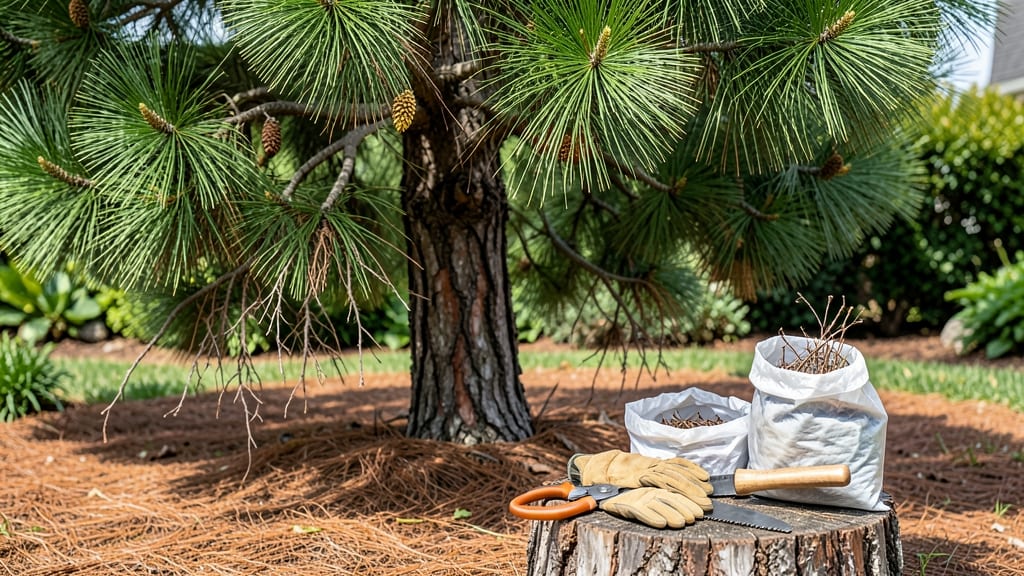
Dead lower branches on your pine tree aren’t just unsightly—they’re a safety hazard and growth thief. 🌲 I’ve removed dozens of these branches over the years, and the right technique makes all the difference between a healthy tree and one that struggles for years.
The problem usually boils down to three culprits: natural aging (branches outlive their purpose), fungal infections (like needle cast), or pests (bark beetles love stressed wood). Without removal, these branches block sunlight, trap moisture, and create entry points for diseases. My first mistake?
Waiting too long—now I prune as soon as I spot three or more dead needles in a cluster. You’ll end up with a pine that grows stronger, not just prettier. The key is selective pruning: only remove branches that are completely dead (no green needles, no flexible twigs).
Use sharp, clean tools and make cuts just outside the branch collar. The tree will thank you with fresh, vibrant growth within a season. This works for any pine—from dwarf varieties to towering ponderosas. The only rule?
Never remove more than 25% of the live canopy at once, or you’ll stress the tree. Let’s get those branches off safely!
Root Causes Of Branch Decline
Understanding why your pine tree’s lower branches are dying starts with identifying the hidden stressors at play. These issues often stem from environmental, biological, or even human-induced factors. Let’s break down the most common culprits and why they trigger branch death in pines.
Pine trees thrive in open spaces where sunlight and air circulate freely. When lower branches grow in dense clusters—especially in shaded or cramped areas—they compete fiercely for nutrients and light. This leads to thinning foliage, weakened branches, and eventual death as the tree prioritizes survival of the upper canopy.
Why it happens:
- Shade stress: Lower branches receive less sunlight, reducing photosynthesis. Without energy, they yellow, brown, and die back.
- Fungal growth: Stagnant air traps moisture, creating ideal conditions for needle blight (e.g., Lophodermium or Dothistroma fungi). These pathogens thrive in damp, shaded environments, clogging stomata and killing needles.
- Competition for water: Roots may struggle to supply enough moisture to all branches, leaving lower ones dehydrated.
Actionable fix: 🔹 Thin the canopy by removing 20–30% of overcrowded branches to improve airflow. 🔹 Prune in late winter/early spring (before new growth) to avoid stressing the tree during active fungal seasons.
Pine trees are surprisingly drought-tolerant, but their lower branches often suffer when watering habits are off. Too much water causes root suffocation, while too little leads to desiccation—both triggering branch death from the bottom up.
Why it happens:
- Root rot (Phytophthora, Pythium): Overwatering or poorly draining soil creates anaerobic conditions, where roots suffocate. The tree can’t transport water/nutrients to lower branches, causing them to dry out or develop brown, crispy needles.
- Drought stress: In sandy or fast-draining soils, lower branches may dry out first because they’re farther from the root zone. Needles turn straw-colored and fall off, exposing bare wood.
- Salt buildup: Over-fertilizing or using tap water high in chlorine/sodium can burn root tips, reducing water uptake to lower branches.
Actionable fix: 🔹 Check soil moisture 3–4 inches deep—water only when dry (pines hate soggy feet!). 🔹 Mulch properly: Use 2–4 inches of organic mulch (pine bark or wood chips) but keep it 6 inches away from the trunk to prevent rot. 🔹 Aerate compacted soil if drainage is poor (use a garden fork or hire a pro).
Pine trees are a buffet for pests and pathogens, and lower branches are often the first to show damage. Sap-sucking insects, borers, and fungi weaken branches by disrupting nutrient flow or blocking vascular tissue.
Why it happens:
| Pest/Disease | Symptoms | Why Lower Branches Die First |
|---|---|---|
| Pine beetles (e.g., Dendroctonus) | Sawdust-like frass, pitch tubes, red-brown needles | Attack stressed trees; lower branches are easier to infest. |
| Sphaeropsis tip blight | Dark, sunken lesions on needles; branch dieback | Fungus thrives in wet, shaded conditions. |
| Aphids/Scale insects | Sticky honeydew, curled needles, sooty mold | Sap-suckers drain nutrients, causing lower branches to wilt. |
| Armillaria root rot | White fungal shelves at base, mushrooms in soil | Fungus girdles roots, cutting off water to lower branches. |
Actionable fix: 🔹 Inspect for pests (look for frass, bore holes, or webbing). Treat with neem oil or systemic insecticides (e.g., imidacloprid) if infestation is severe. 🔹 Remove infected branches 6+ inches below damage to prevent spread. 🔹 Apply fungicide (copper-based or propiconazole) in spring/fall for blight prevention.
Pine trees are hardy, but temperature swings, wind scorch, and pollution can fry lower branches faster than you’d expect. These branches are often more exposed to ground-level heat or cold drafts.
Why it happens:
- Winter desiccation: Needles lose moisture in dry, cold air but can’t photosynthesize to replenish it. Brown, papery needles result.
- Wind scorch: Lower branches whip in wind, causing physical abrasion and transpiration stress (like a sunburn for plants).
- Urban pollution: Ozone and sulfur dioxide damage cell membranes, turning needles purple-brown (a sign of chlorosis).
Actionable fix: 🔹 Windbreaks: Plant evergreens or shrubs on the windward side to shield lower branches. 🔹 Winter watering: Deep-water once a month in winter if your area has low humidity. 🔹 Avoid salt spray: If near roads, rinse branches with water after ice-melt season.
Aggressive or improper pruning—especially topping or shearing—can turn a pine into a stress case. Lower branches die because the tree’s energy is redirected to sprout new growth (often weak and unsustainable).
Why it happens:
- Over-pruning: Removing >25% of foliage in one session starves the tree of energy, causing lower branches to wither.
- Wrong cuts: Stubs or torn bark invite disease; sealed wounds (with pruning sealant) trap moisture and rot.
- Timing matters: Pruning in summer stresses pines more than dormant season (late fall/winter).
Actionable fix: 🔹 Follow the "1/3 rule": Never remove more than 1/3 of the crown in a year. 🔹 Use sharp tools: Make clean cuts at the branch collar (the swollen area where the branch meets the trunk). 🔹 Prune in late winter: Aim for February–March before new growth starts.
How to Revive & Restore Your Pine Tree
Reviving a pine tree with dead lower branches requires a mix of diagnosis, action, and prevention—but don’t worry, most cases are fixable with the right steps. Below, we break down cause-specific solutions, from quick fixes to long-term care, so your tree stays healthy and hazard-free.
Fungi like Armillaria or Heterobasidion thrive in damp, crowded roots, turning lower branches brown and brittle. Act fast to stop the spread.
🔥 Step 1: Prune the Damage (Safely!)
- ✂️ Use sterilized tools (rubbing alcohol or bleach wipe) to cut 2–3 inches below the dead branch collar (the swollen base where the branch meets the trunk).
- 🚫 Avoid "topping"—never cut back more than 1/3 of the tree’s foliage at once, or it stresses the pine.
- 🗑️ Bag and remove infected branches—don’t compost them!
Burn or trash them to prevent reinfection.
👨🍳 Step 2: Improve Airflow & Drainage
- 🌬️ Thin the canopy by removing crossing or rubbing branches (use pruning shears for small branches, a handsaw for thicker ones).
- 💧 Fix waterlogging: If your pine sits in a low spot, amend the soil with sand or gravel to improve drainage.
For container pines, ensure pots have drainage holes. - ☀️ Space trees 6–10 feet apart to reduce humidity and fungal spores.
🌡️ Step 3: Apply Fungicide (If Needed)
- 💡 Pro Tip: For severe infections, use a copper-based fungicide (like Bordeaux mixture) or neem oil spray every 2–4 weeks during wet seasons.
- ⚠️ Warning: Avoid chemical fungicides if your tree is near edible plants or water sources.
🎯 Prevention for Next Year
- 🌧️ Water at the base (not overhead) to keep foliage dry.
- 🍄 Mulch with pine straw (not wood chips) to deter fungal growth.
- 🔍 Inspect annually for shelf fungi (mushrooms at the base)—a red flag for root rot.
Pines hate "wet feet." If the soil stays soggy, roots suffocate, and branches die from the bottom up.
🔥 Step 1: Stop Watering Immediately
- 💧 Let the soil dry out completely before watering again.
Stick your finger 4 inches deep—if it’s damp, wait. - 🚰 Improve drainage: Dig a 12-inch-deep trench around the tree’s drip line (the edge of its canopy) and fill it with river rock or coarse sand.
👨🍳 Step 2: Aerate the Roots
- 🪓 Use a garden fork to loosen compacted soil around the root zone (but don’t damage roots).
- 🌱 For container pines, repot into a larger container with fresh, fast-draining mix (50% pine bark, 30% perlite, 20% peat).
🌡️ Step 3: Boost Root Health
- 💡 Pro Tip: Apply mycorrhizal fungi (a natural root booster) to help absorption. Follow package instructions.
- 🍄 Avoid mulch piles—keep mulch 2–3 inches deep and 6 inches away from the trunk.
🎯 Prevention Tips
- 🌧️ Water deeply but infrequently—pines prefer drought-like conditions once established.
- 🏞️ Plant in well-draining soil (avoid clay-heavy areas).
- 🔍 Watch for needle drop—if lower needles turn yellow/brown, it’s a sign of stress.
Storms, animals, or lawn equipment can snap branches, leaving them dead but still attached—a safety risk.
✂️ Step 1: Assess the Risk
- 🚨 If a branch is hanging by a thread, remove it immediately—it could fall and cause injury.
- 📏 Use the "DANGER ZONE" rule: If a branch is larger than 3 inches in diameter and dead, prune it even if it’s not broken.
👨🍳 Step 2: Prune Correctly
- 🔪 For small branches: Use bypass pruners to cut just outside the branch collar.
- 🪓 For large branches: Use a 3-cut method to avoid tearing the bark: 1. Under-cut (12–18 inches from the trunk).
- Top-cut (6 inches further out).
- Final cut (just outside the collar). - 🚫 Never leave stubs—they invite pests and disease.
🌡️ Step 3: Seal the Wound (Only If Necessary)
- 💡 Pro Tip: For trunk wounds larger than 2 inches, apply pruning sealant (like Tanglefoot Tree Wound Pruning Seal) to prevent decay.
- ⚠️ Warning: Don’t seal small cuts—pines heal better when exposed to air.
🎯 Safety & Prevention
- 🌪️ After storms, inspect your pine for split or cracked branches—remove them before they become projectiles.
- 🚜 Keep lawn equipment away from the trunk to avoid girdling damage.
- 🐿️ Protect from wildlife: Use tree guards if squirrels or rabbits are chewing bark.
Even after fixing the problem, your pine needs ongoing love to grow strong and healthy.
☀️ Light & Nutrition
- 🌞 Pines love full sun (6+ hours/day)—if shaded, thin nearby trees/shrubs.
- 🍄 Feed with slow-release fertilizer (like 10-10-10) in early spring—avoid high-nitrogen fertilizers, which burn roots.
💧 Watering Wisdom
- 💧 Water deeply 1–2 times per week (more in extreme heat).
- 🚫 Avoid wetting foliage—use a soaker hose at the base.
🪓 Pruning Schedule
- ✂️ Prune dead or weak branches in late winter/early spring (before new growth starts).
- 🌿 Never prune in fall—it stresses the tree before winter.
💡 Final Pro Tip: If your pine is over 20 years old and half its branches are dead, it may be past saving. In that case, removal and replanting a young, healthy pine is the best long-term solution.
With these steps, your pine will sprout fresh, green branches and stay a safe, stunning centerpiece for years! 🌲✨
Frequently asked questions
Why do pine trees naturally lose lower branches as they age?
This is called self-pruning, a natural process where older, lower branches outlive their usefulness. As pines mature, they redirect energy to the upper canopy where sunlight is more abundant. These lower branches often become shaded, nutrient-starved, and eventually die back. It's normal to see this in healthy, established pines—especially those over 15-20 years old.
How can I tell if a lower branch is truly dead vs. just dormant?
Run the scratch test: Scrape a small section of bark with your fingernail. If it's green underneath, the branch is alive. For needles, pull a few—if they come out easily and the branch feels brittle, it's dead. Never prune live branches—only remove branches with no green needles and no flexible twigs.
Is it safe to remove large dead branches myself, or should I hire a pro?
For branches over 3 inches thick or higher than your shoulder, hire an arborist. Large branches require proper technique to avoid tearing bark. If you DIY, use the 3-cut method, wear gloves, and work on a dry day. Never attempt this during storms or high winds—dead branches can be extremely heavy.
Will removing dead branches help my pine grow faster?
Yes, but only if you remove the right branches! Pruning dead growth reduces stress and allows the tree to focus energy on healthy branches. However, never remove more than 25% of live foliage at once—this can actually stunt growth. The key is selective pruning of only the dead wood while preserving the tree's natural shape.
How often should I inspect my pine for dead branches?
Check your pine twice a year: once in late winter (before new growth) and again in early fall. Look for clusters of three or more dead needles—this is your first warning sign. For container pines, inspect monthly since they're more prone to stress. Remove any dead branches immediately to prevent pest infestations.