
Pruning
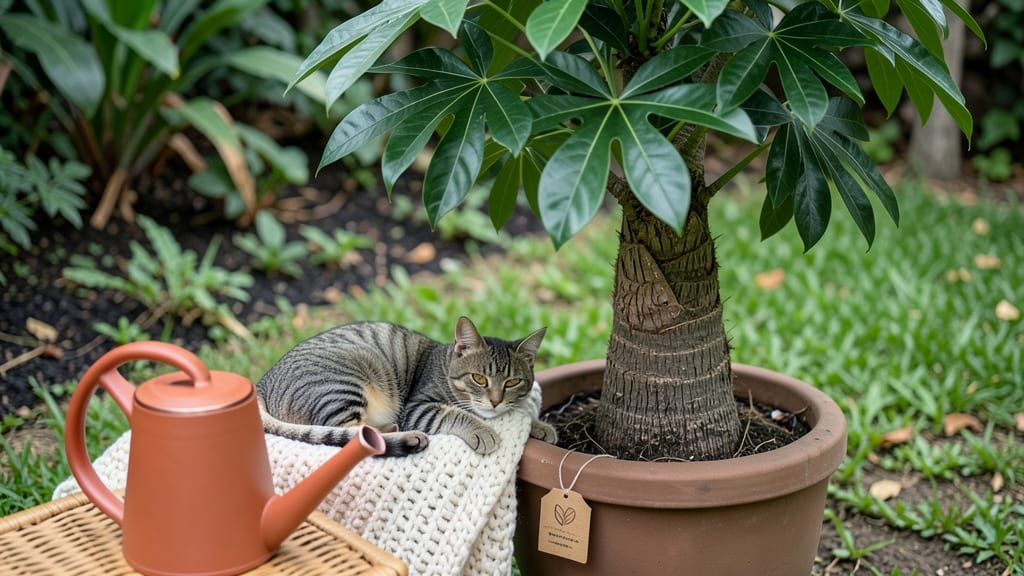
Money trees (Pachira aquatica) are pet-friendly plants, safe for homes with cats or dogs. Their non-toxic nature means accidental nibbling won't cause severe reactions, though mild stomach upset might occur. Always watch for unusual pet behavior after exposure.
This tropical plant earns its reputation as a pet-friendly choice because its leaves and sap contain minimal toxins, unlike many common houseplants. 🌿 According to the ASPCA, money trees rank among the safest options for curious pets, though individual reactions can vary based on your pet's size and sensitivity.
The key is proper placement—keeping the plant out of reach prevents any accidental ingestion entirely.
For extra protection, consider placing your money tree on a high shelf or using pet deterrents like bitter apple spray on lower branches. If your pet does chew on leaves, monitor for symptoms like drooling or vomiting, though these are rare.
The plant's mild nature makes it an excellent low-maintenance option for pet owners who still want lush greenery at home.
💡 In This Article
- Why Money Trees Are Safe for Cats and Dogs
- Best Practices for Keeping Money Trees Pet-Proofed
Why money trees are safe for cats and dogs
The safety of money trees (Pachira aquatica) for pets stems from their botanical composition.
Unlike many popular houseplants, this tropical species contains negligible levels of oxalates—compounds that cause oral irritation and digestive upset in pets. 🌱 While some plants like philodendrons or dieffenbachias contain calcium oxalate crystals that can trigger severe mouth swelling, money trees have only trace amounts, making them far gentler on curious pets.
Veterinarians and organizations like the ASPCA classify money trees as non-toxic because their sap lacks the irritating alkaloids or glycosides found in toxic plants.
For example, a cat chewing on a Boston fern might experience drooling or vomiting due to its mild toxicity, but a money tree's leaves would likely cause no more than a mild stomachache if ingested.
The plant's fibrous leaf structure also makes it less appealing for pets to chew compared to softer foliage like spider plants.
What makes money trees especially pet-friendly is their natural resistance to mold and pests, which reduces the need for chemical treatments that could harm animals.
Their glossy, waxy leaves contain tannins—bitter compounds that actually deter pets from chewing in the first place. 🐾 This built-in protection means you don't need harsh deterrents, though placing the plant in a hanging basket or on a high shelf adds an extra layer of safety for particularly adventurous pets.
Scientific studies on plant toxicity often highlight that physical plant characteristics play a role in pet safety. Money trees have a sturdy, slightly leathery leaf texture that's difficult for pets to chew through, unlike delicate plants that tempt pets to investigate.
The plant's slow growth habit also means it develops fewer tender new shoots that might attract pets' attention compared to fast-growing vines.
For comparison, consider the Boston fern—a popular pet-safe plant that contains small amounts of soluble oxalates. While not dangerous, it can cause mild gastrointestinal discomfort if eaten in large quantities.
Money trees, however, contain virtually no oxalates, making them a safer bet for households with pets that might have a history of plant munching. 🌿 Their non-toxic nature combined with their resilience makes them an excellent choice for pet owners seeking both beauty and safety.