
Trees
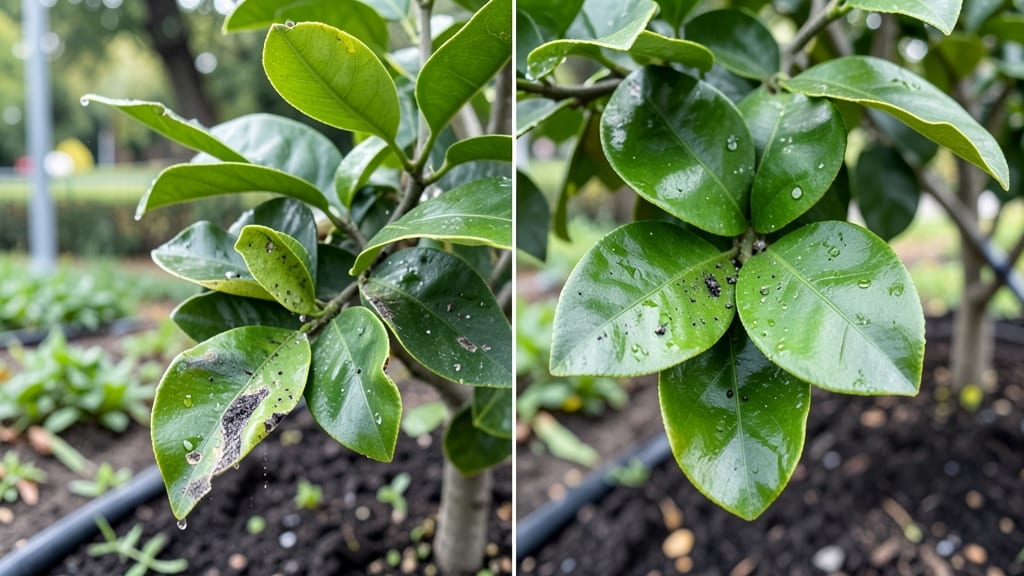
Your lime tree’s curled leaves are screaming for help—before they turn into a full-blown crisis. 🌿 I’ve seen this spiral from spider mites to fungal infections, and the good news is most fixes take less than 30 minutes if you catch it early.
Start by flipping those leaves: tiny webs or specks of white mean mites, while yellow spots or black dots signal fungal trouble. A strong spray of water (or neem oil for stubborn pests) can turn things around in a week—no harsh chemicals needed.
By the time you finish pruning the worst leaves and adjusting watering, you’ll see fresh, flat growth within 2-3 weeks. The key is acting before the damage spreads to the whole tree.
Works for Meyer, Persian, and Key limes alike—just tweak the treatment based on what you find under those leaves.
Understanding Leaf Curling Causes
When your lime tree’s leaves start curling, it’s often a distress signal from the plant—like a tiny, green SOS. While the sight might be alarming, pinpointing the root cause is the first step toward revival.
Below, we break down the most common reasons why lime tree leaves curl, backed by science and actionable insights to help you diagnose the issue accurately.
Pests are among the most common culprits behind curled lime tree leaves. These unwelcome guests feed on sap, inject toxins, or lay eggs in the foliage, triggering the tree’s defensive response—curling—to protect itself. Here’s what’s likely biting your tree:
🔍 Spider Mites: The Silent Sap Suckers
These microscopic arachnids (yes, they’re not insects!) thrive in dry, hot conditions and use their needle-like mouthparts to pierce leaf cells, draining chlorophyll-rich sap. As they feed, they inject saliva that disrupts the leaf’s normal functions, causing:
- Curling or cupping of leaves (often upward or inward).
- Stippling (tiny white or yellow dots) on the leaf surface.
- Webbing on the undersides of leaves (a telltale sign of two-spotted spider mites).
Why it happens: Spider mites prefer stressed trees (drought, poor soil, or over-fertilization), making them a common issue in lime trees. Their population explodes when humidity drops below 40%, so they’re often worse in summer.
🐛 Scale Insects: The Sticky Invaders
Scale insects attach themselves to leaves, stems, or branches and suck out sap, leaving behind a waxy, protective shell. Their feeding weakens the tree and triggers leaf curling as a stress response. Look for:
- Sticky residue (honeydew) on leaves or nearby surfaces.
- Black sooty mold growing on honeydew (a fungus that thrives on the sticky mess).
- Yellowing or wilting leaves, even if they’re still attached.
Why it happens: Scale insects are attracted to new growth and thrive in warm, sheltered environments. They reproduce rapidly, often going unnoticed until the tree’s health declines significantly.
🐛 Caterpillars and Leaf Miners: The Leaf Munchers
While caterpillars (like those from lime looper moths) chew holes in leaves, leaf miners burrow inside the leaf tissue, creating serpentine trails that distort and curl the foliage. Signs include:
- Wavy, blistered, or “window-pane” patterns in leaves (leaf miners).
- Fecal pellets on curled leaves (caterpillars).
- Skeletons of leaves (only veins remain).
Why it happens: Caterpillars and leaf miners target young, tender leaves because they’re easier to digest. Their larvae stage is particularly destructive, often going unnoticed until the damage is visible.
Fungi don’t just cause spots—they can also warp and curl leaves by disrupting cellular processes. Unlike pests, fungal issues often spread slowly but can become systemic if ignored. Here’s what to watch for:
🌡️ Powdery Mildew: The Fluffy Curler
This fungal disease thrives in humid conditions and appears as a white, powdery coating on leaves. While it primarily causes white patches, severe infections can lead to:
- Thickened, curled leaves (especially on young growth).
- Premature leaf drop if left untreated.
- Stunted growth due to reduced photosynthesis.
Why it happens: Powdery mildew spores germinate in warm (60–80°F), humid environments with poor air circulation. Lime trees are particularly susceptible if they’re planted too closely together or in shaded, damp areas.
🍂 Leaf Spot Diseases: The Hidden Curlers
Fungal leaf spot diseases (like Alternaria or Cercospora) create small, dark lesions on leaves. As the infection progresses, the leaf tissue around the spots may:
- Develop yellow halos (a sign of cell death).
- Curl upward or downward to limit fungal spread.
- Drop prematurely, leaving the tree vulnerable to secondary infections.
Why it happens: These fungi spread via water splashes (rain, overhead irrigation) or contaminated tools. Weakened trees—those with nutrient deficiencies or poor drainage—are especially prone to severe curling and defoliation.
Not all leaf curling is caused by pests or disease—sometimes, it’s your lime tree’s way of coping with environmental factors. These issues are often reversible with adjustments to care.
💦 Overwatering or Poor Drainage: The Smothering Effect
Lime trees hate “wet feet.” When soil stays soggy, roots suffocate, leading to:
- Yellowing leaves (chlorosis) due to oxygen deprivation.
- Curling or drooping as the tree conserves moisture.
- Root rot, which can kill the tree if untreated.
Why it happens: Clay or compacted soil traps excess water, while overzealous watering (or lack of mulch) prevents evaporation. Lime trees prefer well-draining soil and should only be watered when the top 2–3 inches of soil are dry.
☀️ Extreme Heat or Sunburn: The Scorched Look
While lime trees love sunlight, intense heat or sudden exposure (like after transplanting) can cause leaves to:
- Curl upward to reduce surface area and limit water loss.
- Develop crispy edges (a sign of sun scald).
- Turn bronze or brown in severe cases.
Why it happens: High temperatures (>90°F) increase transpiration rates, forcing the tree to curl leaves to conserve water. Young trees or those recently moved are most vulnerable.
🌬️ Wind or Physical Damage: The Bruised Leaves
Strong winds or hail can physically damage leaves, causing them to curl as a protective response. Look for:
- Ragged edges or torn leaf tissue.
- Curling along the margins (like a “cup” shape).
- No other symptoms (e.g., no pests, spots, or discoloration).
Why it happens: Mechanical stress triggers the release of ethylene gas, a plant hormone that accelerates aging and causes curling. This is purely cosmetic and not contagious.
A lime tree’s leaves may curl if it’s not getting the right nutrients, particularly:
💚 Nitrogen Deficiency: The Yellowing Curler
Nitrogen is crucial for leaf growth. A deficiency causes:
- Older leaves to curl and yellow (starting at the edges). <
Quick Fixes for Twisted Lime Leaves
Reviving your lime tree’s vibrant, healthy leaves starts with identifying the root cause—and then taking action. Whether it’s pests, fungal infections, or environmental stress, these targeted solutions will help you restore your tree’s lush foliage.
Below, we break down the most effective fixes for each common culprit, along with preventive steps to keep your tree thriving long-term.
If tiny invaders like aphids, mites, or scale insects are to blame for your lime tree’s curled leaves, act fast with these methods:
🔥 Spray Off Soft-Bodied Pests (Aphids, Mites)
- Mix a soapy water solution: Combine 1 tablespoon of mild dish soap (like Castile soap) with 1 quart of water. Avoid harsh detergents—they can damage leaves.
- Apply directly to infested areas: Use a spray bottle or hose attachment to coat the undersides of leaves (where pests hide) and stems. Reapply every 3–5 days until pests disappear.
- Rinse thoroughly: After treatment, spray the tree with clean water to remove soap residue.
> 💡 Pro Tip: Early morning or late evening spraying reduces sunburn risk on leaves.
🍳 Homemade Neem Oil Treatment (For Mites & Scale)
- Blend 1 teaspoon neem oil with 1 teaspoon dish soap and 1 quart of water.
- Shake well before spraying, as neem oil separates.
Cover the entire tree, focusing on curled leaves and crevices. 3. Reapply weekly for 2–3 weeks to break the pest life cycle.
> ⚠️ Warning: Test neem oil on a small leaf first—some lime varieties are sensitive.
👨🍳 Introduce Beneficial Predators
- Ladybugs and lacewings feast on aphids. Purchase them online or from garden centers and release them at dusk for best results.
- Predatory mites (like Phytoseiulus persimilis) target spider mites. Apply them directly to infested foliage.
If powdery mildew, leaf spot, or root rot are causing your lime tree’s leaves to curl, these fungal fixes will help:
🌡️ Improve Airflow & Reduce Moisture
- Prune crowded branches: Use sterilized pruning shears to remove 1/3 of the thickest growth, allowing air to circulate.
- Space trees properly: Ensure 6–8 feet between lime trees to prevent humidity buildup.
- Water at the base: Avoid overhead watering, which spreads fungal spores. Use drip irrigation or soaker hoses instead.
✨ Fungicide Sprays (Organic & Chemical Options)
| Fungus | Treatment | Prevention |
|---|---|---|
| Powdery Mildew | Spray with baking soda mix (1 tsp baking soda + 1 quart water + a drop of soap). Repeat weekly. | Apply copper fungicide every 2 weeks in humid seasons. |
| Leaf Spot | Use copper fungicide or organic neem oil spray. Remove fallen leaves. | Mulch with wood chips (not fresh) to deter spores. |
| Root Rot | Stop watering immediately—let soil dry out. Repot in well-draining soil with perlite. | Plant in raised beds or containers with drainage holes. |
> 🎯 Prevention Tip: Sterilize pruning tools with rubbing alcohol between cuts to avoid spreading disease.
If heat, drought, or nutrient deficiencies are curling your lime leaves, these adjustments will help:
💦 Hydration & Soil Fixes
- Check soil moisture: Stick your finger 2 inches deep—if dry, water deeply (1–2 inches per week in dry climates).
- Aerate compacted soil: Use a garden fork to loosen soil around roots, improving water absorption.
- Add organic matter: Mix compost or aged manure into the top 6 inches of soil to boost nutrients.
🌡️ Shield from Extreme Conditions
- Shade cloth: If your lime tree is in full sun, provide 30% shade during peak summer heat (12–4 PM).
- Mulch heavily: Apply 3–4 inches of mulch (wood chips or straw) to retain moisture and regulate soil temperature.
📊 Nutrient Boost for Weak Leaves
- Epsom salt soak: Dissolve 1 tablespoon of Epsom salt in a gallon of water and apply to soil monthly for magnesium (commonly deficient in lime trees).
- Balanced fertilizer: Use a 10-10-10 or 6-6-6 fertilizer in early spring to encourage new growth.
To keep your lime tree’s leaves smooth and vibrant, follow these monthly maintenance tips: ✅ Inspect leaves weekly for early signs of pests or disease. ✅ Prune regularly to remove dead/diseased branches. ✅ Rotate watering methods (drip irrigation > overhead spraying). ✅ Test soil pH (lime trees prefer 6.0–7.0; amend with sulfur if too alkaline). ✅ Avoid over-fertilizing—too much nitrogen = soft, curled leaves.
With these practical, step-by-step solutions, your lime tree’s curled leaves should unfurl and recover within 2–4 weeks. Stay consistent with care, and your tree will reward you with glossy, healthy foliage all season long! 🌿✨
Frequently asked questions
Why do my lime tree leaves curl upward instead of downward?
Upward curling often signals underwatering or heat stress. Your lime tree may be conserving moisture by reducing surface area exposed to the sun. Check soil moisture—if the top 2 inches are dry, water deeply. For severe cases, provide afternoon shade during hot spells.
Can I prune curled leaves off my lime tree?
Yes, but only if they're severely damaged or diseased. Use sterilized shears to remove 1/3 of affected leaves, focusing on the worst ones first. Never remove more than 25% of foliage at once—this stresses the tree further.
How do I tell if my lime tree's curled leaves are from pests or disease?
Flip the leaves: pests (like spider mites) leave tiny webs or specks on undersides, while disease shows spots, powdery residue, or discoloration. Check stems too—sticky honeydew means scale insects. If unsure, examine with a magnifying glass.
Will my lime tree recover if I fix the curling now?
With proper care, new growth will emerge in 2-4 weeks. The key is early action—prune damaged leaves, treat the root cause (pests/disease/environment), and maintain consistent watering. Most trees bounce back completely if you catch it before 50% of leaves are affected.
Can I use store-bought pesticides on my lime tree?
Use organic pesticides like neem oil or insecticidal soap first—they're safer for edible trees. Avoid synthetic chemicals if you plan to harvest fruit. For severe infestations, consult a local nursery for lime-tree-safe systemic treatments. Always follow label instructions precisely.