
How To
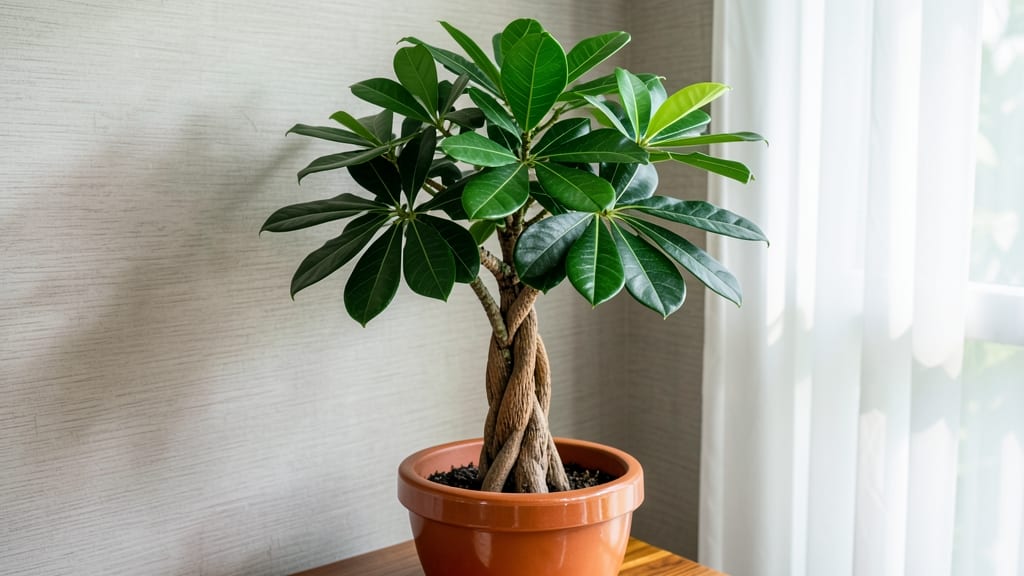
A money tree 🌿 can grow anywhere from 3 to 10 feet tall, depending on the variety and how you care for it—so yes, that potted plant in your corner could one day tower over your kitchen cabinets.
Wondering how tall your money tree (Pachira aquatica) could grow if you nurture it properly? This fast-growing houseplant isn’t just a decorative centerpiece—its mature height can vary dramatically depending on the variety, care, and growing conditions.
Standard money trees often reach 8–10 feet indoors with proper light and pruning, while dwarf varieties stay compact at 3–5 feet. The key to controlling its height lies in pruning, pot size, and light exposure—all factors we’ll break down to help you shape your plant’s growth.
Below, you’ll find out how to encourage a bushier shape, avoid common mistakes that stunt growth, and even troubleshoot why your money tree might be staying shorter than expected. Let’s get growing!


Money tree mature height by variety: what to expect indoors vs. outdoors
If you're admiring your money tree (Pachira aquatica) and wondering how tall it could grow, the answer depends entirely on its variety and growing conditions. Some varieties stay compact at 3 feet tall, while others can tower to 10 feet or more with ideal care.
Understanding these differences helps you plan for the perfect spot in your home or garden.
The standard money tree typically reaches its mature height of 8-10 feet indoors over 5-10 years, but outdoor conditions can accelerate this growth. Meanwhile, dwarf varieties remain manageable at 3-5 feet, making them ideal for small spaces.
Let’s break down what to expect for each popular variety and how to influence their growth.
Your money tree’s height is heavily influenced by its growing environment. For example, a standard money tree indoors may only reach 8 feet in 10 years if kept in a small container with limited sunlight.
However, move it outdoors to a sunny spot with ample space, and it could easily surpass 12 feet in the same timeframe.
Sunlight is one of the most critical factors. Money trees thrive in bright, indirect light, which encourages faster growth. Place yours near an east-facing window for gentle morning sun, or use a grow light if natural light is scarce.
Avoid harsh afternoon sun, which can scorch the leaves and stunt growth.
Container size also plays a role. A money tree in a 12-inch pot will grow slower than one in a 24-inch pot because its roots have more room to expand.
If you want to control height, keep it in a smaller container. For faster growth, upgrade to a larger pot every 2-3 years during repotting season in spring.
Pruning is another tool to manage height. Regularly trimming the top growth encourages bushier growth and prevents the tree from becoming too leggy. Use clean, sharp pruning shears to cut just above a leaf node. This method can reduce height by 20-30% if done consistently.
Humidity levels matter too. Money trees love moderate to high humidity (around 50-70%). In dry indoor environments, mist the leaves regularly or use a humidifier to keep the air moist. Low humidity can cause leaf drop and slower growth, so this is especially important for indoor varieties.
Outdoor money trees grow much faster due to more sunlight and space. If you live in USDA zones 10-12, your tree can thrive year-round outdoors, reaching 15 feet or taller in ideal conditions.
In cooler climates, bring potted trees indoors before the first frost to protect them from cold damage.
To maximize height, feed your money tree with a balanced fertilizer (like 10-10-10 NPK) every 6-8 weeks during the growing season. Avoid over-fertilizing, which can lead to salt buildup in the soil and root burn. Always water thoroughly after fertilizing to help nutrients absorb properly.
If you’re growing a braided money tree, remember that the braiding is purely aesthetic and doesn’t affect growth speed. However, you’ll need to stake the trunk as it grows to maintain the braided shape.
Without staking, the trunk may straighten out over time, but the height will still follow the same growth patterns.
For a dwarf money tree, the key to keeping it small is consistent container confinement and minimal pruning. These varieties are bred to stay compact, but they still appreciate bright light and occasional pruning to encourage fullness. With the right care, you can enjoy a
How to control money tree height: pruning tips and growth hacks
If your money tree (Pachira aquatica) is growing taller than your ceiling or you’d prefer a bushier shape, don’t panic—height control is totally manageable with the right techniques. Pruning isn’t just about cutting back; it’s about guiding growth to match your space and aesthetic.
Whether you’re dealing with a standard variety or a braided money tree, strategic pruning can keep it compact or encourage fuller foliage without sacrificing its iconic charm.
One of the biggest factors influencing your money tree’s height is container size. Smaller pots naturally stunt vertical growth, while larger containers encourage taller stems. Pair this with regular pruning and repotting schedules, and you’ll have full control over its size.
Even if you love the tropical vibe of a tall money tree, knowing how to prune for bushiness can transform it into a stunning, multi-stemmed centerpiece.
Here’s how to master money tree height control with a simple, step-by-step approach:
-
Step 1: Choose the Right Time
Prune during spring or early summer when the plant is actively growing. Avoid heavy pruning in fall or winter, as this can stress the tree. -
Step 2: Identify Your Goal
Want height control? Cut back the tallest stems by 1/3 to 1/2. Prefer bushier growth? Trim just above a leaf node to encourage branching. -
Step 3: Use Clean Tools
Sterilize your pruning shears with rubbing alcohol to prevent disease. Make cuts at a 45-degree angle just above a leaf or branch. -
Step 4: Prune for Shape
For a fuller look, trim the tips of multiple stems. To reduce height, cut the longest stems back to your desired height level. -
Step 5: Encourage New Growth
After pruning, place the tree in bright, indirect light and maintain moderate humidity to promote new shoots. -
Step 6: Repot Strategically
If your tree is root-bound, repot into a container 2-3 inches larger to slow vertical growth. Use well-draining soil to prevent overgrowth. -
Step 7: Fertilize Lightly
Use a balanced fertilizer (10-10-10) every 6-8 weeks in spring and summer. Avoid over-fertilizing, which can lead to rapid, unchecked growth.
For small spaces, consider pruning your money tree into a multi-trunk specimen. Simply cut the main stem back to ground level, and new shoots will sprout from the base, creating a fuller, more compact plant.
This method works especially well for dwarf varieties, keeping them under 5 feet tall while still looking lush and intentional.
If you’re growing your money tree outdoors in warmer climates (USDA Zone 10+)**, height control becomes even more critical. Prune aggressively in late winter to shape the tree before the growing season begins.
Outdoor money trees can reach 10 feet or taller without intervention, so regular maintenance is key to keeping them manageable.
Remember, patience is key. Money trees respond well to gradual pruning, so avoid drastic cuts all at once. With consistent care, you’ll have a tree that’s the perfect height for your home—whether that’s a 3-foot tabletop centerpiece or a 6-foot statement plant. Happy pruning! 🌿