
Size
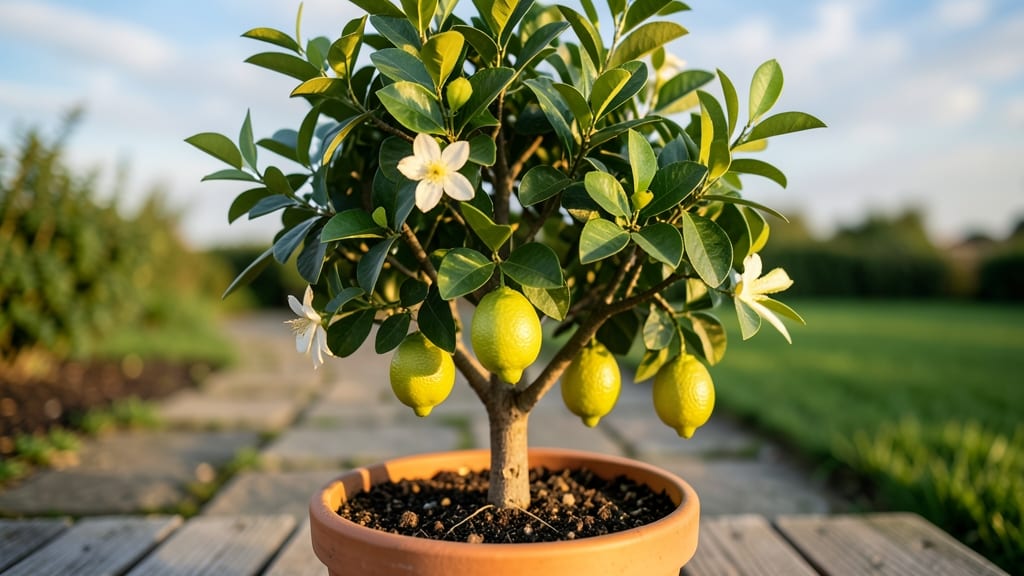
Dwarf Meyer lemon tree growth chart: height and spread by year
If you're planning to grow a dwarf Meyer lemon tree, understanding its year-by-year growth helps you prepare for its mature size and care needs.
Unlike full-size trees that reach 15-25 feet, dwarf varieties stay compact at 6-10 feet tall, making them ideal for patios, small yards, or even large containers. But how quickly does it grow, and when can you expect those first fragrant blooms and juicy lemons?
The growth rate of your Meyer lemon tree depends on whether it's planted in containers or in-ground. Container-grown trees grow slightly slower due to root restriction but are easier to move if needed.
In-ground planting allows for faster growth and larger root systems, but both methods can yield fruit within 2-3 years with proper care. Let's break down the milestones year by year.
| Year | Height (Ground) | Height (Container) | Spread | Key Milestones |
|---|---|---|---|---|
| Year 1 | 1–2 ft | 1 ft | 1–2 ft | Establishes roots, first leaves appear |
| Year 2 | 3–4 ft | 2–3 ft | 3–4 ft | First flowering possible; prune to shape |
| Year 3 | 5–6 ft | 3–4 ft | 4–5 ft | First fruit production likely; needs regular pruning |
| Year 4+ | 6–10 ft | 4–6 ft | 5–7 ft | Mature size; peak fruit production with proper care |
In its first year, your dwarf Meyer lemon tree will focus on root development and leaf growth. You'll notice rapid growth in spring and summer, with a slower pace in fall and winter.
By year 2, it may surprise you with its first delicate white flowers, signaling that fruiting isn't far off. This is also when you'll want to start light pruning to encourage a bushier shape and better air circulation.
By year 3, your tree should reach 5-6 feet tall and begin producing its first Meyer lemons. These early fruits might be smaller, but they'll taste just as sweet!
This is also when you'll need to be more aggressive with pruning to maintain its compact size and prevent overcrowding. Container-grown trees may stay slightly shorter but will require more frequent watering and fertilizer.
Once your tree reaches mature size (6-10 feet) by year 4 or 5, it will enter its most productive phase. With proper care—including regular pruning, balanced fertilization, and consistent wateringsweet, fragrant lemons year-round in warmer climates or fall through spring in cooler zones.
Just remember, container-grown trees will max out around 4-6 feet unless you upgrade to a larger pot.
One common misconception about dwarf Meyer lemon trees is that they stay small without effort. While they are naturally compact, their growth can be influenced by several factors, including sunlight exposure, container size, and pruning habits.
For example, a tree in a 5-gallon pot will grow slower than one in a 15-gallon container or planted in-ground. Always choose a container at least 12 inches wider than the root ball to avoid root-binding.
If you're growing your dwarf Meyer lemon tree in a container, plan to repot every 2-3 years to accommodate its growing roots. Use a well-draining citrus mix and ensure the pot has drainage holes.
In-ground planting allows for more natural growth but requires protection in USDA Zones 6-8 during winter. Mulching around the base helps insulate roots and retain moisture, especially in hot or cold climates.
To maximize fruit production and maintain its compact shape, prune your tree in late winter or early spring before new growth begins. Remove any dead or crossing branches and thin out overcrowded areas to improve airflow.
Avoid heavy pruning in fall, as this can stimulate new growth that won't harden off before winter. With the right care, your dwarf Meyer lemon tree will reward you with years of fresh, homegrown lemons—without taking over your garden! 🍋
Best pruning techniques to maintain compact dwarf Meyer lemon tree size
Keeping your dwarf Meyer lemon tree at its ideal 6–10-foot height requires strategic pruning. Without proper shaping, even dwarf varieties can grow leggy or overcrowded, reducing fruit production.
The key is to prune at the right time of year and with the right tools to encourage a bushy, productive shape while controlling vertical growth.
Pruning isn’t just about cutting branches—it’s about balancing growth and airflow. A well-pruned dwarf Meyer lemon tree will have more fruit-bearing branches and fewer weak, shaded limbs. Start with the basics: sterilized pruners, a sharp saw for thicker branches, and a clean workspace to prevent disease.
I’ll walk you through the exact steps to keep your tree compact and thriving.
Step-by-Step Pruning Guide for Dwarf Meyer Lemon Trees
-
Step 1: Prune in Late Winter or Early Spring
Trim dead or crossing branches before new growth begins (February–March in Zones 9–11). This encourages spring flowering and sets the stage for fruit production.
-
Step 2: Remove Suckers and Water Sprouts
Cut out suckers (shoots at the base) and water sprouts (vertical shoots) to redirect energy to fruit-bearing branches. Use clean pruners for a smooth cut.
-
Step 3: Thin Out Overcrowded Branches
Remove 20–30% of older growth to improve air circulation and sunlight penetration. Focus on branches growing inward or rubbing against others.
-
Step 4: Shape for Compact Growth
Prune to create an open-center shape with a central leader (main trunk). This prevents the tree from becoming top-heavy and keeps height under 6–8 feet.
-
Step 5: Light Summer Pruning (Post-Harvest)
After harvesting, trim overly long branches to maintain shape. Avoid heavy pruning in summer, as it can stress the tree and reduce next year’s blooms.
-
Step 6: Sanitize Tools and Dispose of Clippings
Wipe pruners with rubbing alcohol between cuts to prevent bacterial spread. Remove clippings from the area to reduce pests and disease.
Timing is everything when pruning your dwarf Meyer lemon tree. Avoid pruning in fall or winter (unless removing dead wood), as new growth won’t harden off before cold weather.
Instead, focus on late winter pruning to stimulate early spring growth and light summer touch-ups to maintain shape without stressing the tree.
One common mistake is pruning too aggressively, which can reduce flowering and fruit production. Aim for 10–20% of the tree’s foliage removed per year. Another pitfall is ignoring water sprouts—these fast-growing vertical shoots steal energy from fruit production.
Regularly inspect your tree and remove them promptly to keep it compact and productive.
With consistent pruning, your dwarf Meyer lemon tree will stay within its 6–10-foot height range while producing an abundance of sweet, fragrant fruit. Pair these techniques with proper fertilization and sunlight exposure, and you’ll enjoy a manageable-sized tree that yields lemons year-round.