
Pruning
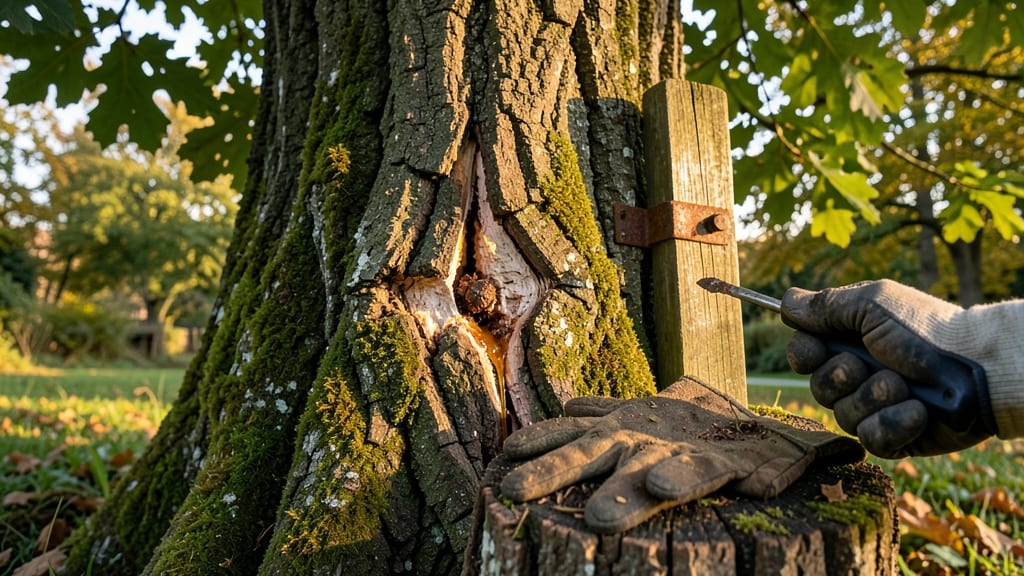
Screwing into a tree does damage it by breaking bark layers and blocking sap flow, particularly in young or small trees, but careful methods like using lag bolts and targeting non-sapwood areas reduce harm while keeping structures secure.
Your tree's bark isn't just a tough outer shell—it's a living system that protects the tree from pests and disease while transporting vital nutrients. 🌳 When screws pierce the bark, they create wounds that can disrupt the phloem layer, where sugars move, and the cambium layer, responsible for growth.
Younger trees are especially vulnerable because their bark is thinner and less resilient, making them more prone to infections or rot. Even mature trees can suffer if screws hit sapwood, which is rich in nutrients and critical for healing.
Age and health matter too. A 10-year-old oak might recover better than a stressed sapling, but both will need time to seal wounds naturally. The key is minimizing disruption—using stainless steel lag bolts (they're less likely to rust and spread disease) and avoiding the trunk's active growth zones.
For large structures, consider tree straps or brackets instead—they distribute weight without piercing the bark at all.
💡 In This Article
- How Tree Anatomy Affects Damage from Screws
- Safe Screwing Techniques for Trees Without Harm
How tree anatomy affects damage from screws
The bark you see isn't just a protective layer—it's a complex system with two critical layers that screws disrupt. The phloem (inner bark) transports sugars from leaves to roots, while the cambium (growth layer) produces new cells.
When screws pierce these layers, they create wounds that block sap flow and expose the tree to pests and disease. 🌲 The cambium is especially sensitive because it's where the tree grows, and damage here can stunt development for years.
Tree size and age determine how much damage screws cause. A 2-inch diameter sapling has thin bark that tears easily, while a 12-inch diameter oak can handle screws better due to thicker bark.
The key factor is the ratio of screw size to trunk diameter—using a 1/4-inch screw in a 1-inch sapling can be catastrophic, but the same screw in a 6-inch trunk may cause minimal harm.
Sapwood (the water-conducting layer just beneath bark) is another danger zone—hitting it disrupts nutrient transport and invites rot.
Trees respond to wounds by sealing them with callus tissue, but this process takes time and energy. A young maple might take 2-3 years to fully recover from a screw wound, while a mature oak can heal faster.
The deeper the screw, the harder the recovery—each inch below the bark increases the risk of internal damage. This is why shallow, horizontal screws (parallel to grain) are less harmful than vertical ones that cut deeper into the trunk.
Season also plays a role in damage severity. Screwing during active growth seasons (spring/summer) stresses the tree more because it's already diverting energy to new leaves and branches. In contrast, winter screwing causes less immediate harm, though it still risks disease entry.
The tree's natural defenses—like resin production in pines or callus formation in oaks—can't compensate for poor screw placement, making technique critical.
Consider this comparison: A 1/2-inch lag bolt in a 4-inch diameter tree might kill the tree within months, while the same bolt in a 12-inch trunk could cause only minor scarring.
The difference comes down to bark thickness and the tree's ability to compartmentalize damage. Thin-barked species like willows are far more vulnerable than thick-barked oaks or elms.
What most people don't realize is that screws don't just damage the entry point—they create stress points along the grain as they twist in. This micro-tearing weakens structural integrity, making the tree more prone to splitting during storms.
The solution? Use screws that match the tree's size and health, and always aim for non-sapwood areas when possible. 🌿