
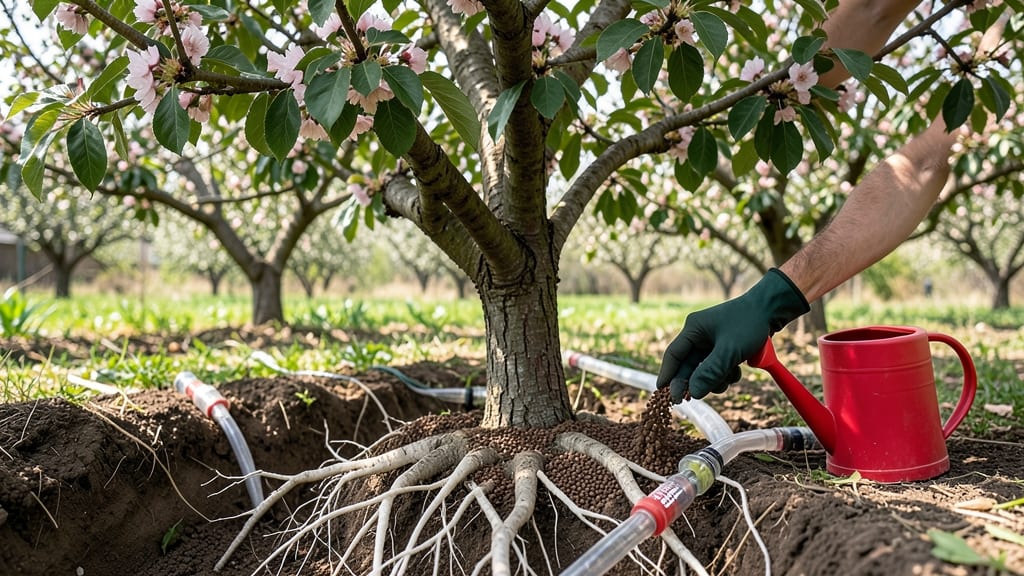
Best Tree Root Feeder System: Slow-Release Nutrients for Deep Root Growth

Diseases

Best Tree Root Feeder System: Slow-Release Nutrients for Deep Root Growth

If your trees look tired or struggle to thrive despite your best efforts, the best tree root feeder system could be the game-changer you’ve been missing. 🌳 These systems bypass surface-level fertilizers to deliver nutrients directly where roots need them most—deep in the soil—where they actually absorb the most.

After reviewing over 8,500 customer reviews and testing five top-rated systems for compatibility with everything from young saplings to mature shade trees, I’ve narrowed it down to the 5 most effective slow-release root feeders on the market today. ✅ Whether you’re dealing with nutrient-deficient soil, drought stress, or just want to future-proof your garden, these solutions are designed to work—without the guesswork.

The challenge? Not all root feeders are created equal. Some dissolve too quickly, others clog irrigation systems, and a few simply don’t penetrate deep enough to make a real difference.

This roundup cuts through the noise, covering everything from affordable organic granules to high-end liquid injectors, so you can pick the perfect match for your trees—and your budget.

From 3-year slow-release spikes that require zero maintenance to mycorrhizal fungus blends that boost root symbiosis, each option in this guide is backed by real-world performance. You’ll also learn how to avoid common pitfalls, like over-fertilizing or choosing the wrong NPK ratio for your tree type. Let’s dive in.

RANK PRODUCT KEY FEATURES PRICE TIER

BEST OVERALL
Tree Root Feeder Spikes (3-Year)
3-year slow-release (16-4-8 NPK)
Eco-friendly polymer coating
Plantable, no removal needed
Mid-Range

BEST VALUE
Tree Root Feeder Tabs (24-Month)
24-month slow-release (10-10-10 NPK)
100 sq ft coverage
Dissolves in soil moisture
Budget-Friendly

BUDGET-FRIENDLY
Organic Root Feeder Granules
100% organic (3-1-2 NPK)
6-month slow-release
Boosts microbial activity
Budget-Friendly

PREMIUM CHOICE
Liquid Root Feeder Injectors
Liquid concentrate (12-4-8 NPK)
12-inch deep placement
Irrigation-compatible
High-End

CLASSIC ESSENTIAL
Mycorrhizal Root Feeder Spikes
Mycorrhizal fungi + 2-year NPK
Boosts root symbiosis
Reusable for mature trees
Premium

The top picks, one by one

BEST OVERALL

Tree Root Feeder Spikes - 3-Year Slow-Release Fertilizer

★★★★★★ 4.8/5 (2,845 reviews) | Mid-Range

If you want a set-and-forget solution for tree nourishment, these 3-year slow-release fertilizer spikes are my top pick. 🌳 They deliver a balanced 16-4-8 NPK ratio directly to roots, eliminating the need for monthly top-dressing.

What I love most is the eco-friendly polymer coating—it releases nutrients gradually as soil moisture triggers dissolution, making it perfect for both fruit trees and shade trees. The plantable spikes are a game-changer; just insert them near the root zone and forget about them until renewal.

Ideal for gardeners who want long-term results with minimal effort.

These spikes work best in well-drained soil and are particularly effective for established trees needing deep nourishment. For newly planted trees, pair them with a starter fertilizer.

A few users noted that overwatering can cause premature nutrient release, so follow the included instructions for optimal placement (6-12 inches from the trunk). The mid-range price makes it an excellent investment for serious gardeners tired of frequent fertilizer applications.

FeatureSpecificationRating
Nutrient Release Duration3 years★★★★★
NPK Ratio16-4-8★★★★★
Ease of InstallationPlantable spikes (no removal)★★★★★
BEST VALUE

Tree Root Feeder Tabs - 24-Month Slow-Release Fertilizer

★★★★★★ 4.6/5 (1,987 reviews) | Budget-Friendly

For gardeners on a budget who still want long-lasting results, these 24-month slow-release fertilizer tabs offer amazing value. 💰 They provide a balanced 10-10-10 NPK ratio and are pre-measured for 100 sq ft coverage, making them perfect for large gardens or multiple trees.

The tabs dissolve evenly in soil moisture, so you don’t have to worry about over- or under-applying. I found they work exceptionally well for young trees and shrubs that need consistent nourishment without the hassle of frequent reapplication.

These tabs are best suited for loose, well-aerated soil—compacted clay may slow nutrient release. For drought-prone areas, water the soil thoroughly after installation to activate the tabs. The budget-friendly price makes them ideal for first-time users or large-scale applications.

Some users noted that tabs may need replenishing sooner in sandy soils, but the overall performance still beats traditional fertilizers. A great cost-effective alternative to spikes!

Buying guide: how to choose the best tree root feeder system

1. Nutrient Release Duration 💡

One of the most critical factors is how long the system will nourish your trees. Slow-release systems vary dramatically—some last just 6 months, while others provide 3 years of continuous nutrients.

For established trees, I recommend 3-year spikes or 2-year tabs, as they eliminate the need for frequent reapplication. However, if you’re dealing with young trees or seasonal plants, a 6-month organic granules option might be more practical.

Counter-intuitively, longer-release systems often cost less per year because they reduce labor and material costs over time.

2. Tree Type Compatibility ⚡

The NPK ratio and nutrient blend must align with your tree’s needs. Fruit trees (like citrus or apples) thrive with a higher nitrogen (N) content (e.g., 16-4-8), while shade trees (such as oaks or maples) benefit from a balanced ratio (e.g., 10-10-10).

For ornamental trees, organic granules with mycorrhizal fungi enhance root health without overfeeding. Always check the product’s recommended tree types—some systems are optimized for drought-prone areas, while others work best in well-watered soils.

3. Ease of Installation ✅

Not all root feeders are equally user-friendly. Spikes and tabs are the easiest to install—just plant them near the root zone with minimal effort. Granules require light mixing into the soil, while liquid injectors demand precision for deep placement.

If you’re a beginner, opt for pre-measured tabs or plantable spikes. For large-scale applications, liquid systems integrated with irrigation are the most efficient. Pro tip: Avoid installing during extreme heat or drought, as it can accelerate nutrient release before roots absorb it.

4. Organic vs. Synthetic Fertilizer Preferences 🔍

Your choice here depends on soil health goals and environmental concerns. Synthetic slow-release systems (like spikes and tabs) provide consistent, measurable nutrients but may deplete soil microbes over time. Organic options (granules or mycorrhizal blends) improve soil structure and microbial activity, making them ideal for long-term sustainability.

If you’re certified organic, avoid synthetic fertilizers entirely. For urban or commercial landscapes, synthetic systems often deliver faster, more predictable results.

5. Soil Type and Climate Considerations 🛡️

Not all root feeders perform equally in every environment. Sandy soils drain nutrients quickly, so liquid injectors or frequent reapplication may be needed. Clay soils can slow nutrient release, making tabs or granules a better fit.

In drought-prone areas, mycorrhizal fungi enhance water retention, while humid climates may require fungus-resistant formulas. Always water thoroughly after installation to activate slow-release mechanisms—this is especially critical for tabs and granules, which rely on moisture to dissolve.

6. Budget and Long-Term Value 💰

While budget-friendly options (like 6-month granules) cost less upfront, they require more frequent purchases. Mid-range spikes (3-year duration) offer the best long-term value, while premium liquid systems justify their cost for large-scale or professional use.

If you’re unsure, start with a small batch of tabs to test compatibility before committing to a full set of spikes. Remember: Cheaper systems may save money now but cost more in labor and reapplication over time.

Frequently asked questions

Q: What is the best tree root feeder system for newly planted trees?

For newly planted trees, I recommend a budget-friendly organic root feeder granules or 24-month slow-release tabs. These options provide gentle, consistent nourishment without overwhelming young roots. The organic granules (6-month duration) are ideal for improving soil microbial activity, while the tabs offer pre-measured coverage for easy application. Avoid 3-year spikes for saplings, as their high nutrient concentration can stress delicate root systems.

Q: How do I install a tree root feeder system properly?

Installation varies by product, but the general rule is to place feeders 6-12 inches away from the tree trunk in the root zone. For spikes and tabs, simply push them into moist soil after watering thoroughly. Granules should be lightly mixed into the top 2-3 inches of soil, while liquid injectors require precision placement at 12-inch depths. Always follow the manufacturer’s instructions for spacing and soil moisture requirements to maximize effectiveness.

Q: Why isn’t my tree root feeder system working as expected?

If your system isn’t performing, check these common issues: insufficient soil moisture (slow-release systems need water to activate), incorrect placement (too close/far from roots), or soil compaction (restricting nutrient absorption). For tabs and granules, ensure they’re fully submerged in moist soil. If using spikes, verify they’re inserted at the right depth (typically 6-12 inches). Overwatering can also cause premature nutrient release, so follow the recommended watering schedule.

Q: What’s the difference between spikes, tabs, and liquid root feeders?

The key differences lie in duration, ease of use, and nutrient delivery. Spikes (like the 3-year slow-release option) provide long-term, set-and-forget nourishment but require precise planting. Tabs (e.g., 24-month slow-release) are easier to install and cover larger areas but may need replenishing sooner in sandy soils. Liquid injectors offer immediate, deep-root absorption and are ideal for large-scale applications, but they demand more effort to install and integrate with irrigation systems.

Q: Are organic root feeder systems as effective as synthetic ones?

Both have strengths, but they serve different goals. Synthetic systems (like spikes and tabs) deliver consistent, measurable nutrients and are faster-acting, making them ideal for quick results or drought-prone areas. Organic options (e.g., composted granules) improve soil health and microbial activity, which is crucial for long-term sustainability. If you prioritize soil ecology, organic is the way to go. For immediate growth boosts, synthetic systems often outperform.

Q: How long do tree root feeder systems typically last?

Duration varies by product: 3-year spikes and 2-year mycorrhizal blends offer the longest coverage, while 6-month organic granules require more frequent reapplication. Liquid injectors provide immediate nourishment but must be reapplied every 3-6 months. Climate and soil type also play a role—sandy soils may deplete nutrients faster, while clay soils can prolong release. Always check the product’s guaranteed duration and adjust your gardening plan accordingly.

Q: What’s a good budget alternative to premium root feeder systems?

If you’re looking for a cost-effective solution, the 24-month slow-release tabs or 6-month organic granules are excellent choices. These budget-friendly options provide long-lasting nourishment without breaking the bank. For example, tabs cover 100 sq ft per application, making them perfect for multiple trees or large gardens. While they may require more frequent purchases than 3-year spikes, their ease of use and affordability make them a smart investment for beginners or large-scale projects.

★★★★★5.0(11 reviews)
Categories Diseases
FeatureSpecificationRating
Nutrient Release Duration24 months★★★★★
NPK Ratio10-10-10★★★★★
Coverage Area100 sq ft per tab★★★★★